

Online Exclusive: A Q&A with WALTER Surface Technologies on the drill bits market
Continuing our coverage of drill bits from the October/November print issue of Contractor Supply magazine, our editor spoke with Eric Smith, senior product manager at WALTER Surface Technologies. Following is our Q&A dialog:
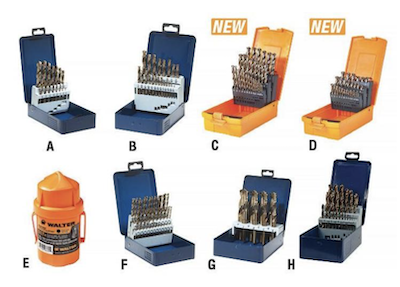 |
| WALTER's lineup of SST+ drill bits — click here for more information. |
Contractor Supply:What is the current outlook for the specified product category?
Smith: The current outlook for drill bits in the metalworking industry is being shaped by the rising cost of raw materials. As fabricators face increasing costs across their operations, many are looking for opportunities to reduce spending on tooling. However, choosing lower-cost tooling can often have the opposite effect.
Higher-quality drill bits typically provide significantly longer tool life, reducing the overall cost per hole. Quality cutting tools also produce more consistent, accurate holes, helping minimize rework and downtime. Ultimately, investing in better tooling can help fabricators offset rising costs by improving productivity and reducing their total cost of operation.
CS: What are the biggest misconceptions or misunderstandings about the product category?
Smith: Fabricators don't always understand the importance of consistency in their cutting tools. We do competitive testing to ensure the consistency of our tooling, meaning that every one of our drill bits or taps performs to the same high standard.
You can expect the same premium finish and long tool life from every product you use. By comparison, some competitive products may last 200 holes with one bit and only 80 holes with the next. That inconsistency makes it difficult for customers to accurately plan their jobs and tooling needs, while also increasing the time spent on tool changes.
Beyond that, many people don't realize how consistency is achieved. It starts with our manufacturing process, including the use of high-quality industrial HSS and frequently dressing the grinding wheel that shapes our tooling. Frequent wheel dressing helps ensure every tool has the same geometry and minimizes imperfections. This gives our customers confidence that the tools they receive will deliver the quality and performance they expect.
CS: What are the emerging trends/technologies influencing the development of these products?
Smith: One of the biggest trends influencing drill-bit development is the continued advancement of tool coatings. At WALTER, coatings are used to increase lubricity and reduce friction during drilling, which can lower the torque required and reduce heat and wear on the cutting edge. They also add hardness to the cutting edge which significantly prolongs the tool’s life. Aside from a longer tool life, the result is smoother cutting and more consistent performance.
As customers look to get more productivity and value out of every tool, coatings are becoming increasingly important in helping drill bits perform longer in demanding metalworking applications. WALTER’s own product development emphasizes these benefits.
CS: What are the main challenges the construction industry will be facing in the coming year that distributors should be aware of?
Smith: One of the biggest challenges for the construction industry in the coming year will remain supply chain reliability and product availability.
For distributors, the expectation from customers is increasingly simple: When they need material, it needs to be in stock.
That makes inventory planning, supplier relationships, and demand forecasting more important than ever. Distributors will need to anticipate customer needs, maintain appropriate safety stock on critical products, diversify suppliers where possible, and closely monitor lead times so potential shortages can be addressed before they impact a project.
Our focus is to make sure stock is never the reason a customer’s job slows down. That means having the right products, in the right quantities, in the right locations, and creating enough visibility throughout the supply chain to react quickly when conditions change. In an environment where contractors are already managing labor constraints, scheduling pressures, and rising costs, dependable product availability can be one of the greatest values a distributor provides.
CS: Considering those challenges, what do you recommend distributors focus on when it comes to meeting customer needs within the specified product category?
Smith: Distributors should focus first and foremost on product availability, strong fill rates, reliability, and responsiveness. Customers need confidence that when they place an order, the products they need will be available and delivered on time without disrupting project schedules.
That means maintaining the right inventory levels, forecasting demand accurately, and working closely with suppliers to protect fill rates and stay ahead of potential shortages or extended lead times. It is also important to communicate proactively with customers when market conditions change and to offer alternatives quickly when a specific product is unavailable.
Distributors should also focus on carrying durable, high-quality products that perform well and last. Contractors do not just want something that is available today; they want products they can trust in the field and that will reduce callbacks, replacements, and long-term costs.
Beyond simply supplying product, distributors can create value by understanding customers’ upcoming projects and planning inventory around those needs. The goal should be to combine high fill rates with dependable, long-lasting products so customers can keep jobs moving and feel confident in what they are installing.
CS: What are the key strategic priorities for your company in the next one to three years related to drill bits?
Smith: Our key priorities are to continue strengthening product availability, fill rates, product performance, safety, and the overall customer experience. At WALTER, those priorities all connect back to one central question: How can we help our customers work better?
That means making sure customers have access to the right products when they need them, supported by a dependable supply chain and consistently strong fill rates. It also means continuing to provide durable, high-performance products that last, perform reliably in demanding applications, and help reduce downtime, replacements, and unnecessary cost.
Our strategy is built around WALTER’s three pillars of productivity, safety, and customer experience. Within this product category, we will continue to focus on proven core products along with newer products and enhancements that help customers work more efficiently, safely, and confidently. Just as important, we will continue supporting those products with expert recommendations and hands-on customer support.
Ultimately, our goal is not simply to sell more product. It is to give customers the tools, consumables, availability, and expertise they need to achieve greatness — while ensuring that stock, product performance, or service is never the reason their work slows down.

CONTRACTOR SUPPLY MAGAZINE
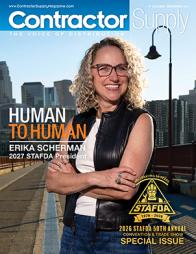
The October/November 2026 issue of Contractor Supply magazine is here!
In our cover story, Human to Human, MC Tool & Safety Sales competes with larger distributors by putting relationships, service and customer knowledge first.
Also in this issue are Industry Updates.
The digital edition, sponsored by BECK AMERICA Inc., is fully searchable and contains live links to every advertiser and new product listing. Click away!
| Read the Articles Read the Digital Edition |