


Cordless Tools Evolve Into Productivity Ground in Professional Trades
The cordless power tool market has seen significant growth over the past few years due to the broad range of tools included under that designation, such as drills, saws, sanders, grinders, nail guns, and other related accessories.
Advancements in battery technology and continued interest in eco-friendly solutions have led trade professionals to increasingly adopt battery-powered options.
With solutions that rival their corded counterparts, more manufacturers are exploring how far cordless tools can take the industry.
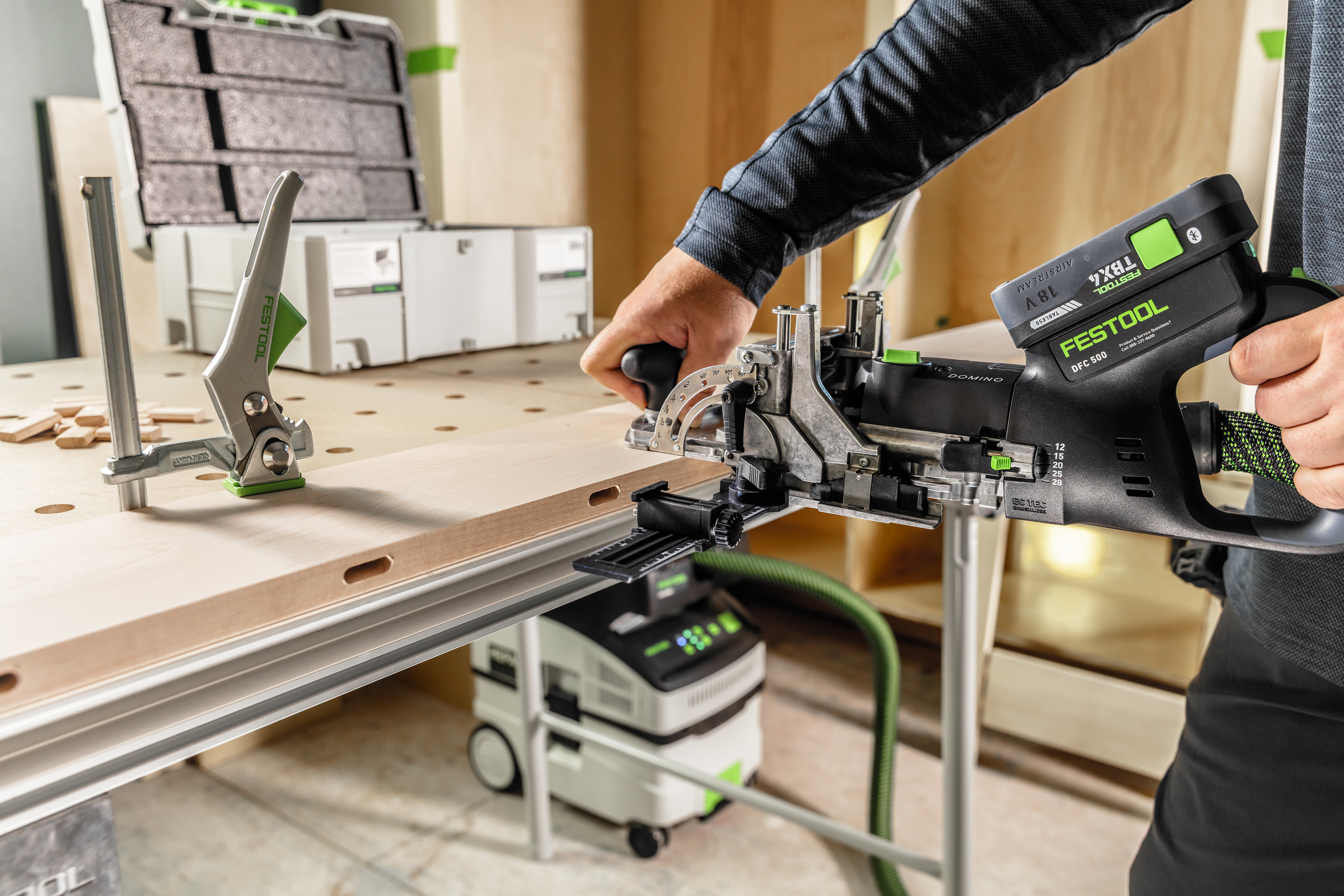 |
| Festool’s cordless DOMINO joiner and related product line up are engineered to deliver precise alignment, serious holding power, and flexibility across materials and applications. |
FESTOOL USA
Driven by a continued demand for mobility, efficiency, and performance on the jobsite, the cordless tool market continues to thrive.
Contractors are increasingly seeking cordless solutions that deliver the same power, precision, and reliability as corded tools while offering greater flexibility.
Despite advances in technology, the common misconception of cordless tools being unable to deliver the same amount of precision or power as their corded counterparts remains evident.
“While this may have been true in the past, advancements in battery and motor technology have significantly closed that gap, enabling cordless tools to deliver the power professionals need to build better,” says Joshua Geusz, marketing content specialist at Festool USA. “Today’s professional cordless tools are designed to meet demanding applications, including high-accuracy tasks like joinery.”
In addition, he says there is a shift toward system-based cordless platforms, where batteries, tools, and accessories are designed to work seamlessly together, ensuring consistent performance across applications.
Professionals expect cordless tools to match performance, and there is a growing emphasis on portability without compromise.
“The introduction of highly specialized cordless tools shows how manufacturers are expanding cordless capabilities into areas that were previously limited to the shop,” Geusz says.
Solutions like Festool’s Cordless DOMINO demonstrate how a system-based approach delivers more power while maintaining precision and increasing portability in a wider range of environments.
“Contractors are being asked to do more with fewer skilled workers, while also managing rising costs and tighter project timelines,” Geusz says.
Contractors seek tools that deliver power and efficiency in fewer steps.
“At the same time, consistency and availability remain important, as contractors depend on distributors to keep critical tools, consumables, and systems accessible when they’re needed,” he says.
To assist customers, Geusz suggests distributors focus on helping them understand how cordless tools can directly address jobsite challenges.
“It’s also important to emphasize complete systems rather than individual tools and ensure customers have access to batteries, dust extraction, and accessories that maximize power output and runtime,” he says.
As a manufacturer, Festool’s strategic priority within the cordless category is to continue expanding high-performance solutions that combine precision, mobility, and system integration.
“We are focused on delivering tools that help professionals achieve consistent results, whether in the shop or on the jobsite,” Geusz says, citing the launch of the Cordless DOMINO as a key example.
“Alongside existing cordless solutions, including our expanding battery system and mobile tool platforms, this reinforces our commitment to supporting efficient, high-quality workflows,” he says. “Our goal is to continue developing durable, reliable tools that work as part of a complete system, helping contractors improve productivity and adapt to the evolving demands of the industry.”
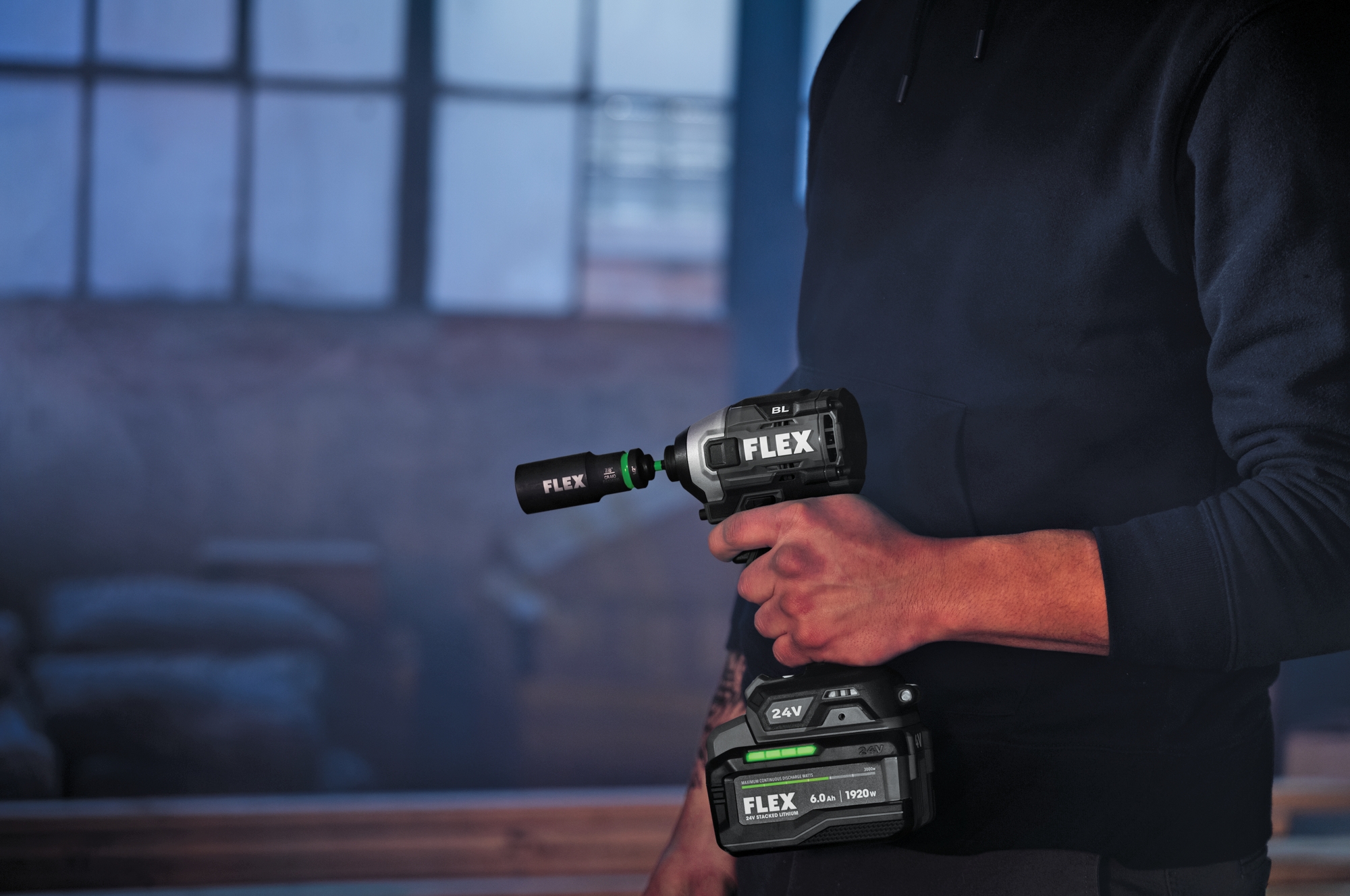 |
| This compact cordless impact driver is 17% lighter weight than its larger counterpart and serves as an ideal tool for electricians, HVAC pros, and driving tech screws for metal framing. |
FLEX
Within the realm of construction tools, a common misconception is that bigger means better performance.
“Contractors are looking for solutions that help crews work faster, reduce fatigue, and complete a wider range of applications without sacrificing performance,” says Andrew Pompei, regional sales manager at FLEX.
Conversely, he says advancements in battery, motor, and drivetrain technology are enabling manufacturers to deliver more power in increasingly compact and lightweight tools.
Pompei says many trade professionals rely on tools every day, making ergonomics, weight, and comfort important in maintaining productivity over the long term.
Within that landscape, impact drivers remain one of the most important and frequently used tools on jobsites.
“They are often the first tool out of the bag and are used across a variety of fastening and drilling applications,” Pompei says. “Contractors continue to demand impact drivers that deliver greater power, speed, control, and versatility while improving overall user comfort and efficiency.”
To meet customers’ needs, he suggests distributors should focus on cordless tools that balance performance with productivity-enhancing features.
“While power remains important, contractors increasingly value solutions that improve workflow, control, durability, and ease of use,” Pompei says. “Features such as fast bit changes, better ergonomics, and improved fastening precision can save time and reduce fatigue throughout the workday.
“Contractors are looking for tools that do more than simply deliver torque; they want solutions that help them work faster, more accurately, and with less effort,” he says.
Pompei says the FLEX 24V 1/4- inch hex impact driver reflects these broader industry trends by delivering professional-grade power in a more compact design while helping users move efficiently between a wider range of applications.
“FLEX remains focused on advancing power, runtime, durability, and overall productivity across its cordless tool portfolio,” he says. “As contractors face increasing demands for efficiency on the jobsite, our priority is developing solutions that help users work faster, reduce fatigue, and get more done throughout the workday.”
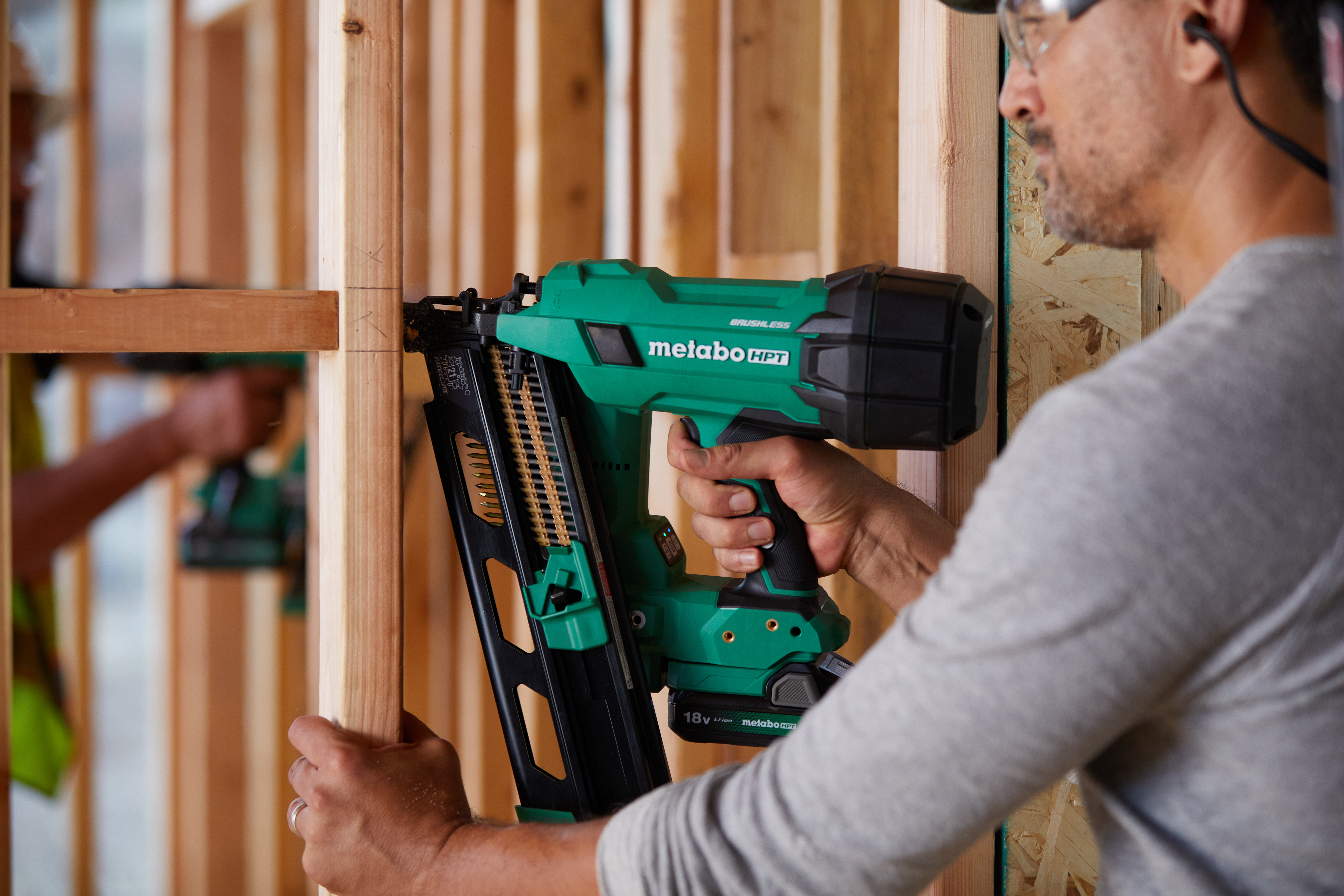 |
| Metabo HPT has a strong reputation in the industry with cordless tools. The company’s focus is not on cordless-only options, but smarter application-based tool solutions. |
METABO HPT
Across the professional building trades, cordless power tools have moved well beyond their early reputation as convenient alternatives to corded and pneumatic equipment.
Today, they are increasingly viewed as contributors to jobsite productivity, workforce efficiency, and overall project economics.
“For many contractors, the conversation is shifting,” says Mitch Kumakura, senior product manager at Metabo HPT. “Instead of focusing solely on upfront cost or peak performance, tools are being evaluated based on how they influence total workflow efficiency and, ultimately, the ability to protect margins in a challenging operating environment.”
He says the steady growth of the cordless power tool market reflects broader changes in how professionals approach tool investment, weighing a broader set of factors, including time savings, mobility, and the ability to complete more work with fewer resources.
“These considerations have taken on greater urgency as the industry faces persistent labor shortages and rising project demand,” Kumakura says.
In this environment, tools that improve efficiency throughout the full workday, not just at the point of use, can have a greater impact.
Unlike traditional tools, which can be compared more directly, cordless tools deliver many of their advantages more cumulatively, making the potential advantage less evident on a simple tool-to-tool price comparison.
“For distributors, this shift presents an opportunity to elevate customer conversations beyond upfront tool price,” Kumakura says. “By focusing on total jobsite productivity, including setup time, mobility, downtime, and labor utilization, distributors can help contractors better understand the broader value cordless solutions bring to the workday.”
He says a few categories illustrate this shift more clearly than fastening.
In many applications, fastening work has historically relied on pneumatic systems, requiring compressors, hoses, and generally more logistical steps that can slow progress.
“Cordless fastening tools remove these constraints by eliminating hoses and compressors, simplifying setup and enabling greater mobility,” he says, noting that in practice, the impact is cumulative.“Crews can move faster between tasks, work more efficiently in tight or elevated environments, and maintain output without the interruptions associated with traditional setups.”
The gains are especially meaningful in high-frequency applications such as framing, finish work, and punch-list completion, where incremental time savings, repeated throughout the day, can significantly affect overall productivity.
Kumakura notes that cordless tools support the overall shift to maximizing the output of each crew.
“The ability to complete more work with fewer resources can influence not only schedules, but also overall project margins,” he says.
In addition, the elimination of cords and hoses helps reduce clutter and minimize trip hazards on a jobsite.
“For years, cordless tools were evaluated as alternatives, measured against corded and pneumatic systems in direct comparisons of power, price, and performance,” Kumakura says. “In an environment defined by labor constraints, tighter schedules, and increasing complexity, the more important question is how tools contribute to overall jobsite performance.”
He says when cordless tools are evaluated through that lens, the advantages of reduced downtime, greater mobility, and more efficient use of labor become increasingly clear.
“The contractors seeing the greatest benefit are those treating cordless not as a one-to-one replacement, but as a system-level productivity driver,” Kumakura says.
As technology continues to advance, he says the shift in perspective may prove to be as important as the tools themselves.
“Cordless is no longer simply about cutting the cord; it is about rethinking how work gets done,” he says.
LEARN MORE
This article originally appeared in the August/September 2026 issue of Contractor Supply magazine. Copyright, 2026 Direct Business Media.

CONTRACTOR SUPPLY MAGAZINE
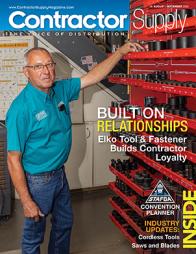
The August/September 2026 issue of Contractor Supply magazine is here!
In our cover story, Built on Relationships, Elko Tool & Fastener of Elko, Nevada has found success in the mining market by offering good customer service.
Also in this issue are Industry Updates.
This digital edition, sponsored by BECK AMERICA Inc., is fully searchable and contains live links to every advertiser and new product listing. Click away!
| Read the Articles Read the Digital Edition |