

 |
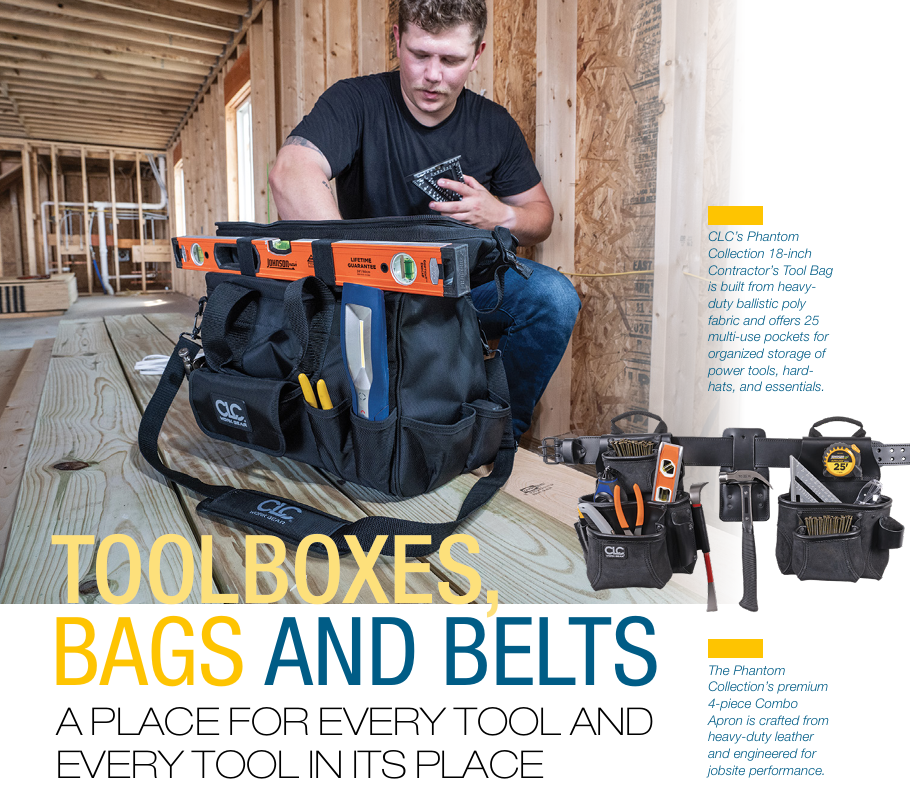
As contractors invest more heavily in tools and equipment, manufacturers continue to develop storage and work-gear systems designed to protect those investments while improving organization and mobility. Trade-specific solutions and modular systems are becoming increasingly common as professionals look for storage that fits the way they work.
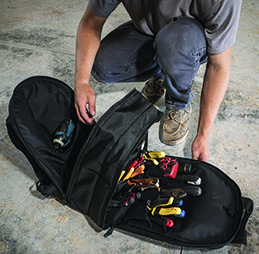 |
| Ideal for tradespeople, on the go, the CLC Phantom Collection 36-pocket backpack keeps essential tools, electronics, and eyewear organized and protected. |
CLC WORK GEAR
The tool carrier and work gear category remains resilient for CLC Work Gear, as contractors and skilled trades continue to prioritize and demand products that improve productivity, organization, comfort and durability.
Scott Porteous, senior product manager at CLC Work Gear/Kuny’s, part of Hultafors Group North America, says an opportunity exists to move the category beyond basic PPE and accessories toward complete jobsite solutions.
He says a key misconception about work gear and tool carriers is that they are a commoditized “one-size-fits-all” market differentiated primarily by price.
“The needs of a plumber, electrician, HVAC technician, or carpenter can vary significantly, requiring different storage solutions, tool access, and organizational features,” Porteous says.
CLC’s portfolio of tool carriers and work gear includes a wide range of sizes, shapes, pocket configurations, materials and features.
“By addressing the unique preferences and workflow requirements of different trades, CLC delivers purpose-built storage solutions that help professionals stay organized, efficient, and productive on the job,” he says.
In recent years, Porteous says work gear and tool carriers have evolved toward lighter, stronger materials, improved ergonomics, trade-specific designs and greater organization.
“Modularity is the name of the game right now as professionals carry more tools and equipment,” he says. “Professionals increasingly want to configure their storage around the job rather than use one carrier for everything.”
CLC has responded with refreshed fabrics and hardware, improved construction, padded handles and shoulder straps, wider openings and better load distribution.
With construction employers continuing to face labor gaps, Porteous says products that reduce fatigue and physical strain while improving productivity can deliver value beyond simple tool storage.
For distributors, he recommends positioning tool carriers and work gear as productivity and safety solutions. CLC’s assortment spans tool carriers, tool belts, tool holders, kneepads, gloves and other work gear, allowing distributors to build more complete jobsite solutions.
Looking ahead, CLC has a one-to two-year innovation roadmap that includes solutions designed to bridge the gap between tool bags and hard toolboxes.
He says the goal is to combine the portability of a bag with the organization and protection traditionally associated with hard storage.
The company’s core professional line has been upgraded, while the Phantom Series of tool carriers adds heavy-duty ballistic poly fabrics, stay-open compartments, purpose-designed pockets and padding for support.
“Our focus is to continue modernizing the assortment of gear while maintaining the durability and value that have established the brand,” Porteous says.
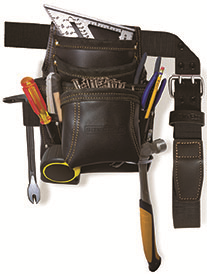 |
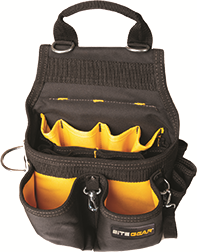
| Above: The Dave White’s Site Pro SiteGear Leather Tool and Nail Bag (Model 51-10113-TSB) is a 10-pocket carpenter’s nail and tool bag made from top-grain oily-tanned leather. Below: The SitePro Professional Electricians Ballistic Tool Pouch (Model 51-B5680) is a rugged, 18-pocket tool holder designed for daily electrical work. |
 |
SITEPRO
The professional tool storage and work gear category continues to see healthy demand as contractors recognize the productivity benefits of better organization.
“Today’s tradespeople expect tool storage to do more than simply carry tools,” says Clay Wagner, SitePro national sales manager. “They want products that improve efficiency, reduce fatigue, withstand demanding jobsite conditions, and integrate seamlessly into their daily workflow.”
As labor becomes more valuable, contractors are increasingly willing to invest in products that save time and improve organization throughout the workday.
Wagner says professional-grade work gear can provide measurable benefits through organization, durability, ergonomics and accessibility, even though some users still view bags, belts and pouches as commodity products where price is the primary differentiator.
“A well-designed tool system helps reduce unnecessary movement, minimizes downtime spent searching for tools, and improves comfort during long workdays,” he says.
The category is shaped by lightweight materials, improved ergonomics, greater modularity, specialized pouches, and improvements in stitching and hardware.Wagner says manufacturers are increasingly designing systems around individual trades instead of relying on one-size-fits-all solutions.
That shift also creates an opportunity for distributors to differentiate themselves from online sellers.
He recommends emphasizing product knowledge, customer relationships, inventory availability, and value-added support rather than competing solely on price.
“Providing contractors with complete work gear solutions often creates additional cross-selling opportunities while improving customer satisfaction,” Wagner says. “Distributors should emphasize quality, durability, and application-specific recommendations rather than competing solely on price.”
In-store demonstrations, system-based merchandising and education about long-term value can help distributors make that case.
Over the next one to three years, he says SitePro plans to continue expanding its SITEGEAR professional work gear line, supported by dealer promotions, digital assets and in-store merchandising initiatives.
The company’s broader focus is on complete, customizable work gear systems that can be configured around a contractor’s trade and application.
“SitePro remains committed to providing distributors with products that combine professional performance, dependable quality, and strong value while helping contractors work more efficiently every day,” Wagner says.
WEAVER TOOL GEAR
The toolbox, bag and belt category remains healthy, although contractors are becoming more selective about where they spend.
For professionals who wear a tool belt every day, Jordan Stolzfus, category manager at Weaver Tool Gear, says premium products continue to have a place when comfort, organization and longevity justify the investment.
Stolzfus says this is particularly relevant for leather products.
“A well-built leather tool belt isn’t a disposable product; it’s something that breaks in over time and is built for years of demanding work,” he says.
The idea that one tool belt is essentially the same as others overlooks details that become important during an eight- to 10-hour workday.
“Leather quality, weight distribution, pocket placement, hardware and construction all affect how the belt performs on the job,” Stolzfus says.
At the same time, contractors want flexibility and less unnecessary weight, driving interest in lighter materials, improved ergonomics and modular designs.
Stolzfus says modern design does not necessarily mean abandoning traditional materials or craftsmanship, particularly when premium leather and proven construction methods remain valuable to professional users.
Ongoing labor challenges, material costs and economic uncertainty are reinforcing the need for products that make workers more productive.
 |
| Weaver Tool Gear has been manufacturing top-tier leather goods from its Ohio plant for more than 50 years. It’s classic leather and poly product lines feature SuperFabric lining to enchance durability. |
“Professionals will pay for equipment that makes their day easier and stands up to daily use, but the product has to prove that value,” Stolzfus says.
For distributors, that means selling value rather than simply price.
“Distributors can win by carrying products they believe in, understanding why they’re different and helping customers choose the right setup for the way they work,” Stolzfus says, adding that if a customer is buying premium gear, it’s important to be able to explain what they’re getting for the investment.
Weaver Tool Gear is positioning itself as a premium American-made name in professional tool gear.
Although relatively new to the construction market, the company traces its leather-making roots back 50 years to a small harness and shoe shop in Ohio.
“Today, our premium leather tool gear is built by skilled American craftspeople at our facility in Mt. Hope, Ohio,” he says. “That hands-on experience matters when you’re building equipment that’s expected to work as hard as the person wearing it.”
Over the next several years, Stolzfus says Weaver plans to expand its line, listening to contractors and dealers, and increase its presence in the industry.
“We want Weaver Tool Gear to become a name professionals associate with premium American-made leather gear that’s built to work,” he says.
LEARN MORE
www.dwsitepro.com
www.goclc.com
www.weavertoolgear.com
This article originally appeared in the October/November 2026 issue of Contractor Supply magazine. Copyright, 2026 Direct Business Media.

CONTRACTOR SUPPLY MAGAZINE

The October/November 2026 issue of Contractor Supply magazine is here!
In our cover story, Human to Human, MC Tool & Safety Sales competes with larger distributors by putting relationships, service and customer knowledge first.
Also in this issue are Industry Updates.
The digital edition, sponsored by BECK AMERICA Inc., is fully searchable and contains live links to every advertiser and new product listing. Click away!
| Read the Articles Read the Digital Edition |