Material Handling: Portamate PM 2500 Heavy-Duty Adjustable Mobile Base

Portamate, an Affinity Tool Works, LLC. brand, announces introduces the PM 2500 Heavy-Duty Adjustable Mobile Base. The patented design of the PM 2500 provides increased mobility and productivity in the workplace and makes moving heavy machinery and equipment easier and more manageable.

The fully adjustable mobile base goes from 12”x12” up to 36”x36”, its low profile raises the machine just ¾” off the floor and it has a maximum weight capacity of 650 pounds, allowing it to handle a wide range of tools and machinery.

Key features include the durable, oversized foot-operated steel lever lock providing substantial stability, as well as, the ball-bearing casters which allow for superior maneuverability and ease in moving heavy items.

It’s designed with heavy-duty channeled side rails, metal locking mechanism, and non-skid rubber wheels.

“The Portamate PM 2500 Adjustable Mobile Base optimizes efficiency and safety in the workplace and aids in shop organization,” said Todd Gluski, Brand Manager for Affinity Tool Works. “Consumers will especially appreciate the durability of the solid steel foot lever, ease of use and overall aid in shop organization.”

The Portamate PM 2500 Adjustable Mobile Base retails for $89.99 and is distributed exclusively by Affinity Tool Works, LLC, based in Troy, Mich. For a complete list of dealers and retailers, please visit www.affinitytool.com or call 248-588-0395.

Anchors: Simpson Blue Banger Hanger Threaded Inserts

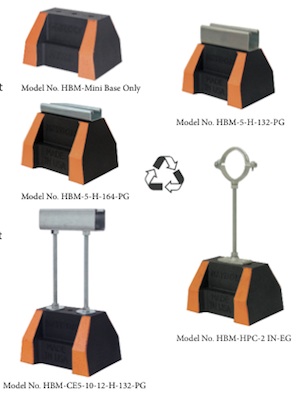
The Simpson Strong-Tie Blue Banger Hanger threaded insert has received the first International Building Code (IBC) report issued for a specialty cast-in-place insert.

The code report (ICC-ES ESR-3707) is the first one for this type of anchor under ICC-ES AC 446. The code report:

  • Covers all sizes of the Blue Banger Hanger wood form inserts and metal deck inserts
  • Addresses both cracked and uncracked normal-weight concrete and sand-lightweight concrete
  • Addresses static, wind and seismic loads

Blue Banger Hanger internally-threaded inserts are cast into the underside of concrete deck after being fastened to the top of wood forms or metal decks. The high-strength, easy-to-install wood-form and metal-deck anchors have been tested and shown to provide outstanding performance in cracked and uncracked concrete under both static and seismic loading conditions.

In the last 10 years, this type of cast-in-place insert has grown in popularity for anchoring suspended mechanical, electrical and plumbing equipment, piping and conduit. These types of anchors are quickly fastened to wood formwork or through corrugated metal deck before concrete is poured.

The Simpson Strong-Tie design is the only pre-pour insert to offer the patented multi-thread design that enables one size insert to handle multiple diameters of threaded rod. This gives flexibility to the installer in layout and to the designer in case the loads and threaded rod sizes are changed during construction.

“Until now, engineers who wanted to specify these anchors had to address the question of code-compliance every time they used them. Now, this new code report gives engineers increased confidence that they can properly design and specify the Simpson Strong-Tie Blue Banger Hanger and still comply with the requirements of the 2012 IBC,” said Ryan Vuletic, Simpson Strong-Tie Manager of Engineering/R&D for Anchor Systems.

For more information about the Blue Banger Hanger, visit www.strongtie.com/anchorsystems.

Gas Engine Equipment: Atlas Copco Dynapac CA1300 and CA1500 Rollers

The Atlas Copco Dynapac CA1300 features a Tier 4 Final, 75-horsepower Kubota diesel engine.
The new CA1500 roller features Atlas Copco’s exclusive Active Bouncing Control (ABC), a cross-mounted Tier 4 Interim or Tier 4 Final engine and steel blades that improve compaction, safety and visibility.

Atlas Copco has introduced its CA1300 and CA1500 single-drum soil rollers for high maneuverability and visibility on parking lot, road, utility pipe and street projects. The new CA1500 roller features Atlas Copco’s exclusive Active Bouncing Control (ABC), a cross-mounted Tier 4 Interim or Tier 4 Final engine and steel blades that improve compaction, safety and visibility.

The engines on the CA1300 and CA1500 are cross-mounted, or placed perpendicular to the frames, which is an industry first. The rollers’ hydraulic pumps are also in line with the engine. This allows users to reach all the necessary components on the engines and hydraulic pumps for fast and easy service and maintenance. And because the engines are cross-mounted rather than parallel to the frame, they provide optimal weight distribution and contribute to the units’ minimal footprint.

The CA1300 features a Tier 4 Final, 75-horsepower Kubota diesel engine, and the CA1500 uses a Tier IV Interim, 100-horsepower Cummins diesel engine. Both have top-mounted, cool air intakes with side vents that combine with the ejector exhaust outlet to minimize engine noise and prevent dust from being sucked into the engine compartment, which is a common occurrence on soil compaction sites.

The rollers’ high static linear loads make them ideal for compacting a range of materials, from clay to rock fill. The CA1300 features a static linear load of 73 pounds per linear inch (PLI), and the CA1500 has 112 PLI. The compaction power is transferred through the rollers’ drums to efficiently compact soil with minimal passes.
The CA1300’s 54-inch drum and the CA1500’s 66-inch drum give operators optimal visibility and allow them to maneuver into tight workspaces, such as pipe trenches or road shoulders. “With high visibility, operators can monitor the drums and keep an eye out for nearby workers,” said Vijayakumar Palanisamy, Atlas Copco Dynapac product marketing manager. “This means operators don’t need to sacrifice productivity or safety when working on cramped worksites.”

Atlas Copco’s ABC system, an optional feature for the CA1500 through CA6500 models, prevents operators from over-compacting the soil, which can damage the rollers. Once soil reaches its maximum density, further vibrations from the roller begin to travel back into the machines. This double jumping can crack drums and cause premature fatigue damage to the rollers

Stationary Tools: SawStop Jobsite Saw

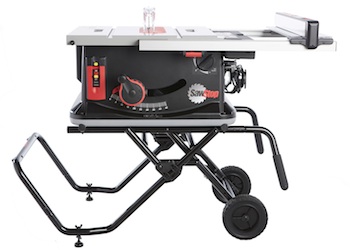
SawStop, LLC, the world leader in table saw safety, today announced the introduction of a new saw: the SawStop Jobsite Saw. This saw is the lightest, most portable and most affordable SawStop yet, and incorporates many groundbreaking features never before seen on portable table saws.

At the heart of the new Jobsite Saw is SawStop’s contact detection technology. Just like other SawStop saws, the Jobsite Saw detects contact with skin on the blade, and stops and drops the blade in less than five milliseconds. Injuries are dramatically minimized and saw reset takes just a few minutes with a new blade and a new cartridge ($69 USD).

The Jobsite Saw also showcases multiple pioneering innovations that increase accuracy, save time and improve results. Key among these many innovations are the One Turn Elevation (other saws required over 25 turns) and the T-style fence with ErgoLock for easy operation, firm lockdown and improved accuracy.

With the included wheeled mobile cart, the saw weighs only 108 pounds (lighter than many other portable table saws, and by far the lightest SawStop yet).

SawStop inventor and President Dr. Stephen Gass commented on the new saw. “When we debuted our first saw over 10 years ago, we knew that the portable SawStop was not only possible, but essential to protecting saw operators. We also knew that the SawStop reputation demanded the highest quality, most innovative jobsite saw possible. I am very proud of our new saw. It’s so much safer than anything else, but also improves the user experience in exciting new ways.”

The SawStop Jobsite Saw will begin arriving in dealer showrooms in March, 2015, with a US list price of $1,299. For more information, visit www.sawstop.com/jobsite.

Adhesives & Sealants: Dow LIQUIDARMOR CM Flashing and Sealant

Dow Building Solutions introduces LIQUIDARMOR - CM Flashing and Sealant, an innovative, patented liquid flashing solution designed to provide commercial buildings advanced moisture and air sealing protection.
An innovative alternative to flashing tape, the elastomeric spray forms a tight, seamless barrier along the rough openings of windows and doors while helping to significantly reduce labor time. The new product offers an excellent alternative sealant solution to conventional flashing and sealing products for installation of THERMAX or the Ultra Air Barrier Wall Systems.

LIQUIDARMOR - CM Flashing and Sealant covers and seals hard-to-reach gaps up to a quarter inch wide and offers a reliable replacement to peel-and-stick flashing tapes commonly used on board joints of commercial buildings.

The versatile, water-based coating works on a wide range of surfaces, including foam boards, steel studs, concrete masonry units, tapes, wood buck, and wraps. With sprayable, aqueous technology, it facilitates a consistent application using commonly available airless paint sprayers, such as those sold through Titan and Graco, without measuring, cutting or special accessories.

Additionally, the non-hazardous, liquid flashing solution can be safely sprayed without a respirator or extra ventilation required.

LIQUIDARMOR - CM Flashing and Sealant is as much as three times faster than traditional flashing tapes, and helps cut down on overall installed labor time and costly call backs by getting the job right the first time.

It seals around screws, veneer anchors and penetrating fasteners, resulting in a durable and resilient barrier suited to withstand job site variations and long-term building performance. Once the LIQUIDARMOR - CM sealant sets to the final elastomeric solid, the treated area is protected and helps provide superior air leakage and moisture control as part of a joint treatment with Dow’s commercial wall assemblies.

For more information, please visit the THERMAX Wall System or Ultra Air Barrier Wall System website.

Gas Engine Equipment: Atlas Copco Dynapac CA1300 and CA1500 Rollers

The Atlas Copco Dynapac CA1300 features a Tier 4 Final, 75-horsepower Kubota diesel engine.
The new CA1500 roller features Atlas Copco’s exclusive Active Bouncing Control (ABC), a cross-mounted Tier 4 Interim or Tier 4 Final engine and steel blades that improve compaction, safety and visibility.

Atlas Copco has introduced its CA1300 and CA1500 single-drum soil rollers for high maneuverability and visibility on parking lot, road, utility pipe and street projects. The new CA1500 roller features Atlas Copco’s exclusive Active Bouncing Control (ABC), a cross-mounted Tier 4 Interim or Tier 4 Final engine and steel blades that improve compaction, safety and visibility.

The engines on the CA1300 and CA1500 are cross-mounted, or placed perpendicular to the frames, which is an industry first. The rollers’ hydraulic pumps are also in line with the engine. This allows users to reach all the necessary components on the engines and hydraulic pumps for fast and easy service and maintenance. And because the engines are cross-mounted rather than parallel to the frame, they provide optimal weight distribution and contribute to the units’ minimal footprint.

The CA1300 features a Tier 4 Final, 75-horsepower Kubota diesel engine, and the CA1500 uses a Tier IV Interim, 100-horsepower Cummins diesel engine. Both have top-mounted, cool air intakes with side vents that combine with the ejector exhaust outlet to minimize engine noise and prevent dust from being sucked into the engine compartment, which is a common occurrence on soil compaction sites.

The rollers’ high static linear loads make them ideal for compacting a range of materials, from clay to rock fill. The CA1300 features a static linear load of 73 pounds per linear inch (PLI), and the CA1500 has 112 PLI. The compaction power is transferred through the rollers’ drums to efficiently compact soil with minimal passes.
The CA1300’s 54-inch drum and the CA1500’s 66-inch drum give operators optimal visibility and allow them to maneuver into tight workspaces, such as pipe trenches or road shoulders. “With high visibility, operators can monitor the drums and keep an eye out for nearby workers,” said Vijayakumar Palanisamy, Atlas Copco Dynapac product marketing manager. “This means operators don’t need to sacrifice productivity or safety when working on cramped worksites.”

Atlas Copco’s ABC system, an optional feature for the CA1500 through CA6500 models, prevents operators from over-compacting the soil, which can damage the rollers. Once soil reaches its maximum density, further vibrations from the roller begin to travel back into the machines. This double jumping can crack drums and cause premature fatigue damage to the rollers

Page 1915
Currently Viewing: Product Carousel
Atlas Copco Dynapac CA1300 and CA1500 RollersGas Engine Equipment

Gas Engine Equipment: Atlas Copco Dynapac CA1300 and CA1500 Rollers

The Atlas Copco Dynapac CA1300 features a Tier 4 Final, 75-horsepower Kubota diesel engine.
The new CA1500 roller features Atlas Copco’s exclusive Active Bouncing Control (ABC), a cross-mounted Tier 4 Interim or Tier 4 Final engine and steel blades that improve compaction, safety and visibility.

Atlas Copco has introduced its CA1300 and CA1500 single-drum soil rollers for high maneuverability and visibility on parking lot, road, utility pipe and street projects. The new CA1500 roller features Atlas Copco’s exclusive Active Bouncing Control (ABC), a cross-mounted Tier 4 Interim or Tier 4 Final engine and steel blades that improve compaction, safety and visibility.

The engines on the CA1300 and CA1500 are cross-mounted, or placed perpendicular to the frames, which is an industry first. The rollers’ hydraulic pumps are also in line with the engine. This allows users to reach all the necessary components on the engines and hydraulic pumps for fast and easy service and maintenance. And because the engines are cross-mounted rather than parallel to the frame, they provide optimal weight distribution and contribute to the units’ minimal footprint.

The CA1300 features a Tier 4 Final, 75-horsepower Kubota diesel engine, and the CA1500 uses a Tier IV Interim, 100-horsepower Cummins diesel engine. Both have top-mounted, cool air intakes with side vents that combine with the ejector exhaust outlet to minimize engine noise and prevent dust from being sucked into the engine compartment, which is a common occurrence on soil compaction sites.

The rollers’ high static linear loads make them ideal for compacting a range of materials, from clay to rock fill. The CA1300 features a static linear load of 73 pounds per linear inch (PLI), and the CA1500 has 112 PLI. The compaction power is transferred through the rollers’ drums to efficiently compact soil with minimal passes.
The CA1300’s 54-inch drum and the CA1500’s 66-inch drum give operators optimal visibility and allow them to maneuver into tight workspaces, such as pipe trenches or road shoulders. “With high visibility, operators can monitor the drums and keep an eye out for nearby workers,” said Vijayakumar Palanisamy, Atlas Copco Dynapac product marketing manager. “This means operators don’t need to sacrifice productivity or safety when working on cramped worksites.”

Atlas Copco’s ABC system, an optional feature for the CA1500 through CA6500 models, prevents operators from over-compacting the soil, which can damage the rollers. Once soil reaches its maximum density, further vibrations from the roller begin to travel back into the machines. This double jumping can crack drums and cause premature fatigue damage to the rollers’ frame, hitch and other structural components, which are expensive and time consuming to replace. The optional ABC system helps protect the frame and drum by detecting double jumping as soon as it begins to occur and shutting off the roller’ vibration.

“We created our exclusive ABC system specifically to help contractors get the most life from their compactors by minimizing a main cause for roller repairs,” Palanisamy said. “Without double jumping, the equipment stays in the field longer; compaction is more efficient; and the ROIs are greater.”

The service alert systems and easy-access engines allow contractors to service and maintain the rollers on the worksite without taking them to a shop. The service interval alert in the instrumentation display indicates when and what type of maintenance is required.

Optional strike-off blades help the rollers’ consistency by removing oversized rocks and obstacles in front of the thick drum shells. The blades have an innovative, divided profile that efficiently pushes out rocks, which can break up compacted soils. All Atlas Copco pad foot rollers are fitted with heavy-duty drum scrapers to keep the drums clear of clay and mud to ensure consistent compaction.

For environmentally sensitive worksites, the rollers feature Atlas Copco’s ECO Mode, an rpm-management system. The system reduces fuel consumption as much as 20 percent by delivering to the rollers only the amount of power that is necessary to operate at any given time. It is standard on the CA1300 and is also included with the Antispin/ECO Traction Systems for the CA1500 through CA6500 models.

Atlas Copco’s speed limiter makes it easy for the operator to reach consistent speeds in the CA1500 through CA6500 models. With a speed limiter setting, the operator sets the desired speed in the controls and pushes the joystick completely forward to quickly and accurately achieve the same compaction speed every time.

www.atlascopco.us/usus/