

 |
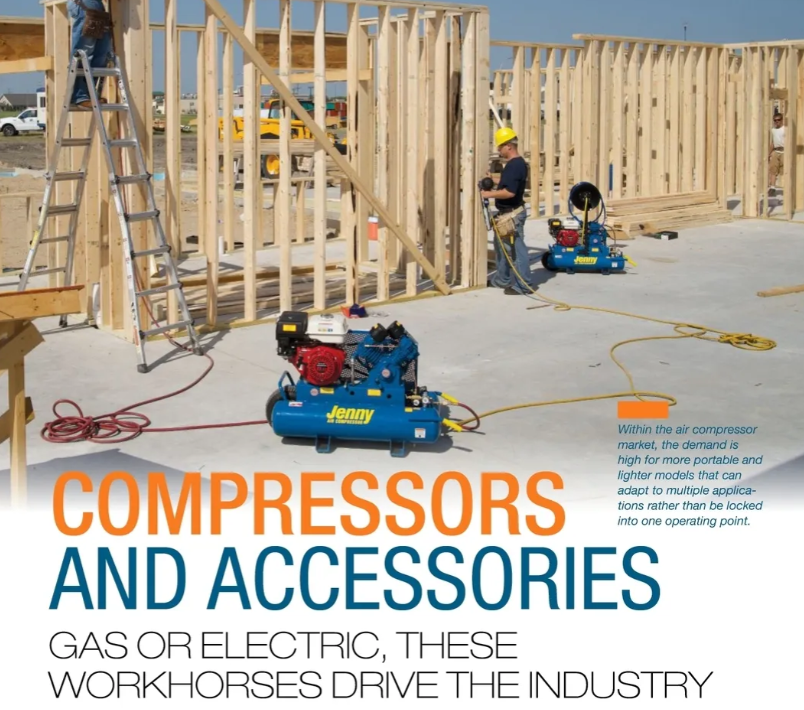
Construction professionals and other industries rely on air compressors for a variety of applications, including powering tools such as nail guns and jackhammers. Having the ability to easily transport compressors to different jobsites can directly enhance productivity and efficiency.
Challenges such as labor shortages, rising material costs, and tighter job timelines are pushing contractors to demand greater efficiencies from their tools, including air compressors.
Innovation remains steady amongst manufacturers of portable air compressors with advanced models offering improved energy-saving technology, lightweight materials, and smart features such as remote monitoring.
JENNY PRODUCTS
Distributors play a significant role in helping customers identify tools that minimize downtime and keep crews productive.
Dan Leiss, president of Jenny Products, says skilled labor shortages remain a persistent concern, placing greater emphasis on equipment that is intuitive to operate, easy to maintain, and dependable over long workdays.
While supply chain disruptions have stabilized compared to recent years, contractors and distributors are still operating in an environment where efficiency is critical.
“Given these conditions, distributors can focus on offering equipment that delivers consistent performance with minimal complexity,” Leiss says, adding that contractors increasingly value products that are straightforward, durable, and quick to service in the field.
For portable air compressors, he says this means prioritizing rugged construction and accessible maintenance points.
Leiss says contractors are looking for equipment that can withstand harsh jobsite conditions to help offset labor
From this perspective, he says the overall outlook for portable piston air compressors remains steady and positive.
“These units continue to serve as essential tools on jobsites, particularly for framing and finish work where reliability and portability are key,” Leiss says. “There is ongoing demand for time-tested compressor designs that deliver dependable air power without unnecessary complexity.”
Despite their widespread use, there are still misconceptions about portable air compressors.
One of the most common misunderstandings is that all portable compressors offer similar performance and durability.
“In reality, build quality and component design can vary significantly, directly impacting long-term reliability and total cost of ownership,” he says. “While lower-cost options may seem attractive upfront, contractors often recognize the value of investing in equipment that delivers consistent performance over time.”
While cost is a factor, contractors prefer solutions they know they can trust, especially when equipment performance directly impacts productivity.
For example, Jenny Products lineup of portable, gas-powered air compressors includes several standard features to ensure optimal reliability and reduced maintenance requirements.
Each unit is filled with Jenny “Ultimate Blue” synthetic compressor-pump oil for its splash lubricating system, ensuring complete oil coverage.
In addition, Leiss says each compressor is belt-driven with a large flywheel for easy start-ups and extra cooling, and a directional air shroud helps further reduce pump temperatures.
Other standard features include an enclosed belt guard, stainlesssteel braided discharge hoses, pressure relief safety valves, manual tank drains, and more.
Incremental advancements continue to shape the development of modern portable air compressors.
“Both gas-powered and electric models continue to evolve to meet the needs of different jobsites, whether that involves mobility, accessibility to power sources, or specific application requirements,” Leiss says.
Improvements in manufacturing processes have enhanced pump performance, extended equipment life, and reduced downtime.
Jenny Product’s focus remains on maintaining product quality while continuing to refine usability.
“Jenny’s priority is enhancing core product strengths rather than overcomplicating designs, ensuring that our compressors remain reliable and serviceable, and for the practical needs of both contractors and distributors,” Leiss says.
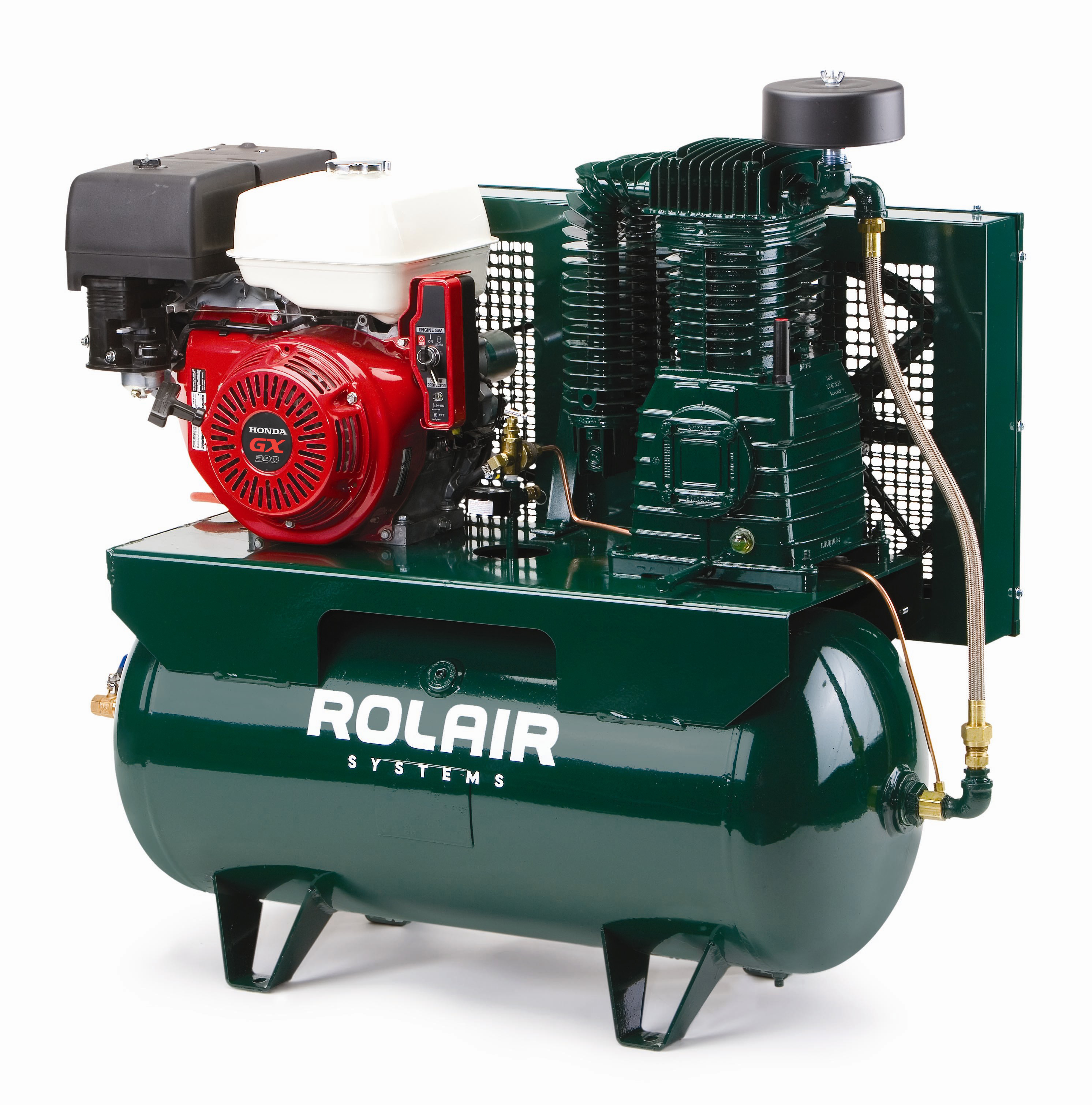 |
| Rolair’s13GR30HK30 produces 23 CFM at 175 PSI and comes with a GX390 Electric-Start Honda engine that features automatic idle-down, for increased fuel efficiency. |
ROLAIR
The construction industry continues to demonstrate resilience as it works through ongoing challenges related to labor availability and the rising cost of labor and materials.
While skilled workers remain in high demand and input costs fluctuate, these conditions are also driving innovation, efficiency, and smarter decision-making across the industry.
Contractors are increasingly focused on solutions that help crews work more productively and protect margins, creating opportunities for equipment and technologies that deliver lasting value.
“For distributors, these challenges create a clear directive: focus on products that deliver a strong ROI, maintain quality over long service lives, and are scalable enough to perform across a wide range of job types,” says Mike Kelley, vice president of Rolair.
He says contractors need equipment that boosts productivity, minimizes downtime, and adapts easily from one project to the next, especially when labor resources are limited.
Against this backdrop, the outlook for the air compressor category remains positive.
“Even during periods of economic uncertainty, demand for air compressors stays strong because they are essential, versatile tools used across framing, finishing, roofing, and industrial applications,” Kelley says. “A reliable compressor helps smaller crews work more efficiently, making it a valuable asset when labor is scarce or costly.”
As a manufacturer of professional-grade air compressors, Rolair offers solutions designed to meet these market demands.
He specifically cites two models, the 8422HK30 and the 13GR30HK30, as being built with durability, performance, and versatility in mind.
“These compressors, both of which utilize the same Italian-made true two-stage pump, provide contractors with dependable air power capable of handling multiple applications, helping maximize usage across jobsites and improve overall equipment ROI,” Kelley says.
The 8422HK30 is a portable wheelbarrow-style compressor capable of delivering 20.1 CFM at 90 PSI. Conversely, the 13GR30HK30 is a truck-mounted stationary compressor capable of delivering 23 CFM at 175 PSI.
“With that amount of air delivery, both models can support a wide variety of tools across multiple crews,” Kelley says. “By prioritizing high-quality, scalable products like these, distributors can better support contractors navigating today’s construction challenges while positioning themselves for sustained demand in a resilient product category.”
 |
|
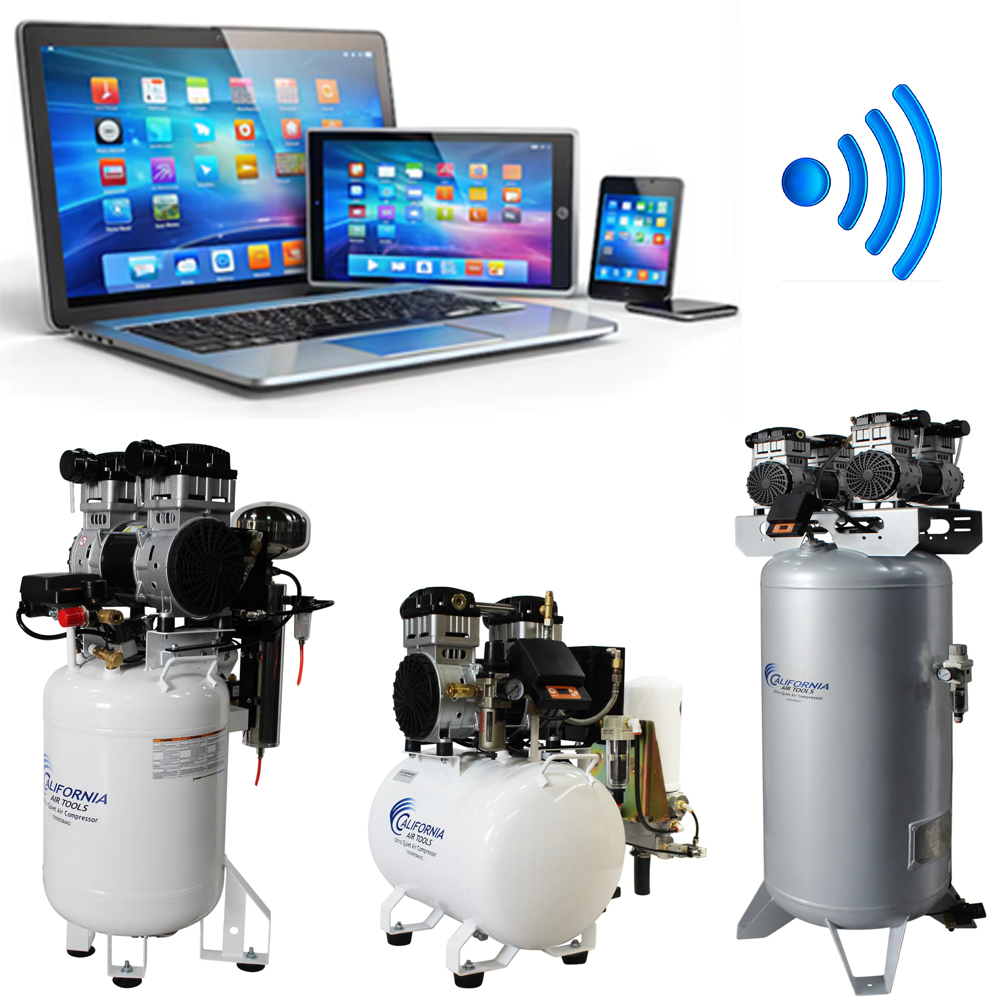
Smart compressor connectivity allows features and parameters to be entered and controlled comfortably along with remote monitoring from phones, tablets or other devices. |
CALIFORNIA AIR TOOLS
From the perspective of California Air Tools, the primary challenges continue to be centered around cost volatility, supply chain pressure, and freight inflation.
While California Air Tools’ supplier network and workforce have stabilized over the past two quarters following the 2025 tariff adjustments, the recent Section 232 tariff changes implemented in April 2026 have introduced a new layer of cost pressure.
Roderick Eslinger, director of sales and marketing at California Air Tools, says the updates, including a 25% tariff on derivative metal goods and increased import tariffs on key components from China and Mexico, have directly impacted input costs across multiple product categories.
In addition, he says distributors should be aware of rising transportation costs, driven in part by a significant increase in diesel prices, which is already translating into higher carrier rates and added pressure on overall costs.
Products manufactured using U.S.-sourced steel and aluminum are benefiting from comparatively lower tariff exposure, which helps offset a portion of these increases.
“Our focus remains on maintaining price stability where possible, supporting our distribution partners, and ensuring consistent product availability,” Eslinger says. “We recognize that predictable pricing and reliable supply are critical for distributors navigating an uncertain cost environment.”
He says the portable air compressor market remains stable, resilient, and positioned for growth in 2026.
Within that landscape, California Air Tools is seeing a notable shift toward quieter, oil-free, and low-maintenance solutions, as end users place greater emphasis on ease of use, reliability, and work environment considerations.
Demand continues to be driven by a combination of construction, light industrial use, and increasing adoption across specialty applications.
“California Air Tools is well-positioned to capitalize on these trends,” Eslinger says. “Our business has delivered consistent year-over-year growth, supported by a diversified product portfolio that serves a wide range of applications from general construction to emerging segments such as dental and other specialty industries.”
In addition, he says the company’s continued expansion across national distribution channels and key retail partners has significantly increased product visibility and accessibility.
Considering the current environment, Eslinger says distributors should focus on two key areas: product expertise and operational efficiency.
“First, proper product education is critical,” he says. “Air compressors are not a one-size-fits-all solution, and ensuring the right fit-for-application is essential to customer satisfaction and long-term performance.”
As use of air compressors expands into more specialty applications, misconceptions about noise and the idea that specialty applications require more complex or hard-to-source solutions become more prevalent.
“California Air Tools has been a leader in redefining this perception,” Eslinger says. “We offer one of the most comprehensive selections of ultra-quiet compressor solutions in North America, designed to support a wide range of applications from general use to highly specialized environments requiring clean, dry air and precise performance standards.”
To improve customer experience, he encourages distributors and dealers to familiarize themselves with the California Air Tools products overview section and various compressor categories and offerings.
Also, he notes that one of the significant trends shaping the air compressor market is the interest in smart, connected, and remotely managed equipment, particularly in precision-driven environments such as dental, biotech, and clean room applications.
“End users are increasingly prioritizing control, efficiency, and real-time system management, driving adoption of technologies that allow operators to monitor and adjust performance without being physically present,” Eslinger says. “As these technologies continue to evolve, the focus will remain on delivering smarter, quieter, and more efficient solutions that align with the increasing expectations of both distributors and end users.”
With the ongoing pressure on freight and input costs, he says strategic inventory planning and purchasing efficiency are more important than ever.
Consolidation of orders into full pallet or full truckload quantities can reduce per-unit costs and improve margins.
Specifically, Eslinger says distributors can benefit from direct shipment options from California Air Tools’ North American manufacturing facilities, which often provide incremental freight savings compared to traditional warehouse fulfillment.
“Ultimately, distributors who combine strong product knowledge with disciplined purchasing and logistics strategies will be best positioned to remain competitive, protect margins, and meet customer expectations in a cost-sensitive environment,” Eslinger says.
Looking ahead, California Air Tools remains focused on innovation, strategic channel growth, and delivering high-performance, ultra-quiet solutions.
The company’s portfolio spans from compact 1-gallon units to large-capacity 80-gallon systems, including over 30 dry air models for precision applications across construction, industrial, and specialized markets.
“We are also focused on strengthening our position as a category leader through differentiated product offerings,” Eslinger says.
For example, California Air Tools remains the only manufacturer offering a full range of aluminum tank compressors, from 2 to 10 gallons, delivering key advantages such as reduced weight, corrosion resistance, and long-term durability.
Additionally, features like automatic drain systems continue to address real-world customer needs around maintenance and reliability.
“We remain committed to the products that have built our reputation,” he says, citing the 2 HP 4620AC aluminum twin stack compressor as a jobsite workhorse example. “Its longevity and reliability are a testament to our design philosophy: build it right, and it will continue to perform in the field year after year.”
As California Air Tool expands its footprint across national distribution, retail, and specialty verticals, Eslinger says it is also investing in tools and support systems that will make it easier for distributors and dealers to sell and support new products.
“Our goal is to be a true partner to our distributors, providing not only high-performing equipment, but also the resources, availability, and margin opportunities needed to grow their business,” he says. “Ultimately, our strategy is simple: continue innovating, expand intelligently, and deliver dependable, high-performance ultra-quiet solutions that customers trust and dealers are proud to represent.”
 |
|
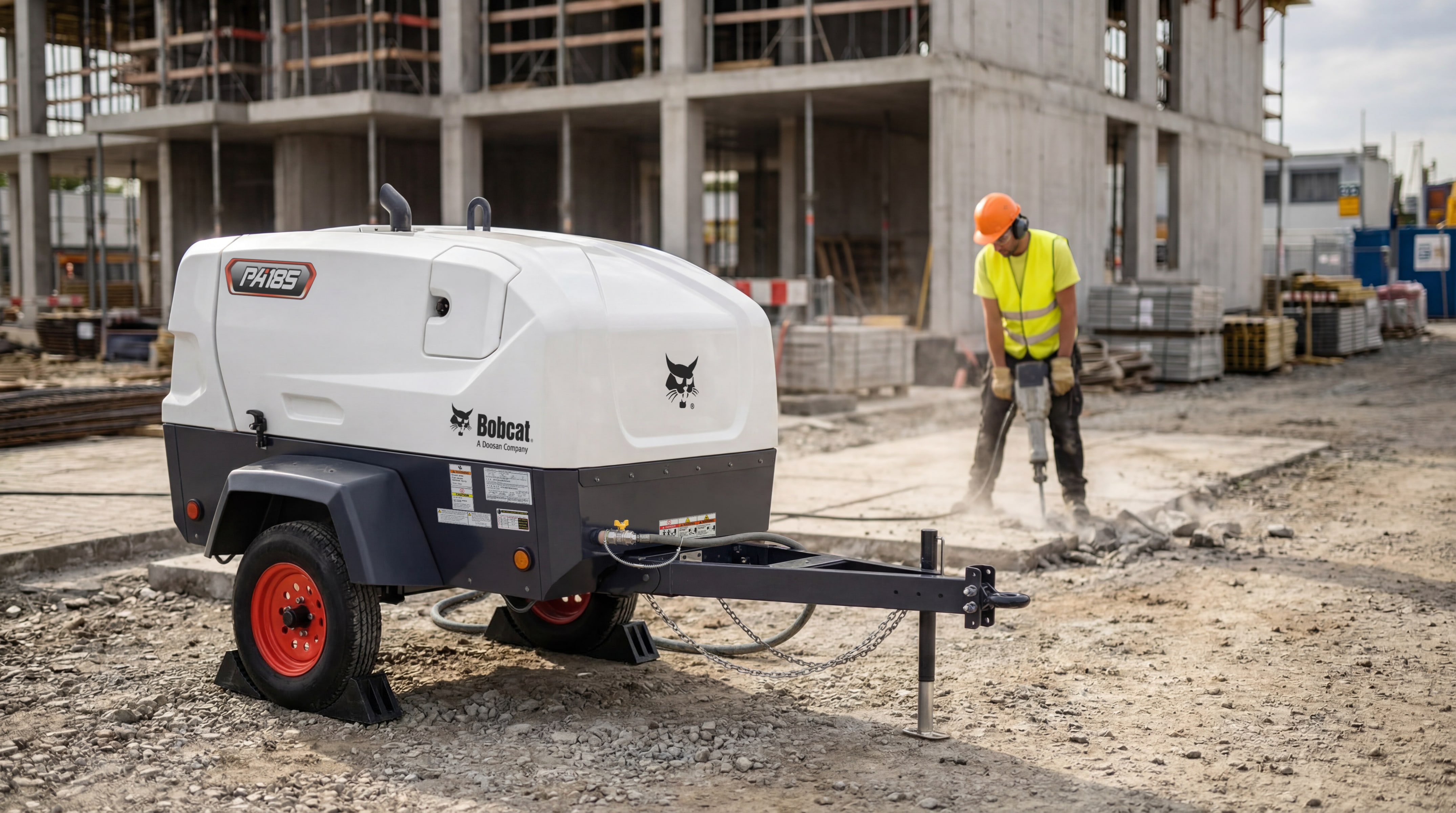
Bobcat’s PA185V towable air compressor offers a range of air power and jobsite versatility via the company’s FlexAir system, allowing users a chance to dial in air power needs. |
BOBCAT
Portable air compressors continue to be essential on jobsites where electricity is unavailable, unreliable, or impractical.
“They support a wide range of applications from pneumatic hand tools and concrete breaking to drilling, surface preparation, blasting, and coating and offer simple, dependable setup in remote or constantly changing environments,” says Cody Blythe, Bobcat product manager. “Rental demand remains a key driver as well, with fleet owners prioritizing machines that can withstand frequent turnover while remaining easy to maintain, transport, and operate.”
On a broader scale, he notes that labor availability, tighter schedules, and rising sensitivity to downtime continue to shape jobsite decision-making.
“Crews are often smaller and less specialized, which increases the need for equipment that is easy to operate, reliable, and flexible enough to manage multiple applications,” Blythe says. “At the same time, downtime is more costly than ever, whether caused by mis-sized equipment, maintenance delays, or machines that aren’t designed for frequent use.”
These pressures are pushing contractors to focus less on initial purchase price and more on up-time, predictable operating costs, and ease of service.
Within the context of air compressors, Blythe says distributors add the most value when they help customers select the right air solution, starting with the application, which tools are being used, hose length, pressure requirements, and not limit a sale or rental to just a compressor.
For tradespeople and other users, there is often confusion between PSI and CFM, and the belief that more airflow is always better.
“Pressure helps start a tool, but airflow keeps it running, and both must be considered together,” Blythe says.
Taking both PSI and CFM into consideration when matching an air compressor to a job impacts productivity loss and unnecessary additional cost.
“Right-sizing equipment to the application often delivers the best balance of performance and cost,” he says. In addition, Blythe notes that depending on the application, air quality can be significant but is often overlooked.
“Painting, coating, and other sensitive applications may require treated air to prevent contamination or rework,” he says.
Most significantly, despite the apparent ease of use, Blythe says safety with air compressors should never be underestimated.
Pressurized air systems require proper setup, inspection, and hose management to avoid serious hazards.
“Increasingly, customers are benefiting from distributors that think holistically by bundling compressors with hoses, reels, accessories, and air treatment when needed, ensuring performance and reliability from day one,” he says.
Today’s air compressors offer improved control over pressure and airflow, allowing a single compressor to adapt to multiple applications rather than being locked into one operating point.
Also, Blythe says smarter control systems, clearer displays, and built-in diagnostics help reduce operator error and speed troubleshooting.
“There is also growing interest in electric towable compressors in certain segments, driven by benefits such as lower noise, zero site emissions, and uninterrupted runtime where power is available,” Blythe says.
Air quality is receiving more attention with filtration, aftercooling, and condensate management becoming increasingly relevant.
Known best for its compact construction equipment, he says Bobcat is keenly focused on increasing awareness of Bobcat’s place in offering a full lineup of portable air compressors.
“We are focused on expanding versatility through adjustable airflow systems, improving uptime through simplified serviceability and longer service intervals, and supporting rental fleets with machines engineered for durability, stability, and straightforward operation,” Blythe says.
 |
|
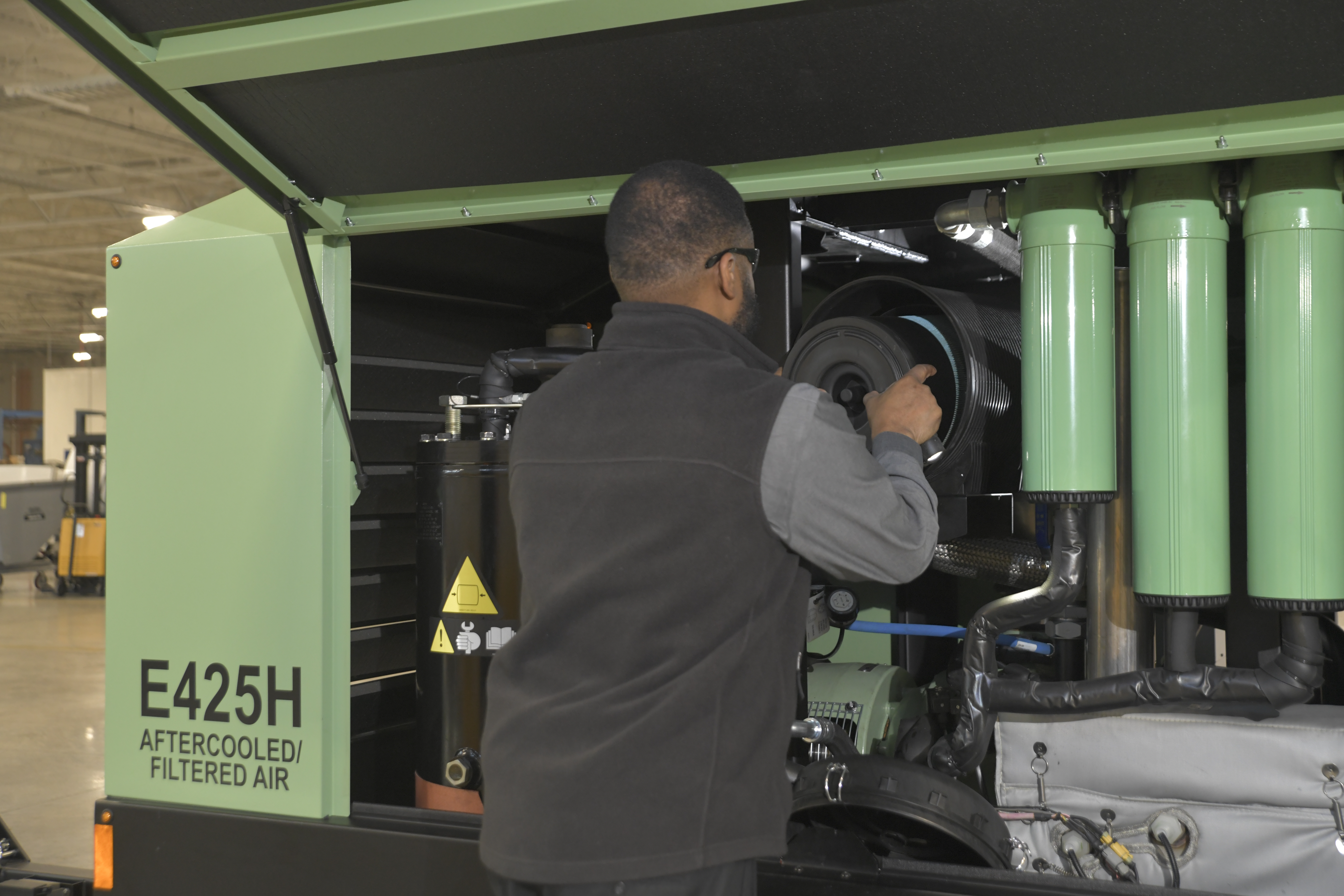
Hitachi Global Air PowerU.S.’s Sullair E425H delivers 425 cubic feet per minute at 150 PSI of compressed air in a maneuverable, user friendly design. |
HITACHI GLOBAL AIR POWER
Several industries are feeling the impact of the current economic climate, particularly in relation to increased energy costs.
This, in turn, leads to greater pressure for energy efficiency across industries, including construction jobsites.
“Compressed air continues to serve as a critical utility across construction applications,” says Jerel Cole, global portable product manager for Hitachi Global Air Power. “This includes powering air tools, drilling, sandblasting, and shotcrete.”
Simultaneously, the labor and talent shortages are also increasing demand for portable compressed air solutions that are easy to operate and require less hands-on management to maintain productivity.
Not every portable air compressor will meet your jobsite needs.
“Air demands can vary widely, and matching the compressor to the application is critical,” Cole says. “Factors like the type of tool being used, frequency and length of use, and number of tools in use all impact performance.”
For example, Hitachi products that include the Sullairexclusive Electronic Spiral Valve technology allow for reliable operation in harsh, dirty environments, improving part load efficiency and keeping the jobsite running.
Cole says that as organizations look to increase efficiency while tightening budgets, sacrificing genuine OEM parts is not the place.
“Using genuine OEM parts is now more important than ever,” he says. “While the upfront cost of ‘will fit’ spare parts is lower, they can end up costing more overall by not functioning as expected.”
He says OEM parts help optimize performance, efficiency, and longevity, as well as help avoid unnecessary downtime or long-term costs.
For example, as summer approaches, warmer weather means more pollen and other airborne debris in filters, and the heat can accelerate wear on rubber components as well.
Recent advancements in connected technologies and the current push for more sustainable options are driving the adoption of solutions that improve reliability and reduce energy waste.
“Fully electric portable air compressors help eliminate fuel costs, reduce carbon footprint and support versatile operation both outdoors and indoors, making electric options increasingly attractive as customers’ needs evolve toward greater efficiency and sustainability,” Cole says.
Hitachi Global Air Power continues to focus on expanding its product line to meet customer needs with a range including more electric portable options and diesel products that operate in the harshest environments.
LEARN MORE
- www.bobcat.com
- www.californiaairtools.com
- www.hitachiglobalairpower.com
- www.jennyproductsinc.com
- www.rolair.com
This article originally appeared in the June/July 2026 issue of Contractor Supply magazine. Copyright, 2026 Direct Business Media.

CONTRACTOR SUPPLY MAGAZINE
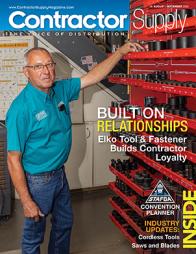
The August/September 2026 issue of Contractor Supply magazine is here!
In our cover story, Built on Relationships, Elko Tool & Fastener of Elko, Nevada has found success in the mining market by offering good customer service.
Also in this issue are Industry Updates.
This digital edition, sponsored by BECK AMERICA Inc., is fully searchable and contains live links to every advertiser and new product listing. Click away!
| Read the Articles Read the Digital Edition |