
 |
In today’s competitive industrial landscape, the evolution of nailers and staplers has transcended basic fastening functions to become pivotal enablers of productivity, precision, and operational efficiency across construction and manufacturing applications.
Power tool manufacturers are integrating smart sensors and wireless connectivity, enabling real-time monitoring of tool performance, battery life, and maintenance needs. Beyond hardware innovations, ergonomic advancements are redefining user comfort and safety.
Also, in the wake of the tariffs implemented in the United States in 2025, toolmakers are exploring advanced alloys and composite materials that deliver comparable strength while reducing weight and dependency on tariff-exposed imports.
 |
|
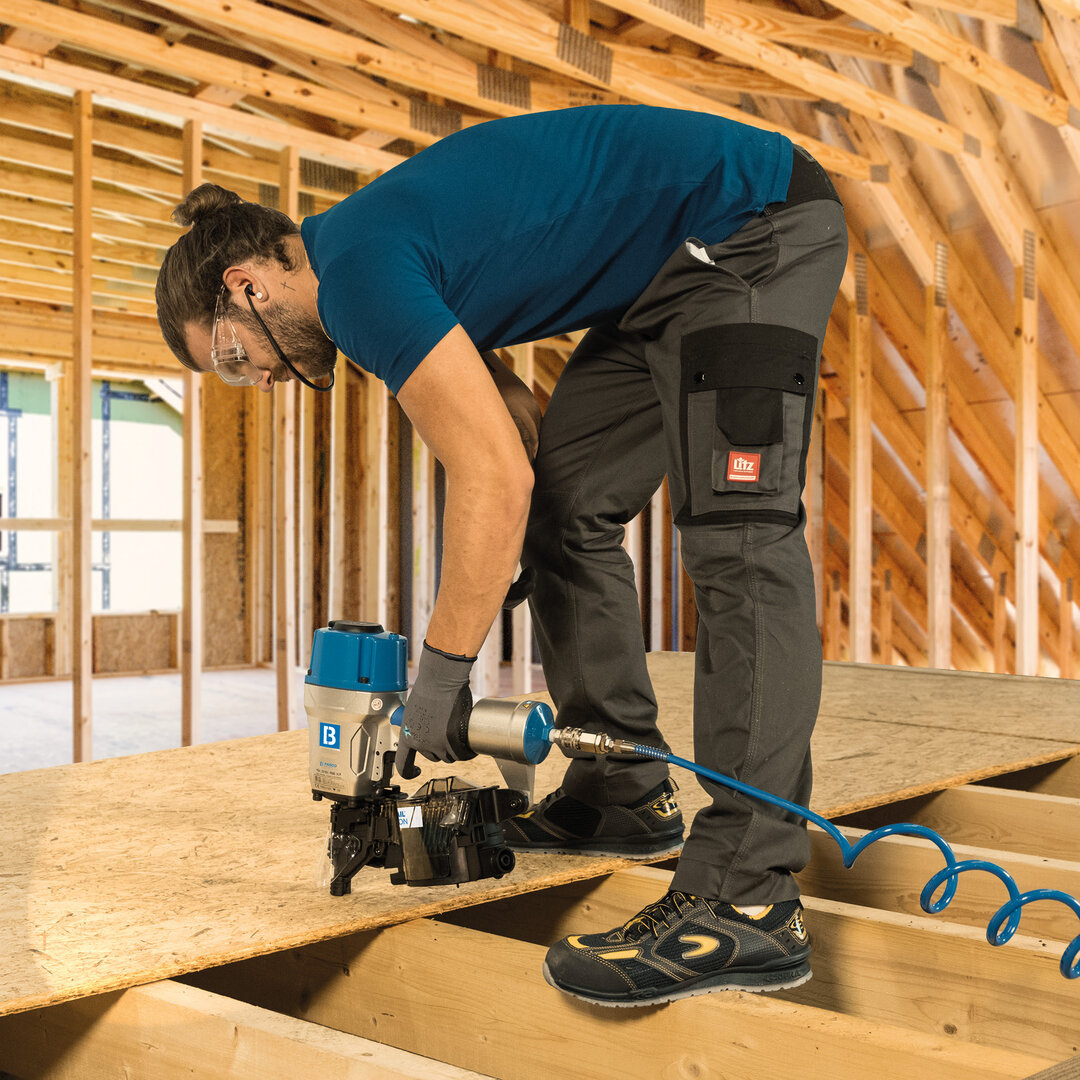
Driven by global green building trends, BECK’s pneumaticLIGNOLOC collated wooden nail system has earned U.S. compliance approval and is expected to grow in use. |
BECK AMERICA
Outside of the major challenge of persistently high interest rates and rising material costs driven by tariffs and supply chain disruptions, the industry continues to face a significant shortage of skilled labor.
The labor shortage reduces the availability of experienced workers, prompting companies to increasingly turn toward automation and process improvements to drive efficiency and maintain productivity.
“For distributors, this shift represents both a challenge and an opportunity: the ability to provide not just products, but productivity-enhancing solutions, is becoming a key differentiator,” says Chad Giese, national sales and product manager at BECK America. “To effectively support customers, distributors must move beyond selling individual tools or fasteners and instead focus on complete fastening systems.”
He says this would mean aligning the right tool, fastener and application to deliver maximum efficiency and performance.
With BECK products, examples of this approach would include:
- SCRAIL SPLITLESS for improved performance in wood decking applications
- SCRAIL CHIPBOARD, offering screw-like performance with the speed of a pneumatic nailer
- SCRAIL SUBLOC PRO, designed to eliminate subfloor squeaks and enhance long-term floor stability
“Bundling these solutions with the appropriate tooling, such as BECK’s pneumatic, new cordless lineup, or automation platforms like the inMotion system, ensures that contractors have a fully optimized setup for their specific application,” Giese says. “This systems-based approach not only improves jobsite efficiency but also helps offset labor constraints by reducing installation time and rework.”
Despite the growing popularity of cordless tools, pneumatic nailers and staplers continue to set the standard for productivity in high-demand environments.
The market is growing and certainly remains stable, driven largely by repair and remodeling activity.
Giese says pneumatic tools remain the preferred choice in applications where continuous use is required, power and speed are critical, and cost-per-fastener must be minimized.
“While cordless solutions such as those built on the CAS battery platform are gaining traction for their convenience and mobility, they are best viewed as complementary rather than a replacement for pneumatics,” he says, noting that while cordless offers mobility, pneumatic tools still outperform in speed, weight, durability, and cost efficiency, particularly in continuous-use applications.
In addition, distributors should be cautious when contractors are too concerned about that upfront cost.
“Lower-cost tools often result in increased downtime, higher maintenance needs, and inconsistent performance, thus ultimately costing more over time,” Giese says.
Manufacturers, including BECK, are continuing to refine pneumatic tools with a focus on usability and safety. Key trends include better-balanced designs to reduce user fatigue, improved ergonomics for enhanced control and comfort, and advanced trigger systems, including full sequential modes for increased safety.
“As the industry adapts to a less experienced workforce, these improvements are becoming increasingly important,” Giese says. “Tools that are easier and safer to operate help reduce training time, minimize errors, and improve overall jobsite performance.”
He notes that the construction industry is entering a period of transformation driven by labor constraints, economic pressures, and evolving technology.
“In this environment, pneumatic tools continue to play a critical role as the backbone of productivity,” he says. “For distributors, success will depend on embracing a solutions-oriented mindset, combining tools, fasteners, and application expertise to deliver measurable value. By focusing on efficiency, education, and innovation, they can help their customers overcome today’s challenges while building a more resilient future.”
BECK continues to place an emphasis on delivering such tailored solutions for specific applications.
For example, Giese says ET&F systems provide specialized fastening solutions for steel framing applications, and the inMotion automation platform helps industrial and manufacturing customers reduce labor dependency while increasing output and consistency.
“These advancements reflect a broader commitment to improving productivity at scale, helping customers do more with fewer resources,” he says.
KYOCERA SENCO
Working with smaller crews, contractors are demanding tools that are dependable and easy to use.
Downtime due to equipment complexity or reliability issues directly impacts productivity.
“As work is being done on residential sites, where access to power, space, and storage can be limited, contractors want compact, lightweight solutions that can be easily moved from truck to application,” says Ryan Schuler, product manager for KYOCERA SENCO. “While supply chains have stabilized compared to prior years, distributors and contractors now expect consistent availability, fewer SKUs, and dependable replenishment, especially for core products.”
He says contractors value tools that are easy to transport, quick to set up, and simple to maintain.
“Distributors should focus on reputable domestic manufacturers to reduce cost and lead time uncertainty resulting from tariffs, trade policy, and supply chain disruption,” Schuler says.
For example, he notes that pairing a portable compressor like SENCO’s PC1010 with SENCO brad nailers, finish nailers, and/or staplers creates a complete job-ready solution.
“Contractors want assurance that if something goes wrong, parts, service, and replacements are readily available,” Schuler says.
When it comes to nailers and staplers, he notes that it is important for distributors to recognize the distinction in quality.
“There are meaningful differences in driving technology, power delivery, durability, weight balance, serviceability, and how well a tool holds up in demanding applications,” he says.
For example, many contractors and distributors mistakenly identify SENCO’s Fusion technology as simply another battery-only system or a marketing ploy.
“In fact, it represents a very specific engineering approach that blends stored energy and mechanical drive systems to deliver consistent power, faster cycle times, and air?like performance without hoses,” Schuler says.
Even as the cordless options continue to expand, he notes that pneumatic tools remain highly relevant for consistent power, durability, lighter weight, and long run time.
“Customers are looking for an entire fastening system, not just one component,” Schuler says. “For the best performance, compatibility across tools and fasteners is increasingly important.”
Also, the drive for more efficient technology has driven increased interest in automated technologies.
“This technology has become more popular in industrial settings relating to the production of products such as wall panels, manufactured housing, and cabinets,” Schuler says.
Going forward, he feels there is no question that pneumatic and cordless tools will continue to coexist on jobsites.
“SENCO’s focus is on giving customers the right tool for the application and being able to support mixed jobsite environments,” Schuler says.
Celebrating 75 years of U.S. manufacturing, SENCO is focused on returning to its roots as a strategic priority.
“Assembling both the SNS45XP construction stapler and the FN series framers at the plant located in Cincinnati, Ohio, means the quality, durability, and reliability have taken center stage,” he says. “Being able to trust the tool will do the job without frequent repairs is SENCO’s top priority to ensure contractors have peace of mind on the jobsite.”
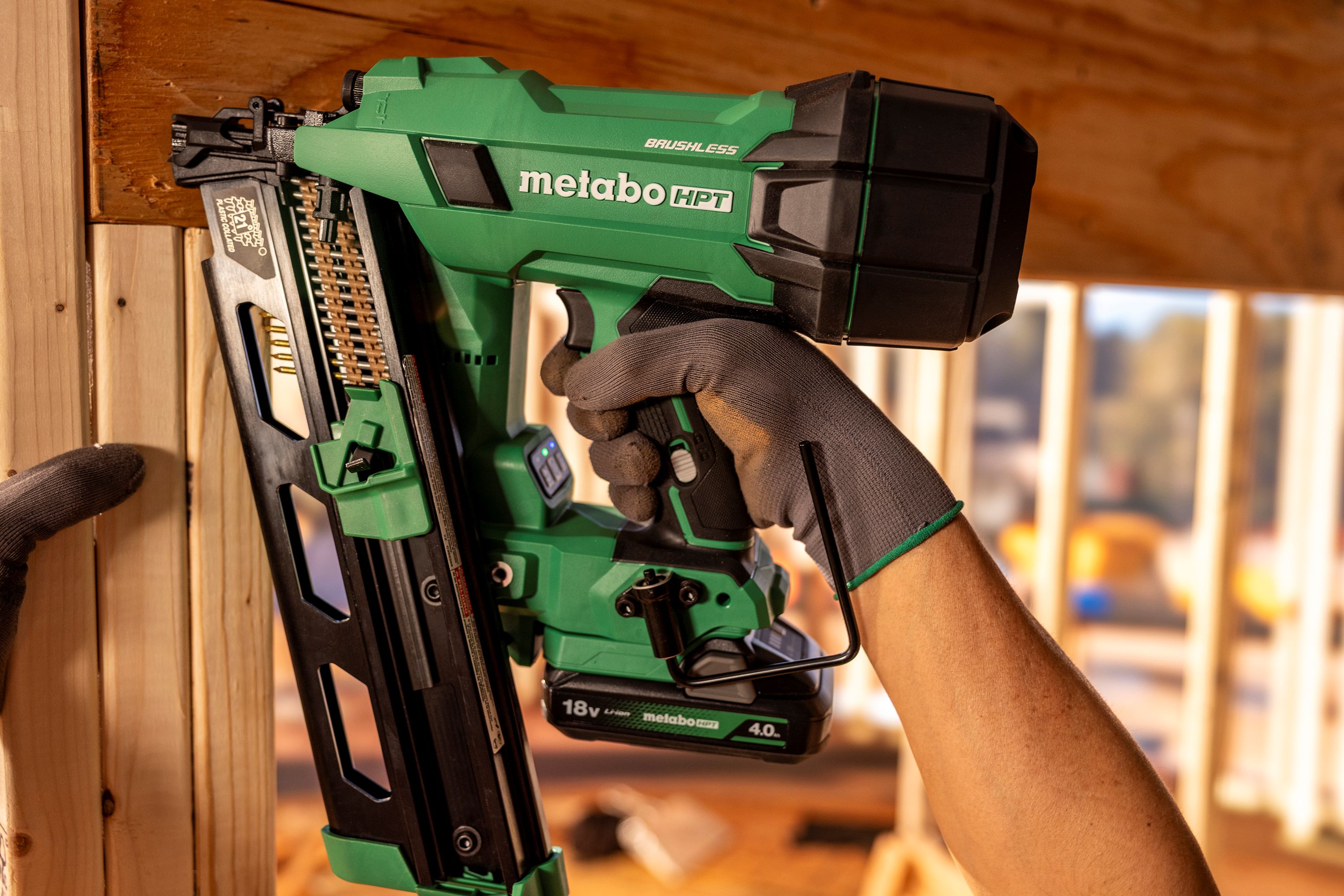 |
| The NR1838DKA is an integral part of Metabo HPT’s expanding MultiVolt System of 18-Volt and 36-Volt power tools. The dual compatiblity provides more power and flexibility among tools. |
METABO HPT
With labor shortages, cost pressure, and tighter schedules still shaping 2026, contractors are putting more value on tools that reduce setup time, improve mobility, and keep crews productive.
“For distributors, the opportunity is not choosing sides between pneumatic and cordless, it is helping customers use each where it creates the most value,” says Mitch Kumakura, senior product manager, Metabo HPT. “Nailers and staplers are no longer judged only on whether they can drive a fastener; they are judged on whether they help the job move faster.”
Instead of treating the category as simply cordless versus pneumatic, he says distributors can create more value by helping their customers choose the right fastening system for the application.
Pneumatic tools still matter where lighter tool weight, lower tool cost, and long-duration productivity are critical. Conversely, he says cordless tools increasingly shine where mobility, setup time, and reduced jobsite disruption matter most.
“At Metabo HPT, we believe the most productive conversation starts with the workflow,” Kumakura says. “That is especially true in interior work, remodeling, and multi-family jobs where crews move room-to-room and floor-to-floor and want to start working the moment they arrive.”
As contractors continue to put more value on mobility and faster setup, and manufacturers continue to advance battery, motor, and electronic control technologies, cordless nailers and staplers will continue to gain market share.
Kumakura says there are three common misconceptions about cordless nailers that continue to slow adoption.
First, cordless nailers do not offer enough power for professional work. Second is that they are heavy, bulky, and uncomfortable to use, and third is that they are mainly for light-duty or punch-list tasks.
“Those ideas reflect older generations of cordless tools more than the current reality,” he says. “Improvements in drive systems, ergonomics, and runtime are expanding where cordless fastening makes practical sense.”
Kumakura acknowledges that pneumatic nailers remain highly relevant for many applications based on their simple construction, lighter in-hand weight, and strong repetitive-use productivity.
“The market is not moving toward a cordless-only future; it is moving toward smarter application-based tool selection,” he says.
Contractors are looking at usability, seeking tools with a strong driving performance, fast response, better balance, and a more comfortable experience over the course of the day.
“For Metabo HPT, that means translating fastening experience into practical user value, tools designed for low maintenance, no ramp-up time in key cordless models, and performance characteristics that feel familiar to pneumatic users,” Kumakura says.
Over the next one to three years, the company’s priority is to expand the practical value of cordless fastening without losing sight of the significance of pneumatic tools.
“We want contractors and distributors to have a full fastening portfolio and the confidence to choose the best solution for each job,” he says. “Across our cordless lineup, the focus is the same: more mobility, less setup, and performance that fits the way contractors actually work.”
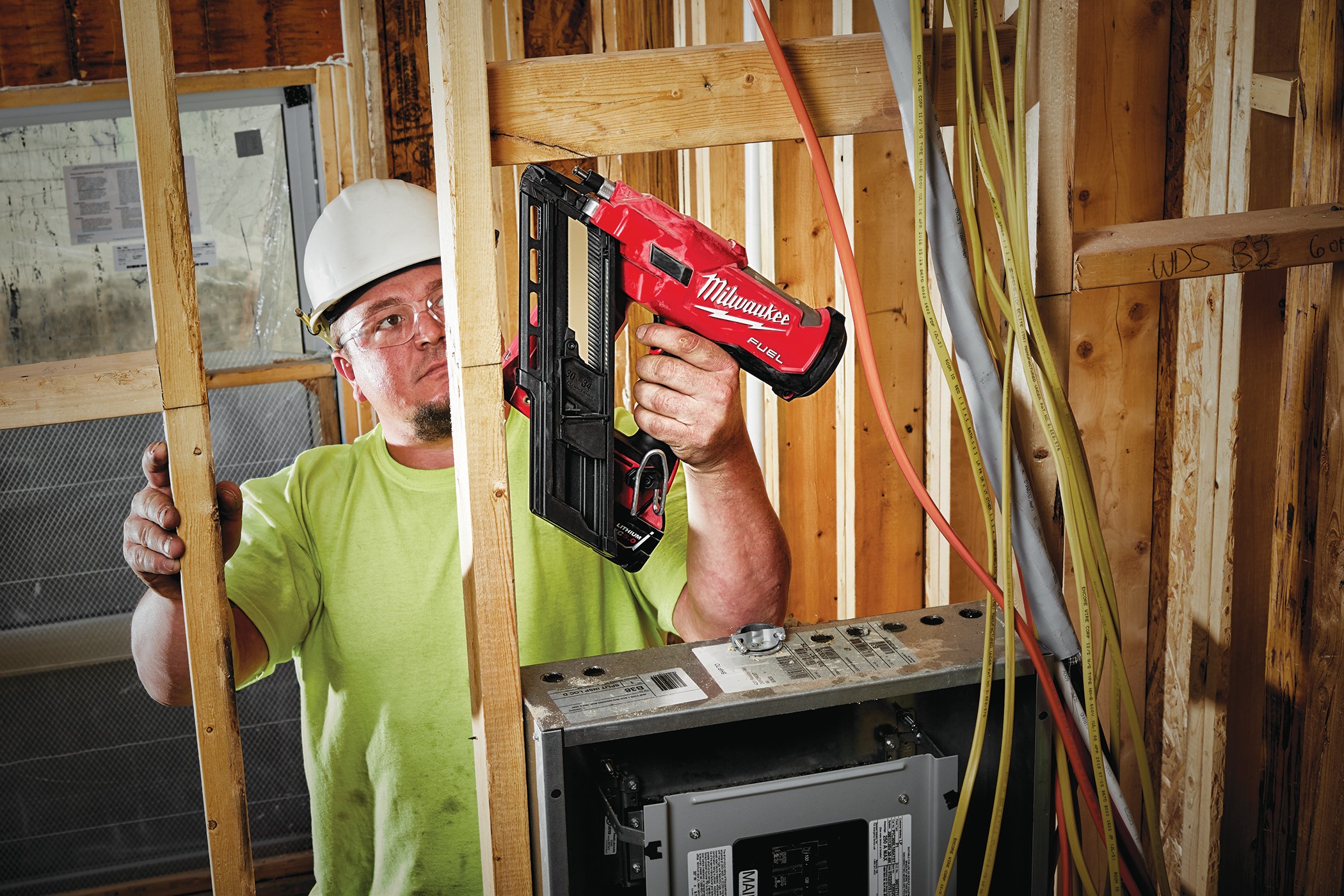 |
| Compared to a hammer, the M18 FUEL Duplex Nailer performs seven times faster while providing a safer and less fatiguing solution that can sink up to 800 nails per charge. |
MILWAUKEE TOOL
In an environment with ongoing labor shortages and increasingly compressed project timelines, contractors are looking for solutions that minimize downtime, reduce jobsite complexity, and allow them to adapt quickly as conditions change.
“Tool selection plays an important role in helping professionals mitigate these pressures,” says Bryan Brunner, senior product manager at Milwaukee Tool. “Distributors should expect flexibility, reliability, and jobsite-ready innovation to be key drivers in purchasing decisions.”
Demand for tools that operate more quietly, improve safety, and offer true portability continues to increase.
Solutions that deliver professional performance without the constraints of cords, hoses, or compressors are becoming essential.
Brunner says the outlook for cordless nailers and staplers remains strong and continues to accelerate as advancements in lithium-ion battery technology, nitrogen gas spring drive systems, and smart electronic controls have significantly narrowed, and in many cases eliminated, the performance gap between cordless and pneumatic tools.
“There is also an increased emphasis on user-driven innovation,” he says. “Features informed directly by jobsite feedback, such as zero ramp-up time, tool-free adjustments, and simplified controls, help streamline productivity while enhancing safety and usability.”
Contractors hesitant on cordless nailers often are under the common misconception that the speed or driver power does not match that of pneumatic systems.
While this was once true, today’s platforms, such as Milwaukee Tool’s M18 FUEL, equal or surpass the performance levels of a pneumatic tool in many applications.
“This includes rapid firing rates, consistent depth control, and features like tool-free jam clearance that professionals expect,” he says. “Professionals can now achieve consistent depth of drive, rapid firing capabilities, and all-day productivity without compressors or hoses.”
Cordless nailers are transitioning from being supplemental tools to primary solutions across framing, finishing, and trim applications.
Pneumatic systems require ongoing upkeep of compressors, hoses, and fittings, which can introduce downtime and added cost.
“Cordless nailers significantly reduce these maintenance demands, enabling professionals to stay focused on productivity rather than equipment management,” Brunner says, noting that distributors should prioritize solutions that simplify workflows without compromising results.
Equally important to the simplification of workflow is total system integration. Tradespeople value platforms that integrate multiple tools on a single battery system.
“A unified ecosystem reduces logistical complexity, lowers total cost of ownership, and supports long-term efficiency,” Brunner says. “Distributors that lead with system-driven solutions are better positioned to deliver performance, compatibility, and confidence to their customers.”
Several key trends continue to shape the evolution of cordless nailers and staplers, such as the advances in battery platforms delivering longer runtimes and faster charging, nitogren gas spring drive technology that provides pneumatic- equivalent power, and smart electronics and firing modes supporting precision and speeds.
Milwaukee Tool’s strategic focus is to continue driving cordless innovation while expanding system compatibility to help professionals fully transition away from compressors and hoses.
“By continuing to invest in cutting-edge technologies and maintaining a system-first approach, Milwaukee Tool remains focused on delivering solutions that increase productivity, improve safety, and reduce jobsite complexity,” Brunner says.
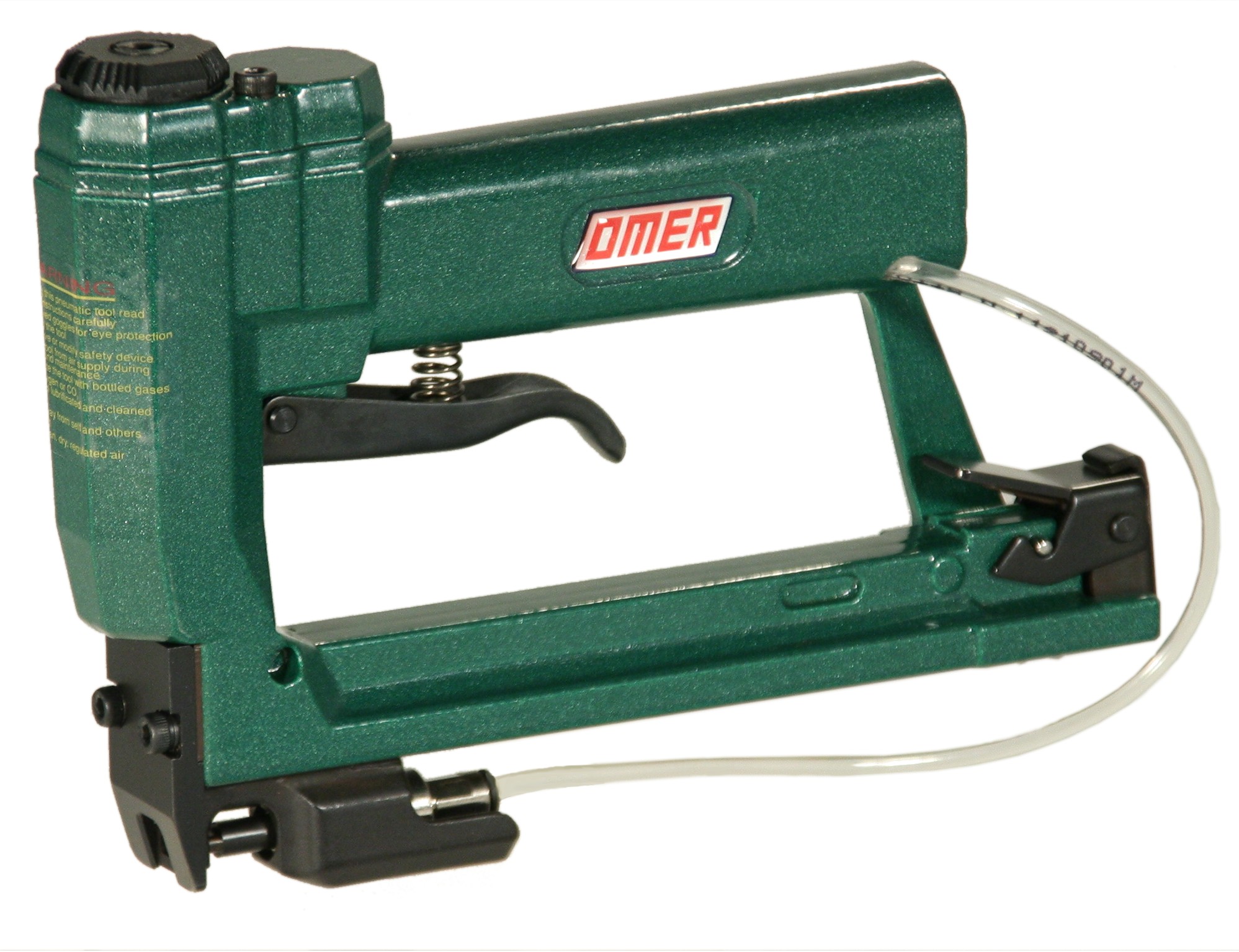 |
| Based in Italy, Omer Tools produces durable professional fastening tools and systems for high production manufacturing and precision woodworking applications. |
OMER TOOLS
Many nailer and stapler manufacturers focus on core construction and DIY applications.
With over 50 years of experience, Omer Tools has consistently developed products for a much broader spectrum of applications, including specialized and niche markets.
“The Omer range includes an extensive selection of tools, from pinners and bradders to finish and specialty nailers, designed to meet diverse professional needs across multiple industries,” says Matteo Salamon, director of sales at Omer Tools.
He says Omer Tools represents Italy’s long-standing tradition of engineering refined yet highly durable fastening equipment. Each product is made with a care for detail, as well as attention to design and function.
“Our internal design team thoughtfully and skillfully considers every detail when designing a tool,” Salamon says. “As a result, our pneumatic tools are both modern and compact yet powerful and functional.”
Every component of an Omer product is the consummation of a thorough study. The tools are forged from a light-weight alloy, resulting in long-lasting durability in a wide range of applications.
Salamon says the company’s philosophy extends to its fasteners as well.
Omer offers a comprehensive assortment of staples, pins, brads, nails, and specialty items, available in various materials such as galvanized steel, stainless steel, and aluminum.
“A wide choice of point configurations further enhances performance across different applications,” he says. “We invite you to discover the full potential of Omer, where innovation, versatility, and application-driven design come together to deliver solutions that go far beyond expectations.”
LEARN MORE
This article originally appeared in the June/July 2026 issue of Contractor Supply magazine. Copyright, 2026 Direct Business Media.

CONTRACTOR SUPPLY MAGAZINE
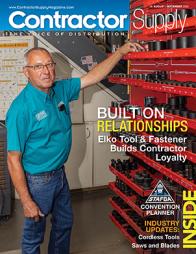
The August/September 2026 issue of Contractor Supply magazine is here!
In our cover story, Built on Relationships, Elko Tool & Fastener of Elko, Nevada has found success in the mining market by offering good customer service.
Also in this issue are Industry Updates.
This digital edition, sponsored by BECK AMERICA Inc., is fully searchable and contains live links to every advertiser and new product listing. Click away!
| Read the Articles Read the Digital Edition |