



 |
Every distributor knows the feeling: you just locked in what looks like a great freight rate, and two weeks later a shipment arrives late, a contractor is waiting on job-site material, and your customer is on the phone. The rate looked good on paper. The execution did not hold up.
For construction tool and equipment distributors, this scenario plays out more often than it should. The instinct is to keep chasing lower rates.
The smarter move is to fix how you manage the carriers and routing rules already in place. A well-structured freight management program starts with that discipline, not with the next rate negotiation.
The numbers make the case clearly. According to a 2024 study of transportation decision-makers, shippers reported an average LTL damage rate of 1.94% in 2023, at an average claims cost of $3,777 per shipment.
Larger shippers faced up to $6.3 million annually in claims tied to damaged, lost, and late freight. For construction and trade distributors specifically, those numbers hit harder because a delayed or damaged shipment does not just mean a credit memo. It means a contractor sitting idle on a job site.
RATE SHOPPING HAS LIMITS
Rate shopping is not without value. Getting competitive pricing from your carriers matters, especially when you are running on tighter margins than the big-box players. But rate shopping is a one-time action. You negotiate, you save, and then the rate sits there until the next renewal cycle.
Routing guide management, by contrast, is an ongoing discipline.
It is the system that determines which carrier handles which lane, under what conditions, and in what priority order.
When that system is well-maintained, your best rates and most reliable carriers get used consistently. When it is neglected, your team defaults to whoever is convenient, bypass rules pile up, and you end up paying more than you should while also getting worse service.
Think about what you ship: drills, saws, compressors, hand tools, safety gear, and heavy equipment parts. Some of it is high value. Some of it is time-sensitive because a trade contractor cannot work without it.
A rate that looks great on a spreadsheet does not mean much if the carrier consistently misses delivery windows or damages freight.
A ROUTING GUIDE
A routing guide is a set of decision rules for your outbound freight. It tells your shipping team which carrier to use first for a given lane or shipment type, who to fall back on if that carrier is unavailable, and when to escalate to spot pricing.
Done right, it acts like a playbook that removes guesswork and keeps your operation consistent regardless of who is covering the dock that day.
For smaller distributors, the routing guide is often informal. It lives in someone’s head, or in a shared spreadsheet that stopped getting updated six months ago.
That works fine until it doesn’t, and when it breaks down, the costs are real: accessorial charges from carriers that should have been avoided, missed service commitments to customers, and unhappy contractors who have plenty of other supplier options.
When routing discipline is in place, the results show up in the data. FreightWaves market data tracking tender acceptance and routing behavior shows first tender acceptance rates holding at 93%, with routing compliance near record highs at 94%.
Those numbers reflect what happens when shippers put structure around carrier selection. The distributors not hitting those benchmarks are typically the ones running on informal or outdated guides.
A GUIDE BREAK DOWN
There are a few common failure points worth understanding.
Carrier compliance drift is the first. Over time, the preferred carriers in your guide stop being used as intended. Maybe a carrier raised rates mid-contract. Maybe a dispatcher developed a habit of calling a different carrier because it was easier. Either way, your routing guide no longer reflects how freight is moving, and you lose visibility into whether you are getting the value you negotiated.
Lane coverage gaps are another problem. If your guide does not account for every lane you ship regularly, your team fills in the blanks on their own. That often means spot freight at higher rates or using a carrier that is not well-suited for that specific corridor.
Outdated service tier assignments cause problems too. The carrier that was your best option for a regional lane two years ago may have lost capacity or changed their network. If your routing guide still lists them as primary, you are setting up service failures before a shipment even leaves the dock.
TIGHTEN YOUR GUIDE
You do not need a large logistics team or expensive software to run a tighter routing guide. Most distributors can make meaningful improvements with a few focused changes.
Start by auditing where freight is going versus where your guide says it should go. Pull three to six months of shipping data and look at carrier usage by lane. You will find patterns: certain lanes where the guide is being bypassed regularly, or carriers being used for freight they are not well-suited to handle.
Next, review carrier performance alongside rate data. A carrier that is 5% cheaper but misses delivery windows 10% more often is not a good trade. For construction and trade customers especially, on-time delivery is not optional.
Research on building materials distributors highlights that even conservative analysis shows a single late load can cost a business tens of thousands of dollars once you account for idle labor, emergency reorders, and customer relationship damage.
A missed delivery can push back an entire job, which reflects on your business, not the carrier.
Build in a regular review cadence. Quarterly is a reasonable starting point for most distributors.
Markets shift, carriers change their networks, and your own shipping patterns evolve as you win new accounts or expand into new regions. A routing guide that is not reviewed regularly is one that is quietly working against you.
BROADER PERFORMANCE
Routing guide management is one piece of a larger operational picture. When it is working well, it connects directly to better inventory positioning, more predictable lead times, and stronger relationships with your downstream customers.
These are the building blocks of end-to-end freight and logistics performance, and for distributors competing against larger players, that operational consistency is a real differentiator.
Small and mid-size distributors often assume that advanced logistics practices are out of reach without a dedicated supply chain team. That is less true than it used to be.
The tools and frameworks that once required enterprise-level investment are increasingly accessible, and the fundamentals, like a well-maintained routing guide, have always been within reach. They just require the discipline to maintain them.
ONE TOOL AMONG MANY
None of this means you should stop negotiating freight rates. Competitive rates matter and you should pursue them.
The point is that rate shopping without routing guide discipline is like buying a quality tool and never maintaining it. You get some of the value upfront, then lose it gradually through poor execution.
The distributors who consistently win on logistics do both. They negotiate competitive rates and then build the operational structure to make sure those rates, and those carriers are being used correctly. That combination, rate discipline plus routing discipline, is where the real leverage is.
For construction tool and equipment distributors, freight is not just a cost line. It is the last mile of your customer promise. Getting it right, consistently, is worth more than any single rate win.
Thomas Harris is the founder and CEO of Alpha Zero Logistics, where he leads the company’s vision of becoming the most transparent and trusted logistics partner for companies looking to scale. With over 33 years of experience engineering logistics programs for industry leaders, he brings deep expertise across aerospace, automotive, energy, manufacturing, and infrastructure markets.
This article originally appeared in the June/July 2026 issue of Contractor Supply magazine. Copyright, 2026 Direct Business Media.

CONTRACTOR SUPPLY MAGAZINE


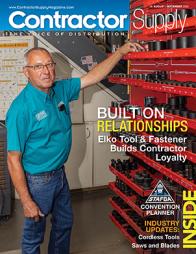
The August/September 2026 issue of Contractor Supply magazine is here!
In our cover story, Built on Relationships, Elko Tool & Fastener of Elko, Nevada has found success in the mining market by offering good customer service.
Also in this issue are Industry Updates.
This digital edition, sponsored by BECK AMERICA Inc., is fully searchable and contains live links to every advertiser and new product listing. Click away!
| Read the Articles Read the Digital Edition |