


DEWALT Study Shows Gap Between AI Training and Industry Needs
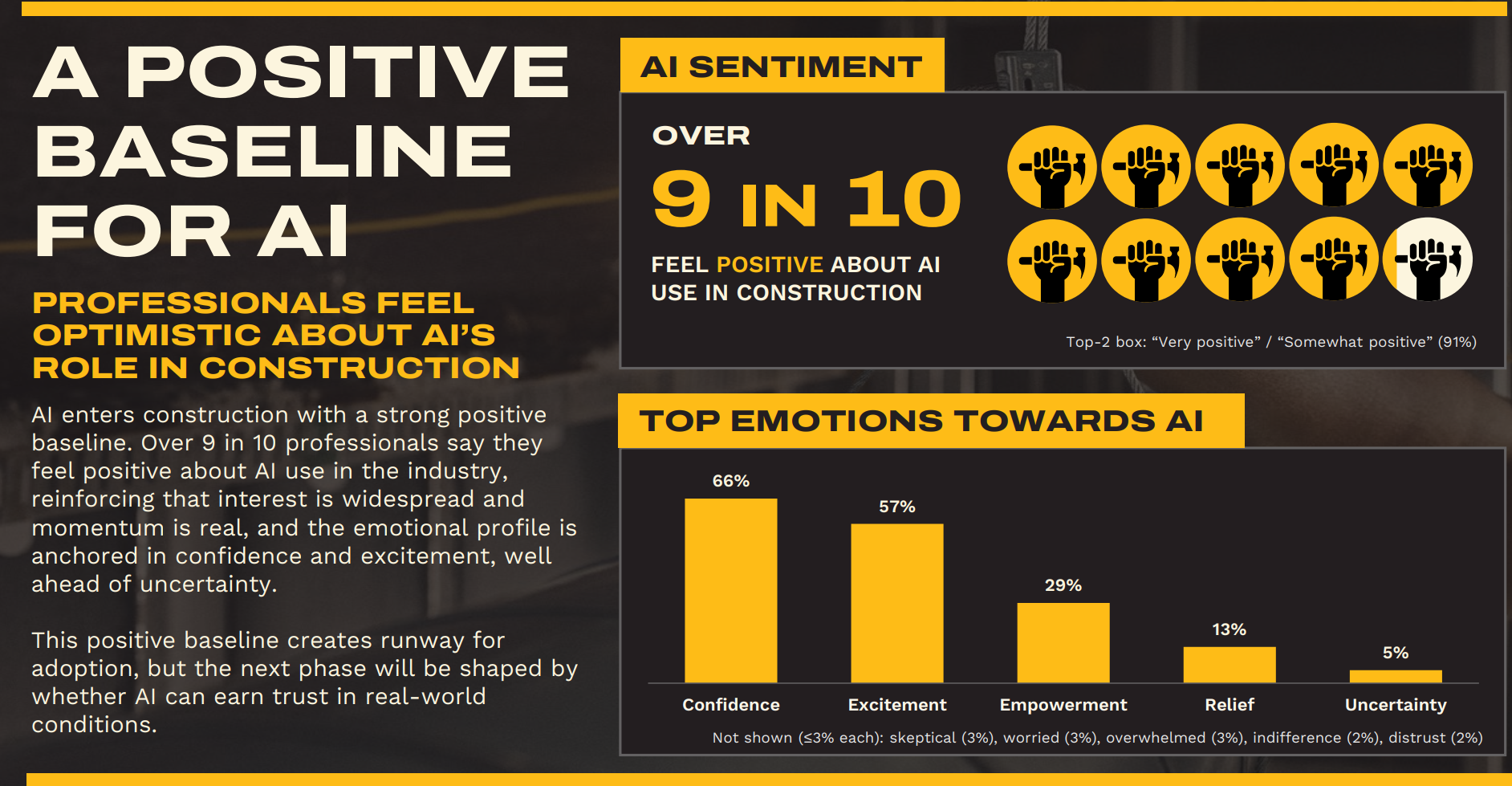
As AI rapidly transforms industries and becomes an essential jobsite tool for construction and industrial businesses, a new national study from DEWALT reveals an emerging disconnect.
 |
The construction workforce is eager for AI, but lacks the hands-on training needed to unlock its full potential.
DEWALT’s AI in the Trades study surveyed construction professionals across the globe.
In the U.S., 90% of construction professionals believe AI will be indispensable within five years, yet only 8% currently use AI on the job.
The primary barrier to using AI cited by professionals is a lack of formal, job-relevant training.
An overwhelming 87% of respondents say AI education must be embedded in trade schools and technical programs, while 59% expressed a need for hands-on training directly tied to real construction tasks.
“Tradespeople are the backbone of our industry, and their hands-on expertise is what brings every project to life,” said Bill Beck, president, tools and outdoors, Stanley Black & Decker. “As jobsites become increasingly complex and technology-driven, the need for practical AI training has never been more important.”
He said DEWALT’s research shows that trade professionals are eager to develop and apply AI skills that will enhance their effectiveness and adaptability on the jobsite, however, too many still lack access to this essential training.
“At DEWALT, we believe that empowering our workforce with AI education is not just about keeping pace with technology it’s about equipping tradespeople with the tools and knowledge they need to solve real-world challenges, drive productivity, and lead the industry forward,” Beck said.
Per the survey, 88% respondents expect adoption to increase over the next year. Likewise, 83% say AI will be standard within three years and 90% believe AI will be indispensable within five years.
While belief in AI’s potential is strong, everyday use is limited with only 8% indicating that AI is currently part of day-to-day work and 37% are piloting and researching use of AI.
Jobsite workflow is the primary benefit of AI for early adopters. The top three benefits cited in the survey were increased productivity, cost savings and improved quality control, with each accounting for about 35% of respondents.
The survey found that 46% of respondents reported exploring AI in site operations and monitoring. The same percentage indicated that AI was being leveraged in the planning and design phases of projects. Also, 41% said they are using AI to help with estimation, procurement and supply chain processes.
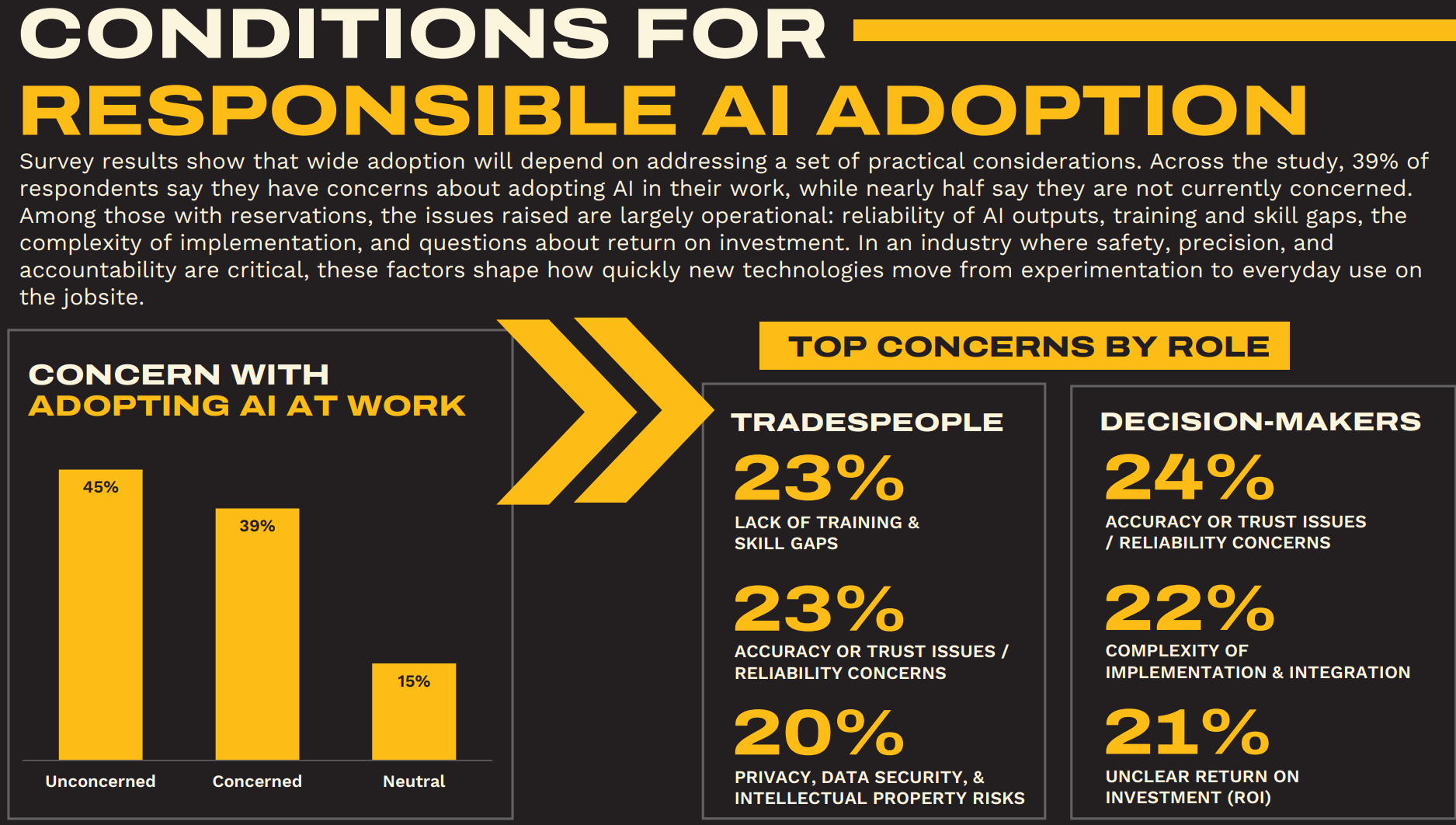
Beck noted that while 86% of construction professionals expressed feeling somewhat or very prepared to work with AI, most cited fragmented, informal learning as a barrier.
Currently, around 40% of tradespeople rely heavily on self-directed resources such as YouTube, online platforms like Coursera or video tutorials for AI education.
 |
To begin addressing the AI training gap highlighted by these findings, DEWALT is launching a pilot program with Associated Builders and Contractors Central Florida chapter’s Innovation and Technology Center.
The program’s goal is to deliver hands-on, jobsite-relevant AI training for the next generation of skilled trades professionals.
To provide access to AI education nationally, DEWALT has also committed $75,000 to ABC’s Trimmer Construction Education Fund toward Trimmer grants that include AI-related initiatives.
ABC chapters across the United States can apply for funding to initiate AI education programs and resources in their regions.
TCEF promotes a safe, skilled and sustainable workforce by providing funding for the direct support of training initiatives/programs or the expansion of a training facility that promotes careers in the merit shop construction industry.
“Education is vital to bringing fundamental AI skillsets to our future workforce,” said Matthew Abeles, ABC vice president of construction technology and innovation. “DEWALT’s commitment to providing AI resources to craft professionals through its donation to the Trimmer Construction Education Fund will be invaluable to improving safety and productivity on jobsites. ABC thanks DEWALT for its generosity and dedication to lifelong learning in the construction workforce.”
DEWALT is also supporting ABC’s “AI Toolbox Takeaways” webinar, a monthly training series that equips ABC’s 24,000 member companies with a roadmap to adopt AI and understand its impact on project design, robotics, and quality control.
These initiatives build on DEWALT’s pledge to help close the skilled labor gap, including its commitment to invest $60 million through its Grow the Trades program by 2030 to expand access
“AI is starting to reshape the future of construction, and we need to make sure tradespeople are ready for it,” Beck said. “These educational programs are about giving early-career workers and current pros access to the tools and skills that will matter on tomorrow’s jobsites.”
He said DEWALT’s goal is to help make AI practical, useful, and accessible for the people doing the work every day.
“We are committed to standing alongside trades professionals to ensure they have every opportunity to succeed in the evolving landscape of construction,” Beck said.

CONTRACTOR SUPPLY MAGAZINE



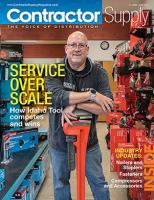

The August/September 2026 issue of Contractor Supply magazine is here!
In our cover story, Built on Relationships, Elko Tool & Fastener of Elko, Nevada has found success in the mining market by offering good customer service.
Also in this issue are Industry Updates.
This digital edition, sponsored by BECK AMERICA Inc., is fully searchable and contains live links to every advertiser and new product listing. Click away!
| Read the Articles Read the Digital Edition |