





Construction Job openings increased by 14,000 in June
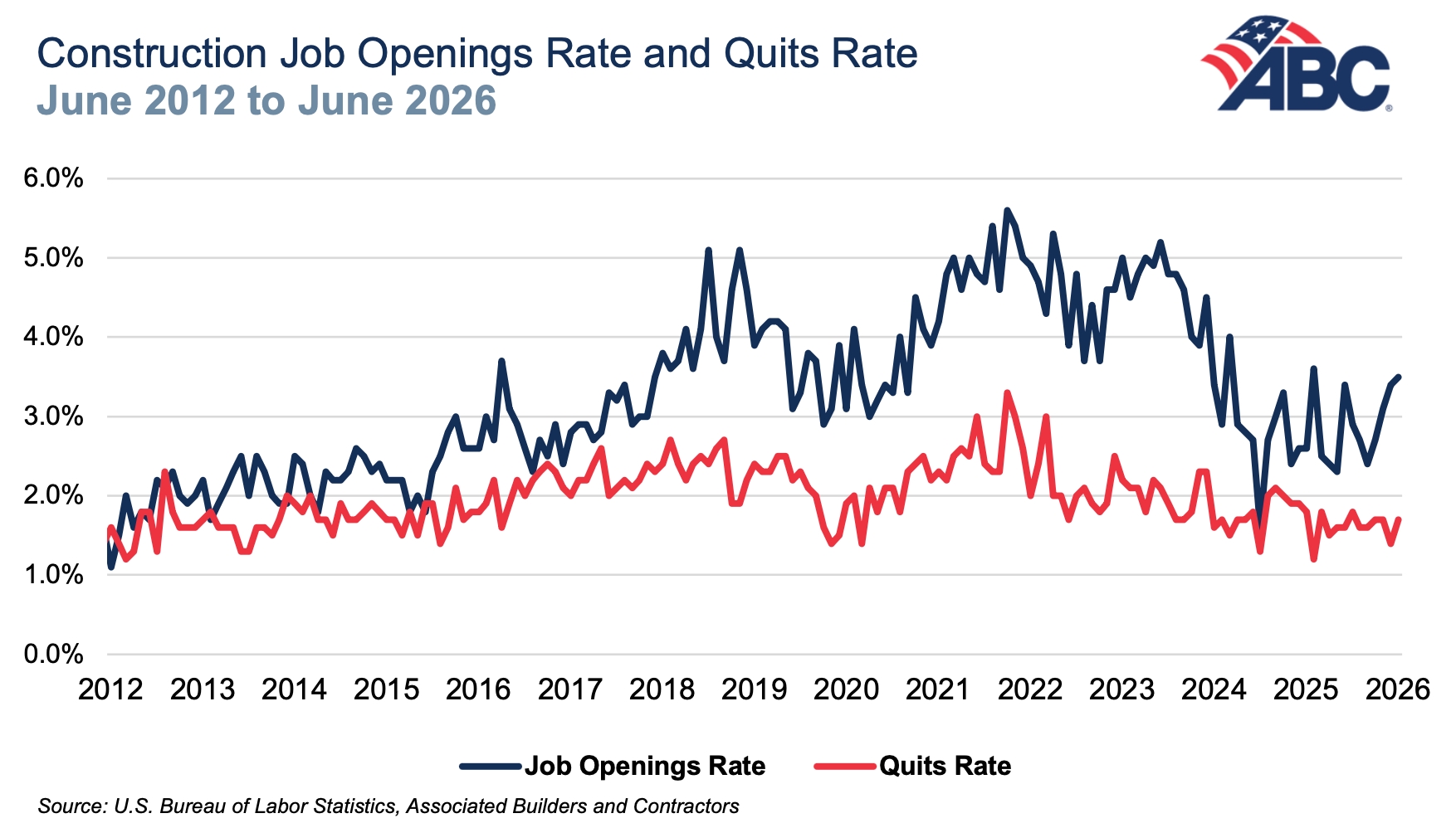
The construction industry recorded 305,000 job openings on the last day of June, according to analysis of federal data by the Associated Builders and Contractors.
 |
Per the report, the industry job openings increased by 14,000 last month and are up by 81,000 from the same time last year.
“One could take these figures at face value and conclude that construction is thriving and driving demand for workers higher,” said Anirban Basu, ABC chief economist.
He noted that ABC’s Construction Confidence Indicator shows that the average contractor expects rising revenues and employment over the next six months.
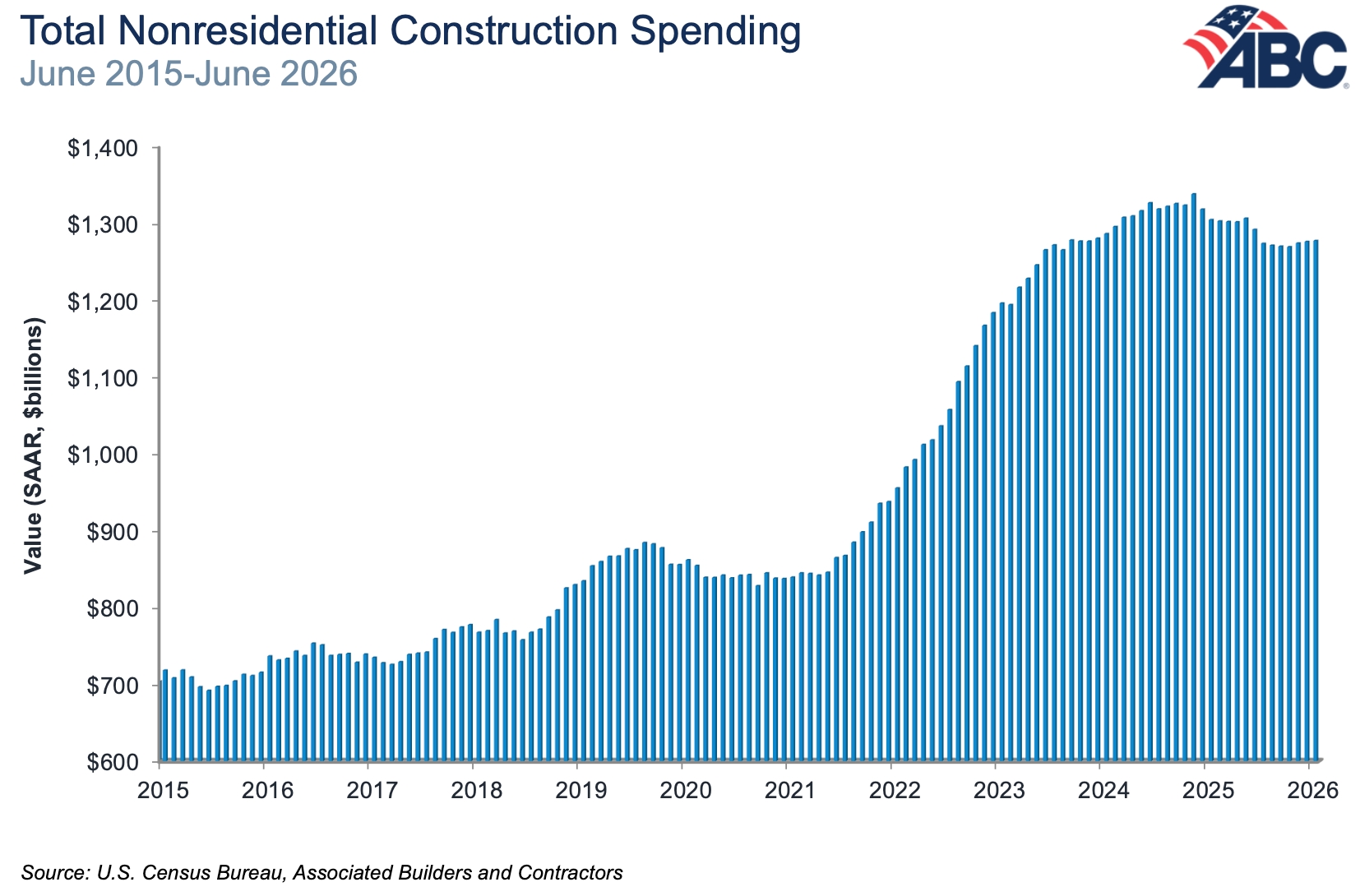
“June’s construction spending report indicates that overall residential and nonresidential construction spending continues to decline,” said Basu.
The reports states that national nonresidential construction spending rose 0.1% in June, totaling $1.277 trillion.
On a monthly basis, spending was up in 8 of 16 nonresidential subcategories. Private nonresidential construction spending ws down nearly 5% from a year ago.
Basu noted that through April 2025, private nonresidential construction spending ascended to $806.1 billion on a seasonally adjusted annual rate basis, an all-time high but has expanded only three times over the past 14 months.
Despite an ongoing data center construction boom, he said private nonresidential construction spending has declined to a seasonally adjusted annual rate of $745.3 billion since the April 2025 peak, which translates into a decline exceeding 7%.
Year over year, excluding data centers, private nonresidential construction spending fell 0.6% in June and is down 7.9% year over year.
 |
“Many contractors view a structural shortfall of skilled labor as their primary challenge because many highly experienced, productive workers are retiring,” said Basu. “It is conceivable that these workers are being replaced with less skilled and productive workers, thereby requiring a few workers to be replaced by many.”
Alternatively, he suggested the jobs data may not be capturing all that transpires.
“It may be that certain people who had been working in construction were doing so without proper documentation,” Basu said. “At least some of these workers are no longer available at jobsites, inducing faster hiring and expanding job openings as contractors work to replace them.”

CONTRACTOR SUPPLY MAGAZINE





The June/July 2026 issue of Contractor Supply magazine is here!
In our cover story, Service Over Scale, Idaho Tool in Nampa, Idaho follows a philosphy of immediacy, expertise, and advocacy through 40 years of change and success.
Also in this issue are Industry Updates.
This digital edition, sponsored by BECK AMERICA Inc., is fully searchable and contains live links to every advertiser and new product listing. Click away!
| Read the Articles Read the Digital Edition |