

Safety and PPE
From Head to Toe, Working Safely Can Still Be Comfortable
 |
From fall protection to gloves and eyewear, safety is one of the construction industry’s hottest categories. Modern designs and more comfortable materials can change worker’s mindsets from avoidance of PPE to clear preference. As new innovations continue to come forward, these manufacturers are looking to ensure workers arrive at the jobsite and get home safe after a full day of work. For contractors, this translates directly into productivity and peace of mind that OSHA will not shut them down or issue a substantial fine.
MILWAUKEE TOOL
The construction industry is heading into 2026 with a mix of economic, labor, and operational pressures that will shape what contractors expect from distributors.
Material costs and financing pressures continue to squeeze margins, and supply chain unpredictability still creates challenges around availability and lead times. Labor shortages remain a major constraint, pushing contractors to get more done with fewer, often less?experienced workers.
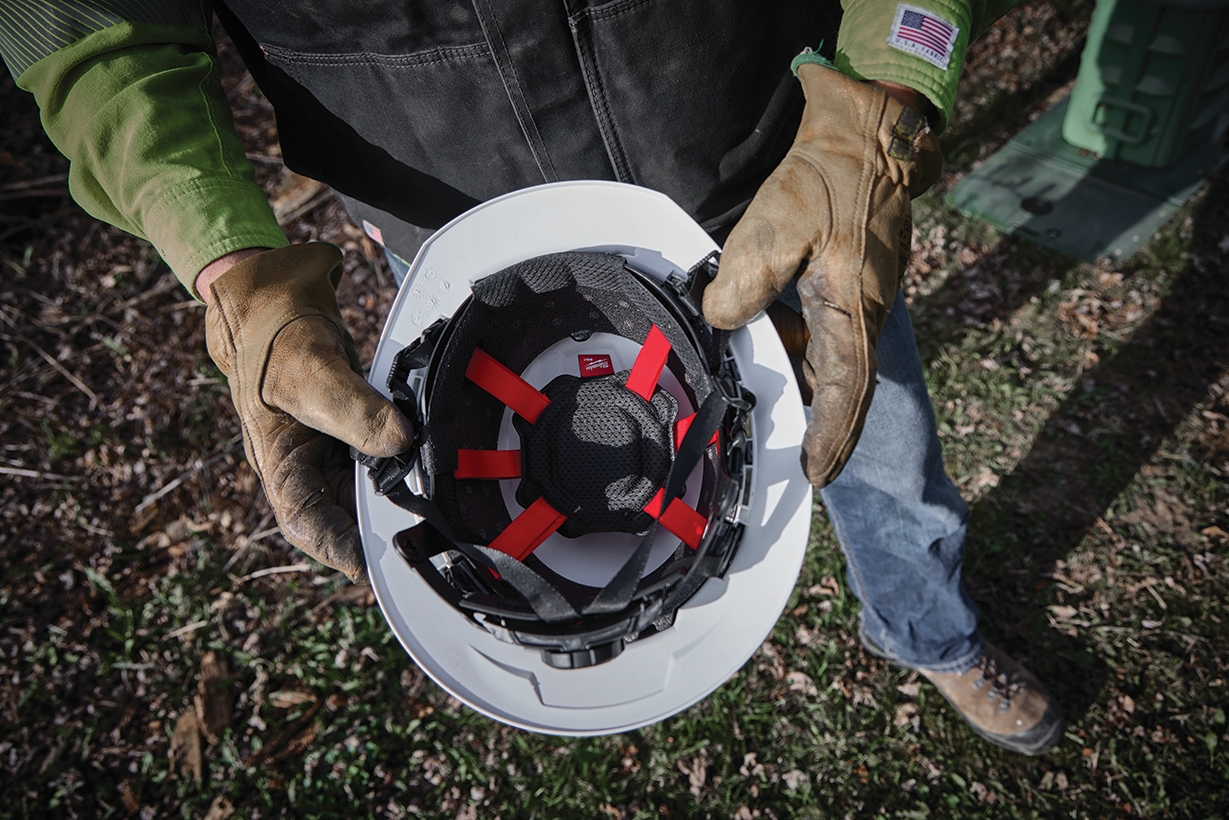 |
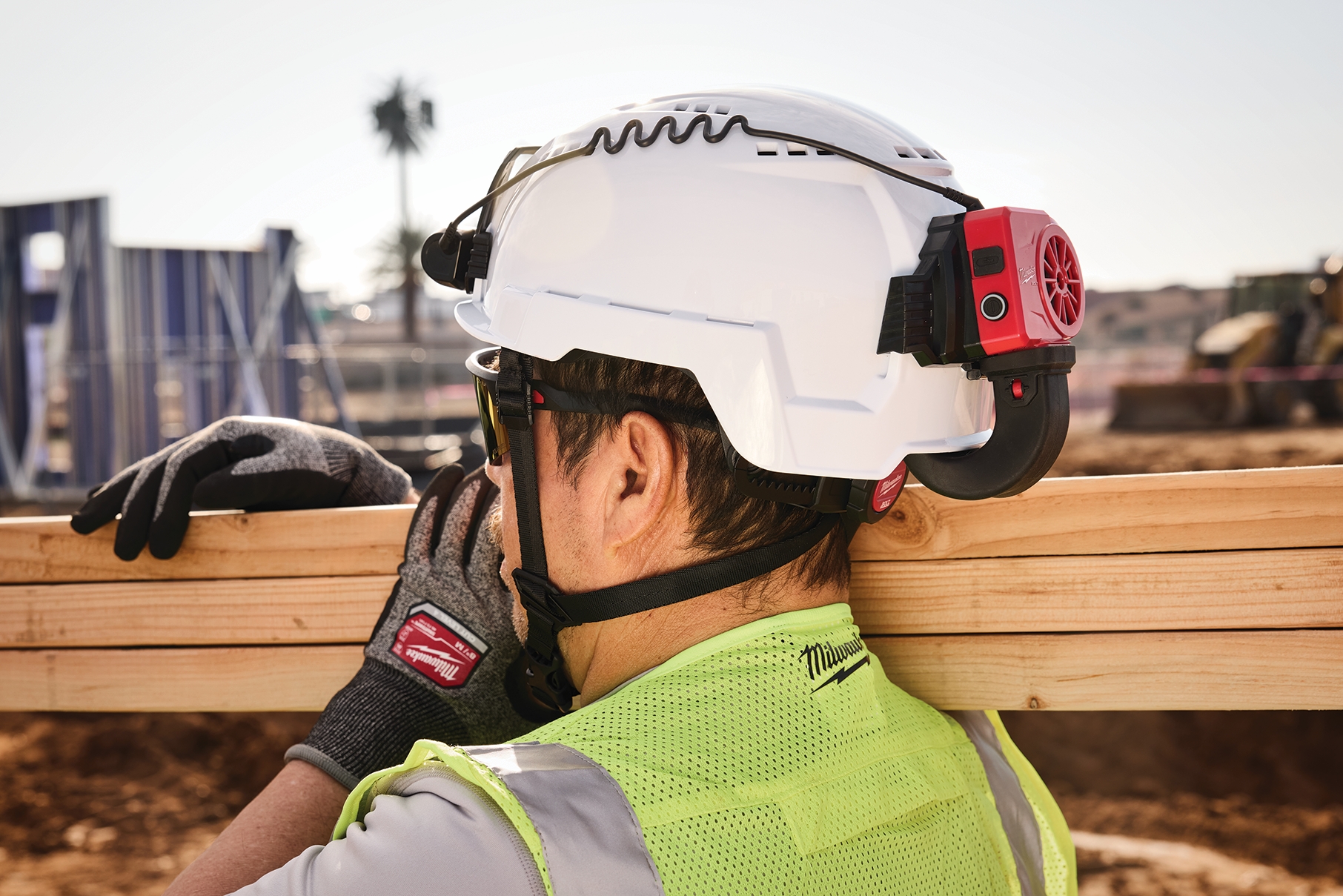
| Combating oblique impact forces from falls, trips, and slips on construction jobsites, Milwaukee Tool offers the BOLT Safety Helmet with IMPACT ARMOR liner for better protection. |
Kyle Anderson, group product manager over PPE at Milwaukee Tool, says those factors are increasing demand for products that boost efficiency, reduce downtime, and lower risk on the jobsite.
At the same time, expectations of safety on the jobsite are rising, even as jobsites become more dynamic and slips, trips, and falls continue to be among the leading causes of injuries among construction workers.
“As crews work faster and leaner, contractors are shifting toward Type 2 helmets that offer top, side, and off?axis impact protection without sacrificing comfort or productivity,” he says. “Many general contractors are also setting higher standards that go beyond minimum compliance, making product performance and education more important for distributors than ever.”
The outlook for head protection points to a growing shift to products that meet higher safety expectations and hold up to field conditions.
Anderson says manufacturers are prioritizing materials that improve cooling, reduce pressure points, and extend comfortable wear time, thus adding protection without adding bulk.
“Contractors consistently cite comfort as a top driver of whether PPE stays on during the task,” he says, noting that next?generation helmets are built around comfort and usability as core safety features, not afterthoughts.
To support contractors navigating tight budgets, leaner crews, and higher expectations of jobsite safety, Anderson says distributors should prioritize education and conversion support and understanding of the significance of fit, comfort, and retention performance.
“With younger crews and tighter margins, contractors need clear guidance on why Type 2 protection matters,” Anderson says. “Distributors should explain the difference between Type 1 and Type 2, especially protection against lateral/oblique impacts that occur with slips, trips, and dynamic movement.”
He suggests citing independent data as a reference point, such as Virginia Tech’s Helmet Rating Lab’s recent construction-helmet ratings using the oblique fall test that were released recently.
The ratings show that moving to Type 2 can reduce average fall?related concussion risk by 34% and skull?fracture risk by 65%, with top-rated safety helmets reducing risk even further.
Among the No. 1 rankings on the list is Milwaukee Tool’s BOLT Safety Helmet with IMPACT ARMOR liner. The helmet features padded suspension, a secure five?point chin strap, and ergonomic adjustment systems designed to support long wear on labor?intensive jobsites.
“Pointing customers to that research builds confidence and supports phased upgrade paths,” Anderson says.
In addition, he says distributors should prioritize helmets that balance weight, improve airflow, and feature secure, intuitive chin?strap systems.
A common misconception among contractors and their crews is that Type 1 helmets cover the real risks. “Incidents don’t only occur from falling objects; they’re from slips, side impacts, and off?axis hits, and that’s exactly where Type 2 matters,” Anderson says, noting that such upgrades are much more than just a matter of checking the “safety” box requirement.
He notes that today’s Type 2 helmets are lighter, cooler, and stay put better, meaning fewer adjustments and fewer compliance issues.
“Better head protection reduces downtime, prevents lost gear, and helps workers stay protected without extra steps,” he says.
Over the next several years, Anderson says Milwaukee Tool’s strategy centers on advancing jobsite head protection through solutions that combine real?world safety performance, all?day wearability, and system?level versatility.
“Future roadmaps will continue to be guided by structured voice?of?user inputs, ensuring that updates to fit systems, retention performance, and accessory integration reflect the real?world needs of diverse trades,” he says.
In addition, a key emphasis will be to track ANSI/ISEA updates and align solutions that meet or exceed those expectations.
“This forward?looking stance reduces compliance risk, avoids delays, and ensures crews are equipped for increasingly complex jobsite hazards,” Anderson says.
WERNER
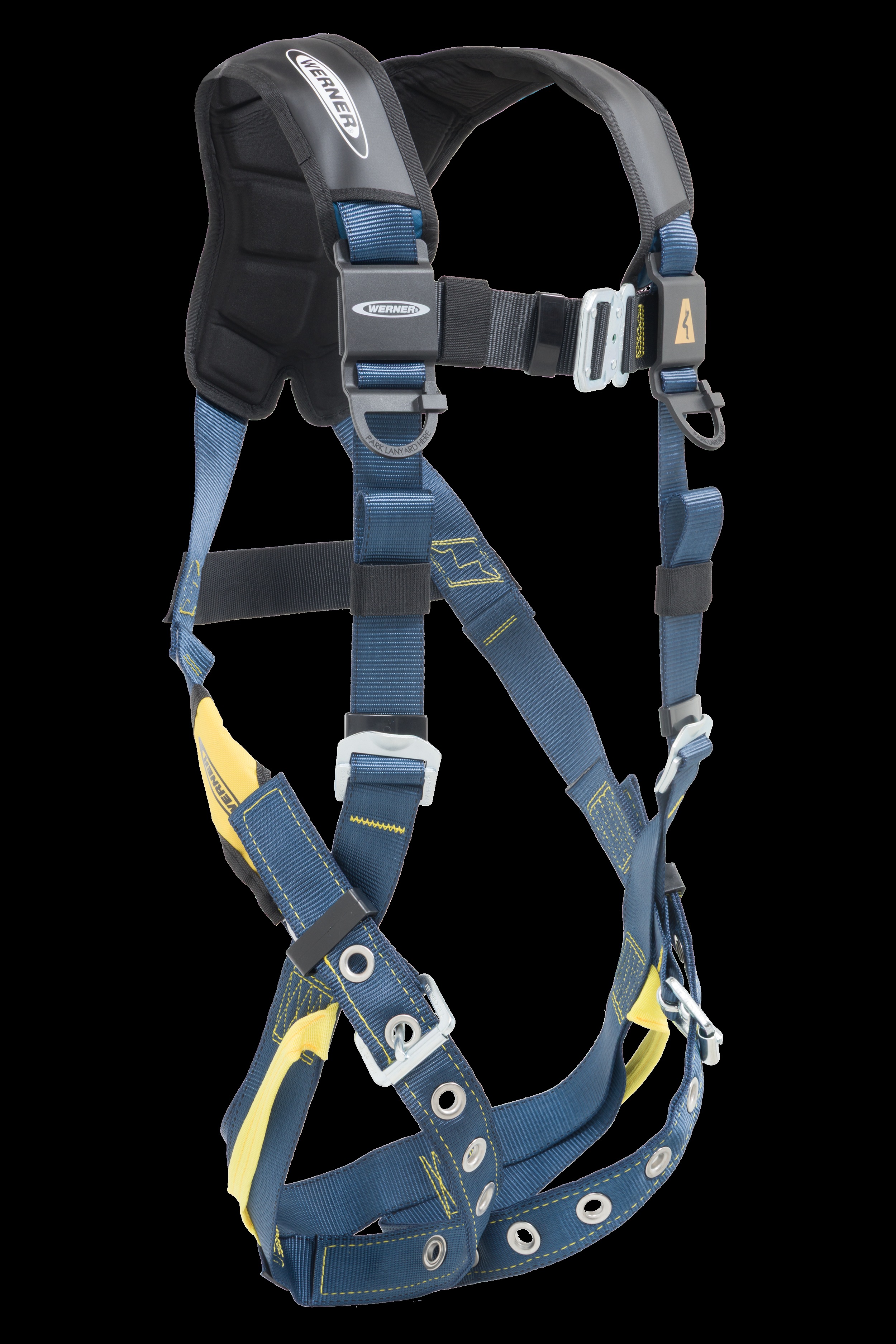 |
| With Werner’s LITEFIT Plus H312002XQP Standard Harness, users pull the Relief Handles to get into the Chair in the Air in the event of a fall arrest to reduce chance of suspension trauma. |
The shift toward ANSI Z359.14- 2021 Class 2 Self-Retracting Lifelines (SRL) is one of the main challenges the construction industry is facing.
More general contractor firms are mandating Class 2 SRLs for all MEWP work to account for edge contact risks, to eliminate the guesswork of whether a worker is anchored above or below the D-ring, and to increase energy capacity requirements.
Michael Cameron, technical service manager fall protection and pro safe access at Werner, says Class 2 SRLs have fundamentally changed how the construction industry views fall protection in Mobile Elevated Work Platforms (MEWPs).
ANSI Z359 Class 2 SRLs are increasingly specified to support ANSI compliance in MEWP applications under the ANSI/SAIA A92.22 Safe Use standard.
While ANSI A92.22 defines when fall protection is required, ANSI Z359.14-2021 defines which SRL class is appropriate based on the application and anchor location.
“Understanding the intersection of these high-performance lifelines and the specific physics of a MEWP is critical,” Cameron says. “Although MEWP applications may not be as severe as a foot-level unprotected edge, the potential for increased force and contact with guardrails, gates, hinges, or control panel covers has made Class 2 SRLs the preferred choice in MEWPs.”
Under the ANSI Z359.14-2021 update, Class 1 SRLs are not permitted for applications where the anchor is below the D-ring.
“Most MEWP anchor points are located at the floor or mid-rail, which is below the user’s dorsal D-ring,” Cameron says, noting that Class 2 SRL devices are engineered to handle the increased forces associated with lower to foot level tie-offs.
Some of the latest developments within fall protection relate to how the Class 2 SRLs are being engineered with specialized webbing and more specialized external energy absorbers to handle any edge risk found on job sites.
“Manufacturers are moving away from heavy steel housings to highimpact polymers like thermoplastics and using advanced synthetic fibers to create high-performance webbing instead of steel cable which helps with weight reduction and reduces fatigue,” Cameron says.
To add value, he encourages distributors to pivot from being just product sellers to compliance partners and help simplify the transition.
“Have MEWP kits that bundle a Class 2 SRL with a compatible harness,” he says. “Bundling these items ensures the user doesn’t mix-and-match incompatible components, which can lead to system failure.”
Bundling items helps remove decision fatigue for the customer.
Cameron says Werner’s priority over the next one to three years is providing comprehensive, ready-touse solutions that reduce the margin for error in the field.
For example, he said the Werner MEWP Kit K134010ML is a strategic pillar for MEWP safety because it addresses the entire system.
When it comes to MEWPs, Cameron says the greatest misconception surrounds the concept of travel restraint.
A true restraint system would not allow a worker to go over the guardrail and become suspended, keeping them inside the guarded platform.
“This means the connector (SRL or lanyard) must be shorter than the distance from the MEWP anchor to the upper edge of the guardrail,” Cameron says. “Like most fall protection applications, it’s very nuanced.”
However, connecting a lanyard or SRL to a lift anchor isn’t a restraint if the length allowed by the system is greater than the distance to the fall hazard.
Cameron says an ongoing trend on jobsites is the use of a “traveling lanyard” combined with a Class 2 SRL.
With that system, he says, when the lift is in motion, while it is travelling, the worker connects the travelling lanyard, hip to hip, and directly into the anchors below the control panel. Upon reaching the work area, the travelling lanyard is removed.
According to Cameron, the lanyard is usually an adjustable positioning lanyard, and the worker is connected so tightly that they can only move a few inches in any direction. The SRL remains connected to the back D-ring.
“Having both the traveling lanyard and a Class 2 SRL available in a MEWP kit is a complete solution,” he says.
GUARDIAN
The category of safety equipment and fall protection remains strong because working at height isn’t going away, and neither is the need to keep workers safe.
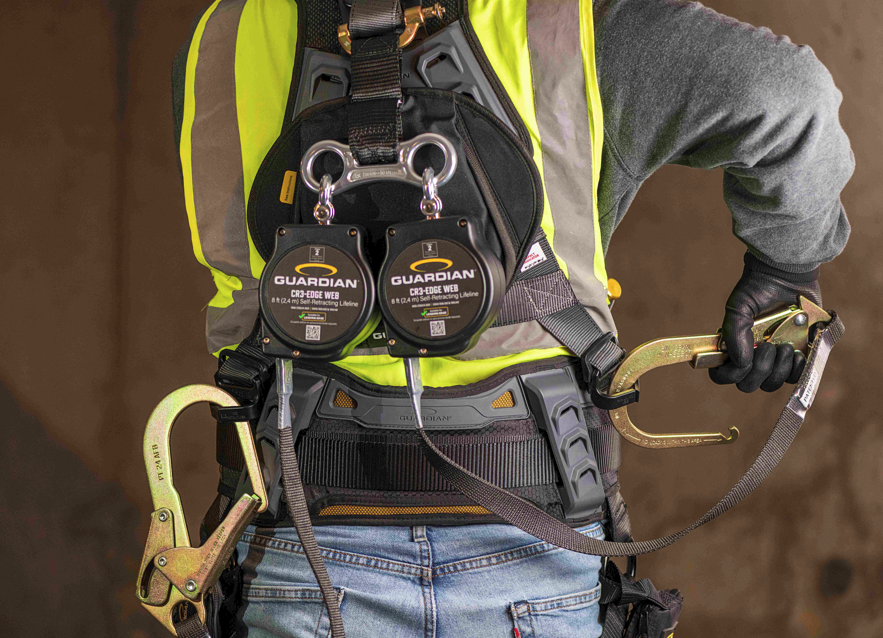 |
| The Defender harness line from Guardian features dual rear autoresetting lanyard keepers on both the front and back, keeping connectors out of the workers’ workspace. |
Falls continue to be a leading cause of jobsite fatalities, keeping fall protection a top safety priority.
“Contractors continue to prioritize reliable, compliant fall protection solutions, especially engineered systems that improve both safety and efficiency,” says Mel Moss, Guardian director of marketing.
She says a common misconception is that fall protection is just about equipment.
“Effective programs require planning, training, proper installation, inspection, and rescue readiness,” Moss says. “Compliance alone doesn’t guarantee safety, correct use and worker adoption are equally important.”
With tighter budgets, labor shortages, and ongoing regulatory pressure, many crews have workers with less experience working at height, making easy-to-use equipment, proper training, and strong distributor support important pieces of safety on the jobsite.
“Supply chains have improved, but reliable product availability is still critical to keeping projects moving,” Moss says.
She notes that customers are looking for more than products; they want partners, they want comprehensive solutions.
“Training support, compliance expertise, dependable inventory, and end-to-end support all help contractors work safer and smarter,” Moss says. “Distributors who take a consultative approach tend to build stronger, longer-term relationships.”
Within the industry, she says, there is more focus on engineered anchor systems, lighter and more comfortable PPE, as well as technology that helps track inspections and improve compliance.
In addition, she says there is a growing shift toward building fall protection plans into projects earlier instead of retrofitting solutions later. For Guardian, the focus is to simplify height safety.
“We want to make fall protection easier to use, easier to access, and more effective on the jobsite, which means continued innovation in harnesses, SRLs, anchors, lifeline systems, and training support, along with strong partnerships with distributors and contractors to help keep workers safe at height,” Moss says.
In 2026, Guardian is launching several new products to reinforce its general mission.
The CR3-Edge Web Self-Retracting Lifeline, is an eight-foot web leading edge. Traditionally, a leading edge is cable, which is heavier and does not always do well across rough, sharp surfaces.
Guardian’s new web lifeline is made from proprietary webbing blend similar to Kevlar. It is lighter and slides smoothly across multiple surfaces such as concrete, Type B roof decking and more.
Moss says the CR3-Edge Web SRL represents the next generation of where SRLs are going, with better materials.
Next, Moss says, is the new Defender harness range, which was released at World of Concrete 2026.
Like the Series line before it, the Defender line features three styles, the base Defender, the Defender Ultra and the Defender Ultra Plus.
She says the line is designed for light work all the way up to heavy duty work, from a lower price point to a higher price piont.
“We have a harness solution for you,” Moss says.
Among the features are accessory loops integrated into the shoulder pads, tool tether attachment points, DiaLock torso adjusters, dual rear autoresetting lanyard keepers and an integrated SRL attachment slot.
“Beyond individual products, we’ve developed the first connected digital ecosystem for height safety customers, distributors, and end users, called Guardian OS,” Moss says noting that tools like Where to Buy make locating and confirming product availability quick and easy, while Gaby AI serves as an always-on assistant for product recommendations.
In addition, Guardian offers a guardrail estimation tool that designs guardrail plans in minutes.
She says the system will soon have anchor and HLL selection tools, plus a customer portal for streamlined account management.
“With so much innovation rolling out this year, the future of height safety at Guardian has never looked brighter,” Moss says.
W.STEPS
The concept of telescopic ladders was unveiled by W.steps nearly 30 years ago in Sweden.
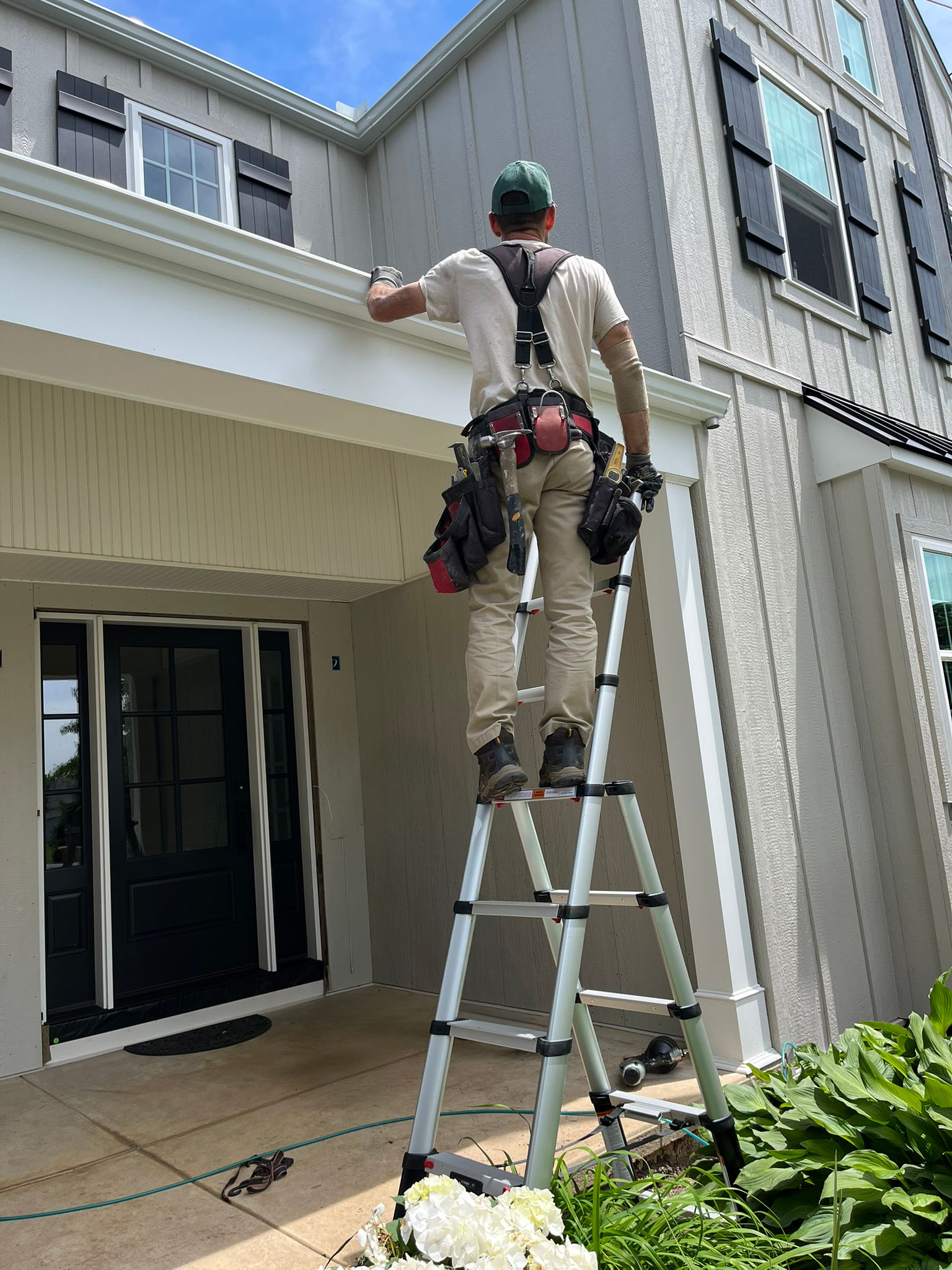 |
| Designed and manufactured with aircraft-grade aluminium, the telescopic PRIME Line ladders from W.steps are available in 9 1/2, 11 1/2, and 13 1/2 feet models. |
Johan Fräjdin, business director for W.steps, says manufacturers need to invest in automation to stay competitive in response to labor and supply issues.
He said ongoing logistical disruptions and fluctuating shipping costs are part of the challenge and one of the reasons why W.steps decided to invest in state-of-the-art automated ladder production in Sweden.
“Given the importance of safety and ergonomics, we truly believe that the construction industry will benefit from investing in high-quality products in the long run, even though those come at a slightly higher price,” Fräjdin says. “These are products manufactured under strict quality standards and in facilities that prioritize fair and safe working conditions. We never compromise on quality and encourage our customers to do the same.”
Based on technology and need, contractors and their crews are regularly pushed to operate and deliver at a faster pace. In conjunction with that speed, the demand for safety from both construction firms and industry regulations has increased.
“This calls for safer and more innovative access products,” Fräjdin says. “Today’s products must be designed to help workers perform their tasks more efficiently, while also ensuring they return home safely at the end of the workday.”
Fundamentally, he says, safe work is about choosing the right solution for the job.
With safety remaining a concern, Fräjdin expects an increased demand as companies invest in equipment that helps keep workers safe.
He notes that demand for professional access solutions, including ladders, generally follows the demand for residential (new construction and renovation) and commercial (plant and institutional) construction.
“The outlook for these sectors is positive, albeit subdued, due to the headwinds we’re facing,” Fräjdin says, adding that W.steps tries to consider every scenario for working at different heights when developing its products.
“When you buy a ladder from W.steps, there’s one thing you can be sure of: every fitting, every material, and every solution has been examined down to the finest detail and has been meticulously designed to guarantee your safety,” he says.
Despite history, many users remain skeptical about the safety and stability of telescopic ladders.
Fräjdin notes that while those issues may be real for cheaper products on the market, W.steps products demonstrate the safe and sturdy aspects of a telescopic ladder in a small package.
W.steps range of telescopic ladders were launched in North America two years ago. The core of the product offering is the PRIME telescopic leaning ladder and the COMBI telescopic stepladder.
“Both of these products are built on our patented triangular tube design that produces superior torsional rigidity, making the ladders stronger and more stable than traditional round tube telescopic ladders,” Fräjdin says.
With the telescopic function, the ladders can be extended to the precise height required and then easily collapsed for compact transport and storage. For greater versatility, the COMBI can be used as a standalone, A-frame, or leaning ladder.
“We continue to expand our product offerings by developing a range of smart accessories for our ladders as well,” Fräjdin says.
W.steps recently launched a backpack that allows users to carry a compacted ladder on their back.
In addition to holding the ladder, the backpack has a zippered front storage compartment with 16 pockets for screwdrivers, rules, and other essential tools, freeing up their hands to carry additional equipment.
The backpack can be left attached to the ladder while extending and climbing it, and the conveniently integrated tool pocket ensures that users have their tools readily available where they need them at the top of the ladder.
W.steps also offers a range of other accessories to ensure that the ladders can be set up safely and stably, such as adjustable safety feet, stabilizers, and top support.
LEARN MORE
This article originally appeared in the April/May 2026 issue of Contractor Supply magazine. Copyright, 2026 Direct Business Media.

CONTRACTOR SUPPLY MAGAZINE
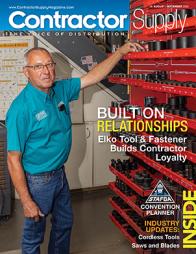
The August/September 2026 issue of Contractor Supply magazine is here!
In our cover story, Built on Relationships, Elko Tool & Fastener of Elko, Nevada has found success in the mining market by offering good customer service.
Also in this issue are Industry Updates.
This digital edition, sponsored by BECK AMERICA Inc., is fully searchable and contains live links to every advertiser and new product listing. Click away!
| Read the Articles Read the Digital Edition |