

 |
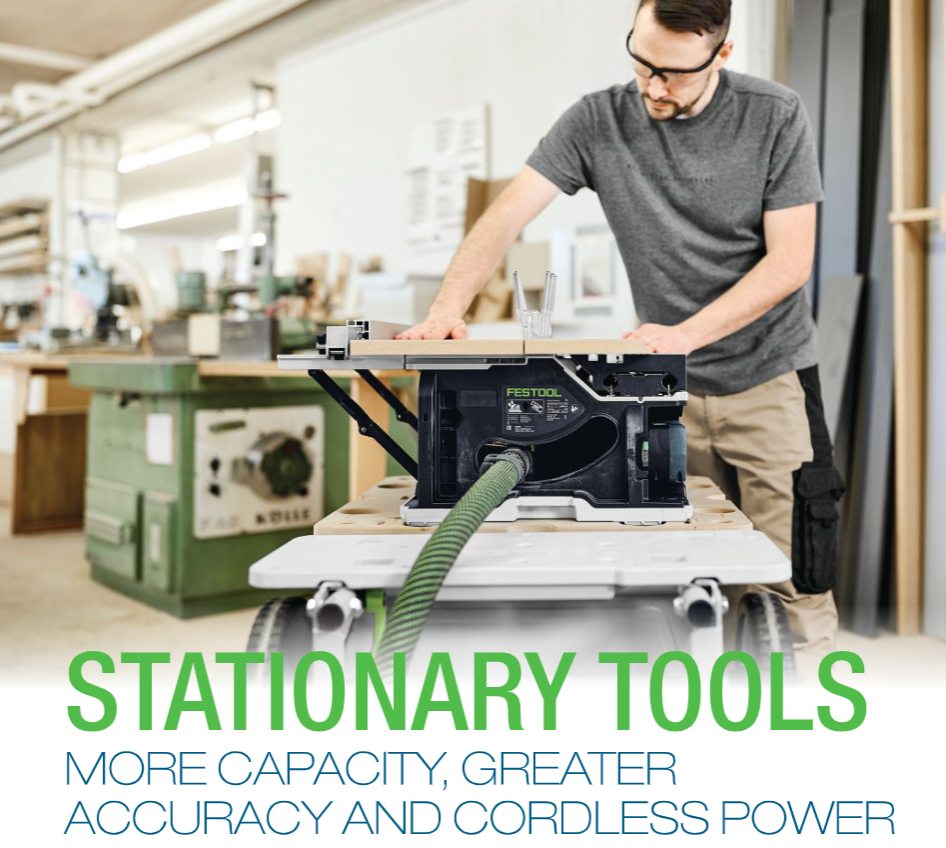
The concept of tools such as table, chop or miter saws being based in the shop is no longer the standard. Today, those items, traditionally defined as stationary tools, are designed to be more compact, mobile, and used on jobsites. These manufacturers continue to ensure that these “portable” stationary tools are ready to do the job wherever the work is needed.
FESTOOL
Contractors are under pressure to complete work efficiently with smaller crews, while also managing rising material and operating costs.
These factors are driving contractors to be more selective in their equipment purchases, prioritizing tools that improve accuracy, reduce rework, and maximize productivity.
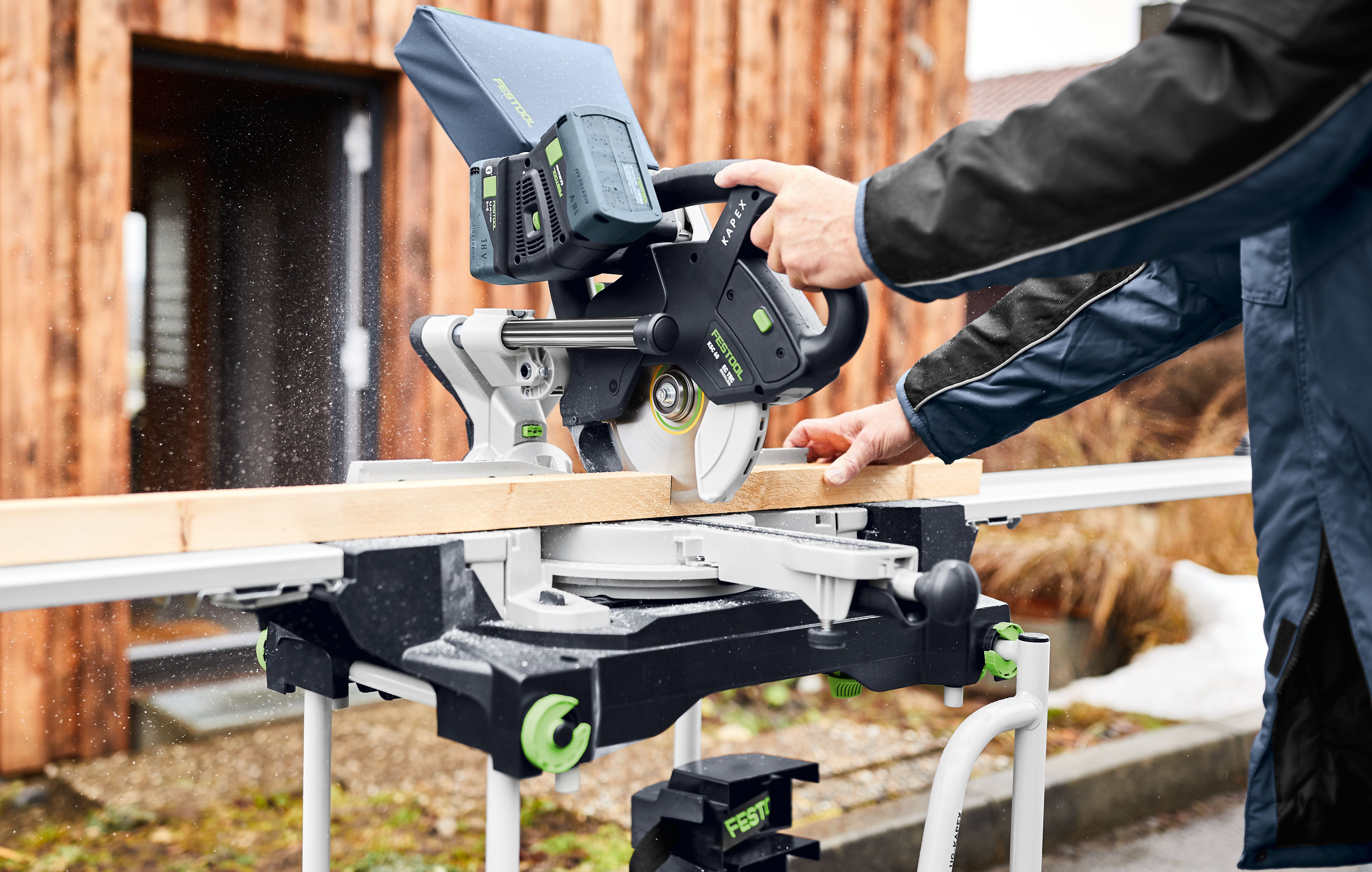 |
| The Festool KSC 60 cordless sliding compound miter saw is ideally suited for woodprocessing tasks on the jobsite with capacity and runtime for trim work, cutting lumber or plywood. |
“Professionals want tools that can transition seamlessly between locations while maintaining precision and consistency,” says Joshua Guesz, marketing content specialist at Festool USA, noting that there is also a growing emphasis on dust control, safety, and ease of use.
“System-based design, where tools, accessories, and storage work together, continues to shape how stationary tools are engineered and used,” he says, noting that the overall outlook for stationary tools remains steady.
Despite the common misconception of stationary tools being intended for shop only environments or the idea that compact or mobile tools compromise performance, there is a growing interest in compact and mobile stationary solutions.
Guesz says modern stationary tools are designed to be portable, while maintaining precision.
He notes that advances in technology have made it possible for tools like cordless table saws to deliver accuracy and power comparable to traditional stationary equipment.
As examples, Guesz cites Festool’s KS 120, known for precise, repeatable, and clean cutting accuracy, the KSC 60, which adds mobility to the precision of the KS120, and the Festool CSC SYS 50 cordless table saw that brings stationary saw capability into a compact mobile system as examples of the current transition.
“Distributors should focus on helping customers understand how stationary tools can address both broader industry challenges and the specific day-to-day needs of their businesses,” Guesz says. “This includes emphasizing benefits like accuracy, reduced set-up time, long-term reliability, and how these tools integrate seamlessly into a contractor’s existing workflow.”
By understanding the unique challenges customers face and positioning solutions accordingly, distributors can provide more meaningful value.
“At Festool, we’re committed to supporting our distribution partners with consistent product availability and insights to help forecast demand more accurately,” he says. “We are focused on developing solutions that help contractors achieve consistent results, while adapting to how work is actually performed in the shop and on the jobsite today.”
METABO HPT
From a product design standpoint, the stationary tool category in the U.S. remains both mature and challenging. It is not a fast-growth segment, but it is a foundational one, and that makes getting it right more important than ever.
Rather than explosive, Bobby Kilkenny, product manager at Metabo HPT, says the overall outlook for stationary tools, particularly miter saws in the U.S. market, is steady.
He says the demand is sustained by remodeling, finish carpentry, and replacement purchases rather than large spikes in new construction.
“Contractors are buying fewer tools impulsively and making more deliberate decisions,” Kilkenny says. “For distributors, this means the category rewards accuracy, matching the right saw to the right user, more than breadth of assortment.”
Economic pressure and labor constraints are influencing how contractors think about tools. “With fewer skilled hands available, accuracy, repeatability, and ease of setup matter more than ever,” he says. “At the same time, price sensitivity has increased, which puts pressure on distributors to clearly articulate value not just cost.”
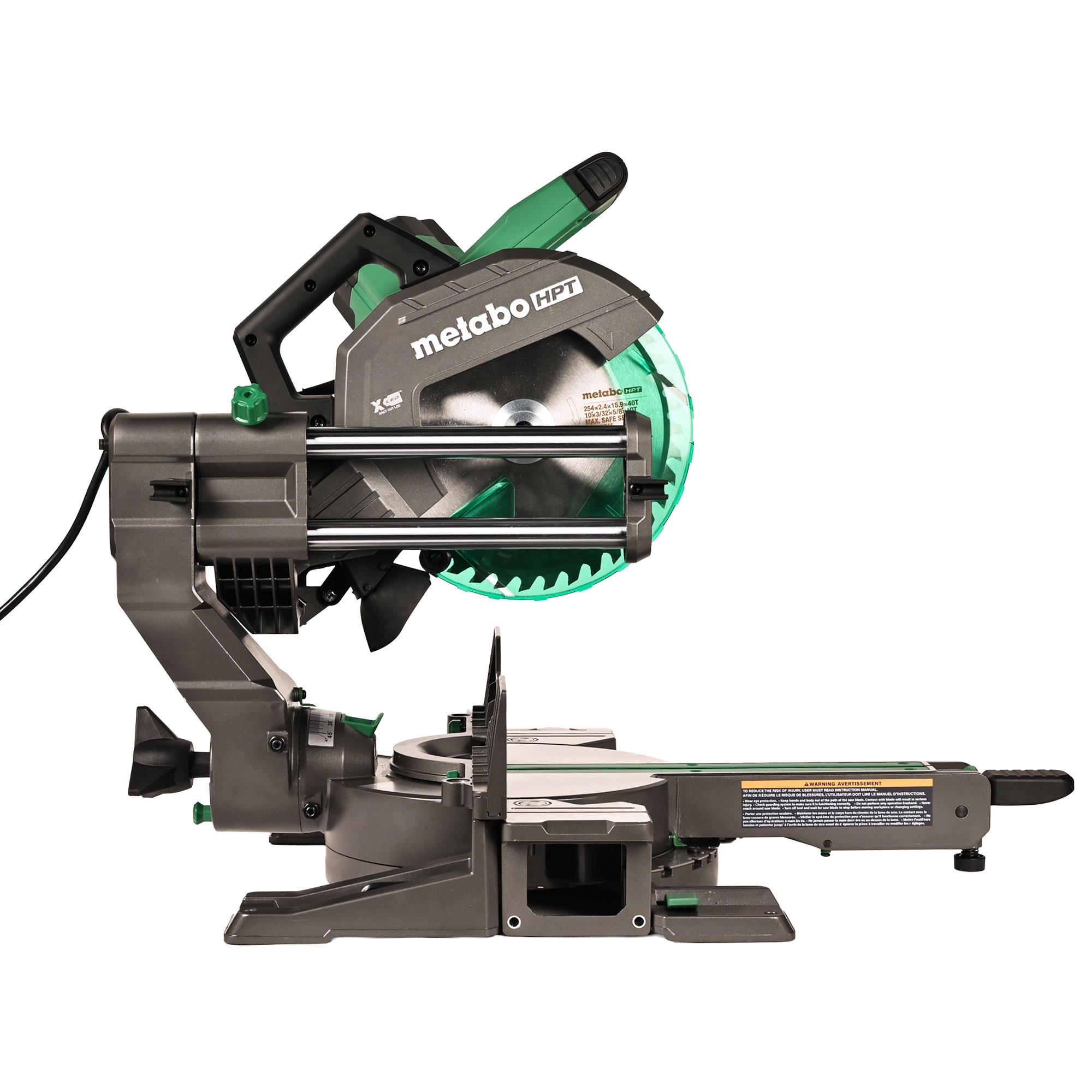 |
| Metabo HPT’s C10FSBS is equipped with a high fence to support the work piece for stable cutting of various types of wood, plywood, decorative panels and hardboard. |
While supply chains have largely stabilized, contractors remain wary of downtime, making availability and service critical parts of the product offering.
With miter saws, the most common misunderstanding is that larger saws will deliver better results. Another misconception is that feature count equals accuracy.
“In practice, many professionals would benefit more from a welldesigned compact saw than from a heavier, harder-to-transport model,” Kilkenny says.
Also, he notes that long-term precision comes from fence alignment, detent quality, rigidity, and calibration and not from add-ons alone.
Kilkenny said from a development perspective, innovation in the miter saw category is increasingly focused on fundamentals.
“We are investing in improved rail and glide systems that reduce deflection and maintain accuracy over time,” he says. “Fence and table flatness, once taken for granted, are receiving renewed attention as tolerances tighten.”
Also, dust management, long a weak point for miter saws, is improving through better shroud design and airflow control.
Kilkenny says ergonomics and weight distribution are also becoming core design priorities as tools are moved more frequently.
He says Metabo HPT’s miter saw lineup reflects this fundamentals-first approach.
“Our core 10-inch and 12-inch compound and sliding models balance cut capacity, footprint, and durability in a way that aligns well with real jobsite needs,” Kilkenny says. “For distributors, the combination of strong out-ofbox accuracy, practical design, and a professional 5-year warranty simplifies the sales conversation and reduces post-sale friction.”
In addition, he adds that Metabo tools are easy to position, easy to support, and well-suited to both shop and jobsite environments.
Looking forward, Kilkenny says Metabo HPT is preparing to expand its lineup with new 10-inch and 7 1/4-inch sliding miter saws, aimed at contractors who prioritize precision, portability, and efficient use of space.
“For distributors, these upcoming additions signal continued investment in the category and create opportunities to address evolving customer needs without overcomplicating assortments,” he said. “In a constrained market, clarity beats complexity, and miter saws remain a category where superior design makes all the difference.”
LEARN MORE
This article originally appeared in the April/May 2026 issue of Contractor Supply magazine. Copyright, 2026 Direct Business Media.

CONTRACTOR SUPPLY MAGAZINE
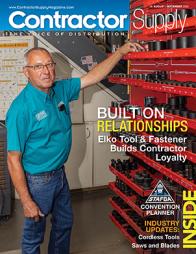
The August/September 2026 issue of Contractor Supply magazine is here!
In our cover story, Built on Relationships, Elko Tool & Fastener of Elko, Nevada has found success in the mining market by offering good customer service.
Also in this issue are Industry Updates.
This digital edition, sponsored by BECK AMERICA Inc., is fully searchable and contains live links to every advertiser and new product listing. Click away!
| Read the Articles Read the Digital Edition |