

 |
Many people still view ladders as a commodity, something you grab off the shelf without much thought. The reality is that ladder technology has evolved. Features like adjustable outriggers, integrated leveling, audible safety cues, and platform standing zones significantly affect safety and productivity.
Manufacturers have moved ladders from basic utility toward safety-driven innovation.
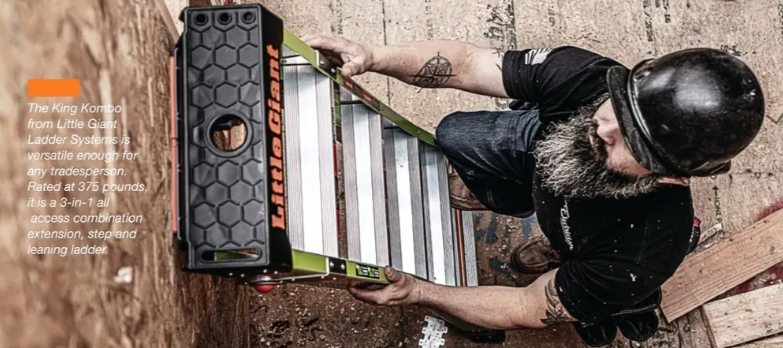 |
LITTLE GIANT
Demand is rising, especially within professional trades and industrial sectors, for ladder solutions that provide adjustability, stability, and ergonomic support.
“Safety is no longer a checkbox, it is a key performance expectation,” says Katie Jancsura, senior director of marketing, Little Giant Ladders.
She says several trends are shaping new product development including safety innovation, versatility, reduced weight and trade specific designs.
HVAC, electrical, and industrial maintenance professionals expect equipment designed for their exact tasks which include features like Little Giant’s Ground Cue, platform style solutions, and built-in leveling systems.
Jancsura says advances in aluminum and fiberglass materials are reducing weight in ladders while maintaining industrial strength.
To address customers’ needs, she says it is important for distributors to ensure their staff have knowledge of the products, so they can differentiate commodity products from the professional-grade solutions being offered.
Due to recent economic pressures and ongoing fluctuations in material costs, contractors are prioritizing long-term value with ladders and other equipment.
“Seeing safety features like leveling or platform standing firsthand can drive purchasing decisions,” Jancsura says, adding that contractors want tools that adapt to multiple job conditions and prioritize their safety.
With technologies that actively help prevent accidents such as integrated leveling, audible safety cues, wider standing platforms and more, Little Giant will focus on three key areas over the next few years.
Jancsura says they are focused on growing a presence within the professional market through development of more pro-grade, job-focused solutions.
“We remain committed to leading the industry in safety by advancing innovations in stability, leveling, and injury prevention,” she says. “Every product we design is driven by our core mission to reduce ladder-related accidents and protect those who work at height.”
In addition, the company will be expanding its Little Giant Live and hands-on training efforts to ensure users not only choose the right ladder but use it correctly on the job.
“The future of ladders is not only to support the worker, but to inform and protect them,” Jancsura says.
 |
|
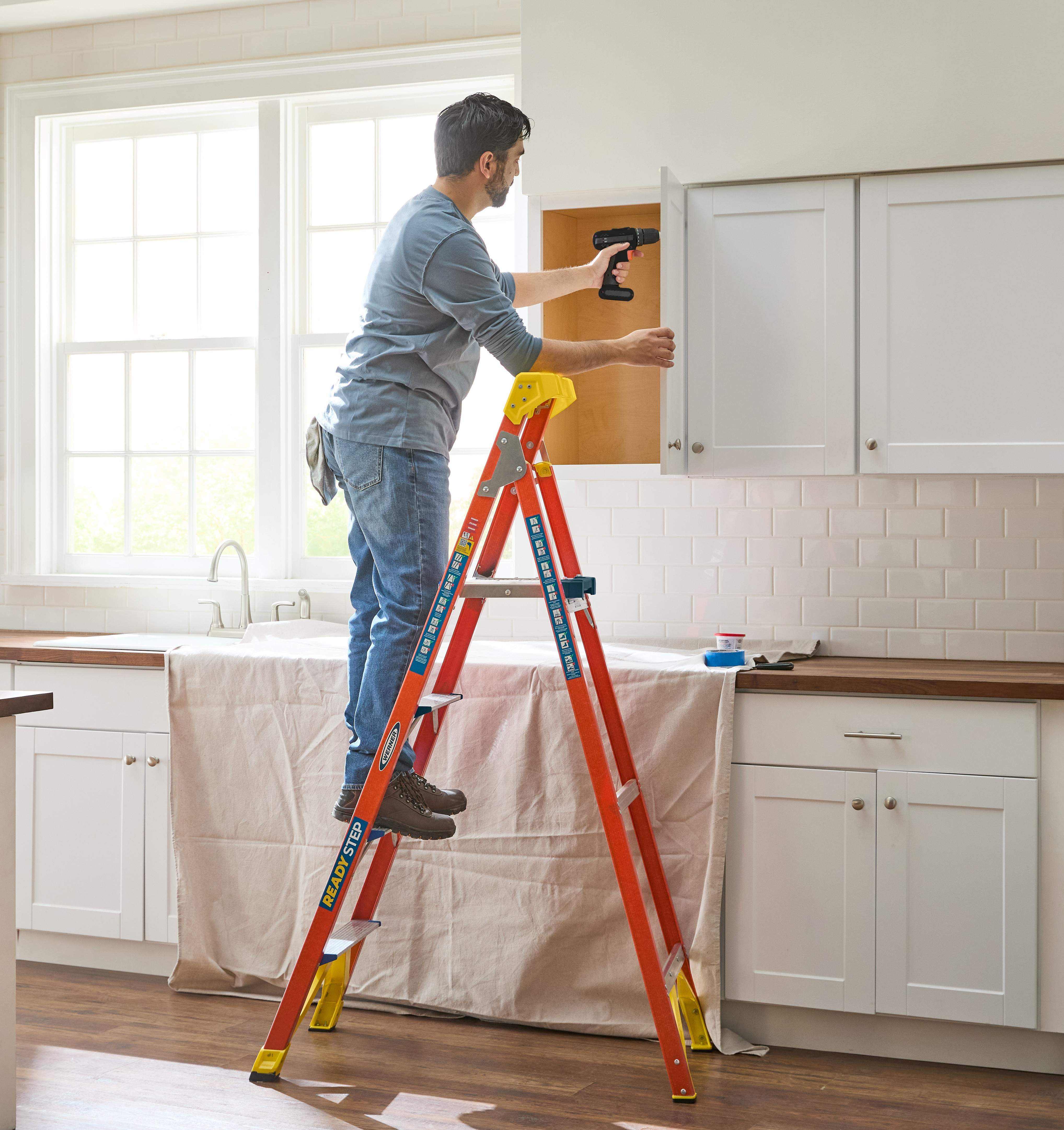
Weighing 15% lighter than a standard step ladder and having a slim 4-inch profile when closed, the Werner Ready Step is easy to transport. In addition, it offers a 300 pound load capacity. |
WERNER
The ladder category has moved beyond the basics of height access to fully integrated systems that make work safer, faster, and more efficient. Werner continues to be a manufacturer at the forefront of the ladder market.
“We see continued strength in the ladder and climbing products category, driven by sustained investment in both commercial and residential construction,” says Erik Blankinship, senior product manager at Werner. “Contractors are under pressure to complete more work with fewer resources, which reinforces the demand for safe, efficient, and versatile climbing solutions.”
The outlook for the market is still positive as the company continues to develop advanced solutions.
“We believe the future of the climbing category will be shaped by safety leadership, smarter product design and more efficient manufacturing,” he says. “Werner is taking every step we can towards providing the right climbing and fall protection products to ensure safety at height and to protect lives and livelihoods and keep the workforce productive.”
From construction to all the MEP trades, professionals want products that are versatile, lightweight, easy to transport and still meet durability and safety requirements. In addition, contractors are showing increased interest in the ergonomics of the ladders.
Blankinship says Werner recently introduced two new products, the Werner Ready Step fiberglass step ladder and the Telescoping Ladder, which check those boxes.
“In the commercial and industrial sectors, we see a need to provide a higher degree of safety,” he says.
Another emerging area is providing visibly distinct on-product design that uses visual safety cues to make ladder selection and fall protection equipment easier and safer.
“With today’s diverse, often multilingual jobsites, color coding and universally recognized icons help users quickly identify the right product for the task, reducing errors and improving overall jobsite safety,” Blankinship says.
He notes that selecting the correct ladder not only prevents injuries but also improves productivity and efficiency on the worksite. Werner offers free online training resources and videos focused on ladder safety and fall protection.
Blankinship says providing resources that help customers select and use ladders properly can be a major point of differentiation for distributors.
“Werner offers free safety training materials, webinars, and guides to make it easier for distributors to educate on proper ladder selection, inspection, and use,” he says. “Distributors who share these tools with their customers add immediate value while supporting a stronger culture of safety.”
Customers are more likely to select the right ladder the first time when they have help considering the ladder style, understanding the duty rating and load capacity, the type of rail material and other safety features.
 |
|
Designed and manufactured with aircraft-grade aluminium, the telescopic PRIME Line ladders from W.steps are available in 9 1/2, 11 1/2, and 13 1/2 feet models. |
W. STEPS
The basic concept of ladders could be considered ancient. The addition of telescopic ladders was made by W.steps nearly 30 years ago in Sweden.
Other companies have since brought telescopic options to the market, leading to some skepticism about telescoping ladders being sturdy and durable enough for professional use.
“Delivering a ladder that’s compact and even lighter weight while not compromising on safety, all while advancing stability and durability, is the end goal,” says Christopher Berg, executive vice president of sales and commercial operations for Hultafors Group North America.
Over the next one to three years, he says the distribution of W.steps ladders will continue to expand in North America.
“We’re putting our ladders through third-party testing to highlight the significant differences in strength between our ladders and those of our competitors,” Berg says.
For example, the stair treads of a W. steps PRIME 13 1/2-foot ladder were loaded with a hydraulic ram and withstood 2,500 pounds of force. Added strength tests included a horizontal test in which a ladder supported 975 pounds and a rail section of a W.steps ladder enduring 2,300 pounds of force in a three-point bending test.
“W.steps’ strength comes from its patented triangular tube design that produces superior torsional rigidity, making the ladders stronger and more stable than round tube telescopic ladders,” Berg says.
Since they are telescopic, users can easily extend the W.steps ladders, made from aircraft-grade aluminum to precise heights that are required and then quickly collapse them for compact transport and storage.
For example, the 13 1/2-foot PRIME ladder collapses down to 36 inches.
Engineers at W.steps are also advancing the development of smart accessories, such as Adjustable Safety Feet and the Top Support, making the ladders even safer and more versatile.
“Given the importance of safety and ergonomics, we truly believe that the construction industry will benefit from investing in high-quality products in the long run, even though those come at a slightly higher price,” Berg says. “We want to deliver products designed to help workers perform their tasks more effectively and efficiently; while also ensuring they return home safely to their loved ones at the end of the day.”
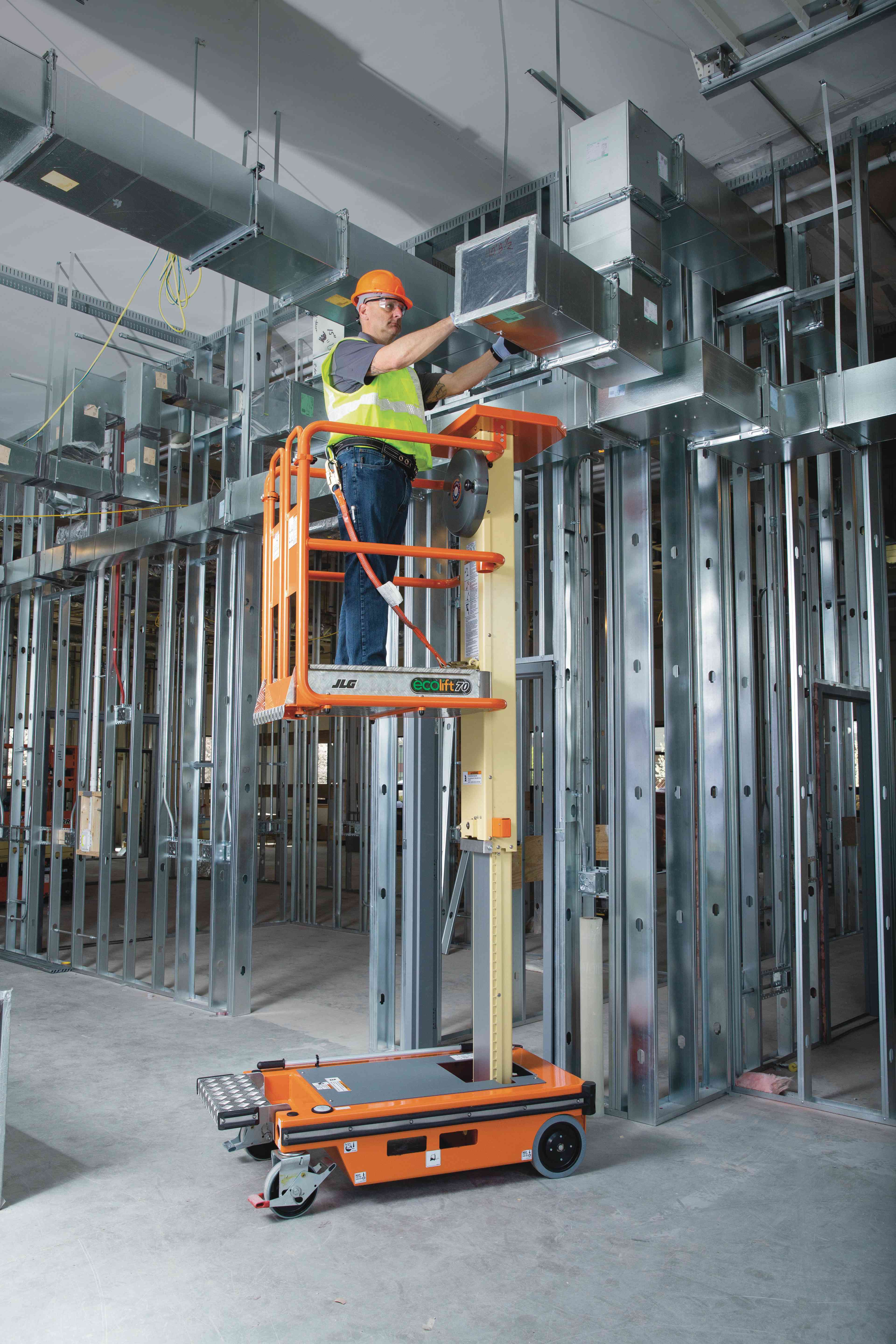 |
| The JLG EcoLift 70 features upgrades for operator comfort and greater serviceability. It’s a more ergonomic alternative to ladders and provides the ability to work comfortably with both hands. |
JLG
For generations, ladders and scaffolding have been the default choice for working at height. More contractors are discovering that mobile elevating work platforms (MEWPS), particularly low-level access lifts, offer safe, efficient and cost-effective ways to get the job done.
“Customers need solutions that minimize downtime, improve worker comfort and demonstrate a clear return on investment,” says Misty Mason, product manager for JLG.
“The shift away from ladders and scaffolds is not just coming; it’s already here.”
She says the message is clear for distributors, the status quo is no longer acceptable.
While on the surface it appears ladders and scaffolds are still the cheapest option, the hidden costs of falls, fatigue and overuse injuries suggest another story.
According to Mason, the average cost of a single fall-related injury is more than $130,000.
“Demand for low-level access equipment is reaching a tipping point as companies across industries look to move away from ladders and scaffolds,” she says, noting that contractors are adopting lifts for fit-out work, drywall, painting, electrical installs and more.
Contrary to the belief that low-level access lifts are cumbersome and are overbuilt for everyday use, she says they are intentionally compact and lightweight.
“Many are designed with quick ‘push-into-place’ mobility, requiring little to no setup,” Mason says. “That makes them as convenient as a ladder, while offering far greater safety and productivity.”
Modern lifts feature a variety of options including auto-lock brakes, steel platforms, tool trays and step-in access that improve safety and comfort. In terms of sustainability, there are human-powered lifts such as the JLG EcoLift series.
According to Mason, distributors who want to stay ahead should emphasize the safety and cost benefits of low-level access lifts.
“Educating customers on the real ROI, from reduced insurance claims to fewer missed workdays, can be a powerful sales driver,” she says. “Offering a range of both powered and non-powered models ensures that contractors can match the right equipment to specific job site needs.”
As part of the sales process, Mason suggests distributors encourage customers to try out a lift.
“Time and again, contractors report higher productivity and greater worker satisfaction after making the switch,” she says.
Options include JLG’s EcoLift models or the powered options such as the JLG 830P, 1030P and 1230P push-around lifts, which continue to raise the bar for innovation.
JLG’s goal is to make access to low-level lifts the new standard. The company is focused on expanding its product line to cover more applications up to 20 feet, while maintaining a focus on sustainability.
LEARN MORE
This article originally appeared in the December 2025/January 2026 issue of Contractor Supply magazine. Copyright, 2025 Direct Business Media.

CONTRACTOR SUPPLY MAGAZINE
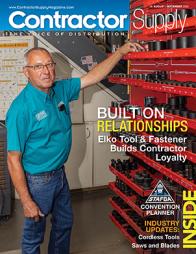
The August/September 2026 issue of Contractor Supply magazine is here!
In our cover story, Built on Relationships, Elko Tool & Fastener of Elko, Nevada has found success in the mining market by offering good customer service.
Also in this issue are Industry Updates.
This digital edition, sponsored by BECK AMERICA Inc., is fully searchable and contains live links to every advertiser and new product listing. Click away!
| Read the Articles Read the Digital Edition |