




 |
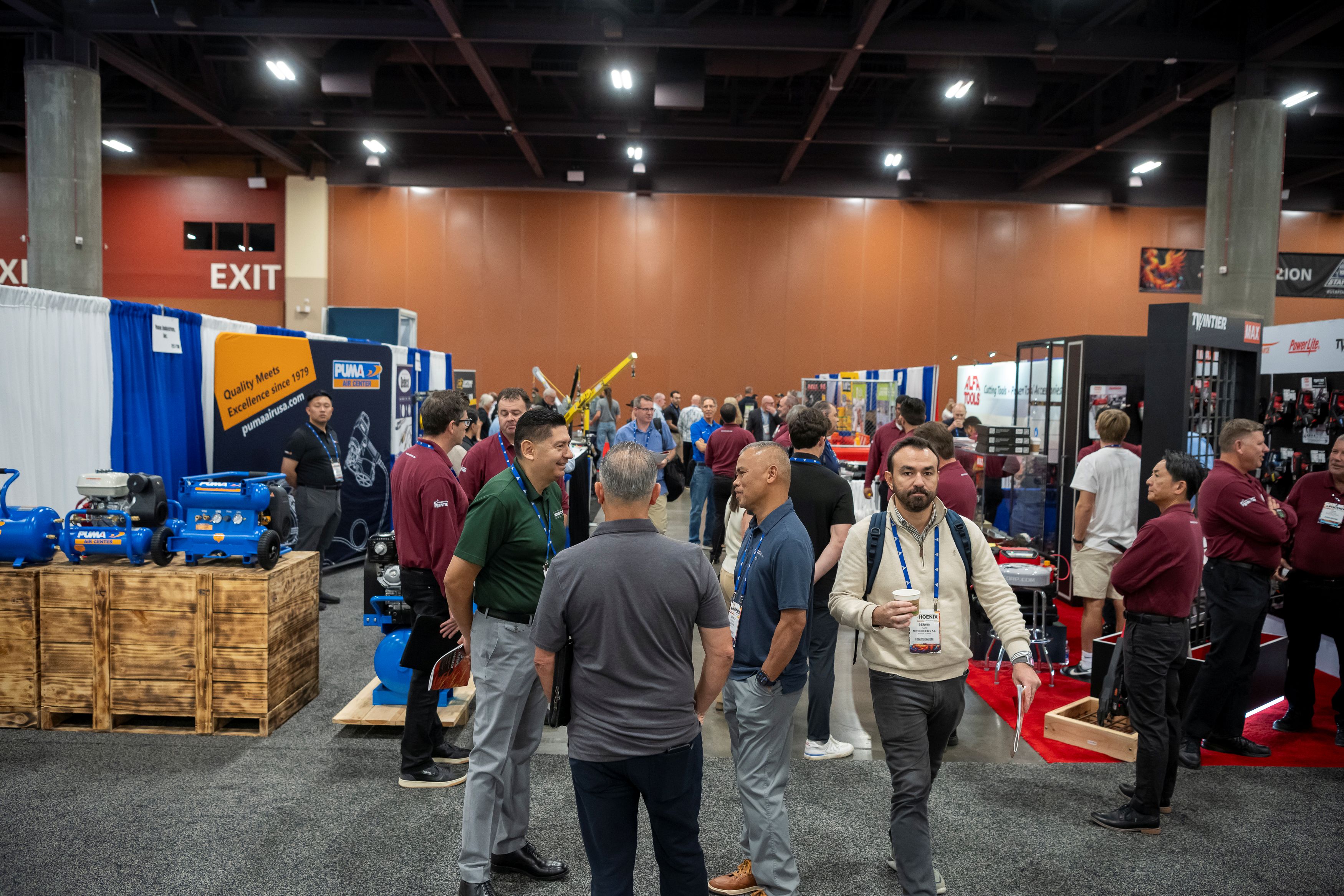
The future of the Specialty Tool & Fasteners Distributors Association (STAFDA) was at the forefront of discussion during the association’s 49th Annual Convention and Trade Show November 9-11 in Phoenix.
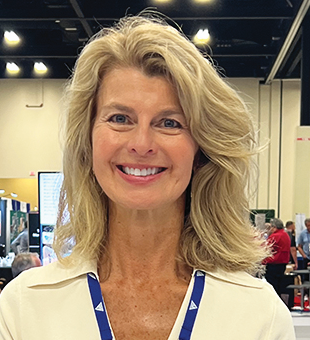 |
| Georgia Foley |
Starting January 1, 2026, FrontlineCo, a woman-owned, accredited association management company headquartered in Springfield, Illinois, will take over administration and back-office support functions for STAFDA.
Most operational changes will happen behind the scenes to avoid disruptions to member services or programs.
The aim is to deliver a stable transition, bringing in additional support and expertise while maintaining the association’s unique culture, service and leadership continuity.
As presented during the general session at 2025 STAFDA Convention and Trade Show, the transition plan for STAFDA to the association management company, includes several coordinated steps.
Among the changes will be the eventual departure of Georgia Foley, STAFDA’s current CEO and executive director, who has served in those roles for the past 25 years.
Her journey with the organization dates back to its origins in 1977, when she was just 13 years old.
Outside of her own father, Morrie Halvorsen, STAFDA’s first CEO, by all other appearances, she was in essence the organization’s first employee.
Having attended the first STAFDA Convention and Trade Show at Doral Country Club in 1977 in Miami, Florida, she continued helping through junior high, high school and college.
After college, Foley managed an association for people in the trade show industry, companies who build custom trade show exhibits, show contractors like Freeman and other exhibit related firms.
Foley worked in that role for seven years before her dad started putting together a succession plan and brought her into STAFDA in 1994 as member services director.
“STAFDA’s succession plan was in full force in 1997, and I was vetted against other candidates, but I got the nod,” Foley said.
She was given the title of associate executive director, taking over for her dad when he stepped down at the end of 1999.
“It’s been a true honor and privilege to continue his legacy,” Foley said. “I’ve been gifted with a career beyond my wildest dreams to serve STAFDA members who are so near and dear to my heart.” However, she noted that her tenure was very different from her father’s.
The formative years of STAFDA from 1977 to 1999 during which he was leading, versus 2000 to present, paints two very different pictures.
“STAFDA was on a rocket ship during the booming 1980s and 1990s, inflation was down and business was on a hot streak,” she said.
With no construction-related channel buying groups, STAFDA was it for the distribution channel. Comparatively, since 2000, it has been relatively stormy, as the organization has weathered the dot com bubble, 9/11, the financial crisis of 2008 and the Great Recession before hitting a decade of growth until the COVID-19 pandemic in 2020.
Prior to taking over from her father, he once asked her how long she planned to work at STAFDA.
“I’d been there for the first convention, and I wanted to see it to its 50th year,” Foley recalled telling him. “I thought that was a milestone and I said after 50 years of Halversons, that’s plenty.”
Behind the scenes, the wheels of those plans were starting to turn.
However, her succession plans were accelerated in June 2024 after she spent two days in the hospital with double pneumonia, strep throat, and borderline sepsis upon returning from a STAFDA board meeting in Nashville.
She said her medical team informed her that she had been about a day from being in a coma.
“It was all very baffling for the doctors to see these symptoms in a healthy woman with a very active and sport-based lifestyle,” she said, noting that since being released there have been no lingering effects and she’s been feeling 100%.
However, while sitting in that hospital room, she was more cognizant of STAFDA’s predicament.
“It’s just Cathy and me in the office, and I was experiencing firsthand what happens when one of us goes down,” Foley said.
Over the years, STAFDA had prided itself on being lean while working with great, outsourced partners.
“I knew last June, we were in a dangerous situation, and something had to change,” she said.
While in the hospital, she took note of how well orchestrated the medical team that assisted her was.
“Everyone had a specific task, came in at a specific time and did what they needed to do,” she said. “No one stepped on each other’s toes. It was a fluid and harmonious process with a singular goal to get me healthy and send me home.”
Following the medical incident, Foley recognized that it was time to move forward with a succession plan as the perfect storm of events was playing itself out.
2026 marks STAFDA’s 50th anniversary, the association’s office lease expires in February, and more support staff is needed.
The STAFDA board approved the option of having the association managed by an association management company and FrontlineCo was brought forward.
From the start of negotiations in early 2025, Kim Robinson, founder and president of FrontlineCo, said it was clear that STAFDA had established itself as a cornerstone of the construction and industrial supply chain channel.
“The organization has benefited from a stable, committed and knowledgeable staff team that has worked in partnership with dedicated leaders To make STAFDA a premier resource in this industry,” she said, citing the association’s unique history.
Robinson explained that FrontlineCo offer a team of experts in governance, leadership, meetings, planning, financial management, education, marketing, data, technology and efficacy.
In addition, the company serves as a full-service marketing and communications firm that focuses on associations.
“Just like that medical team in the hospital, where each member had their assigned duty, STAFDA will now have its own team of medics to take care of each aspect of our organization,” Foley said. “All the back-office support we so desperately need will be transitioned over to FrontlineCo, and I’ll be working with Kim and her team to make sure it all goes well.”
She emphasized that FrontlineCo will be able to bring fresh perspectives, new programs and overall, new energy vitality to STAFDA.
In addition, she noted that under FrontlineCo’s leadership, STAFDA will have the ability to capitalize on programs and services that work well for their other clients, that STAFDA might not have thought of or even known about.
“STAFDA members can bring their own experience to the table, and their current clients might learn from us and in today’s world, when collectively associations are faced with shrinking membership, fewer prospects and changing demographics, it’ll be nice to pull our forces together for possible joint programs and meetings,” Foley said.
“Change can oftentimes cause fear in people, but change can also be a very good and positive thing,” Foley said. “There might be a few hiccups along the way as we shift over to FrontlineCo, but it will get STAFDA in a far safer place than it is right now, with only a staff of two.”
At least temporarily, Foley and Catherine Usher, STAFDA membership services manager, will continue to maintain a small office in Elm Grove, Wisconsin, to assist in the transition. Both will receive training on FrontlineCo’s systems and processes to ensure continuity and knowledge transfer.
For her own role, Foley will reduce her hours to 30 per week, while assisting in the transition and actively leading the recruitment and selection process for her successor.
Usher will remain with STAFDA and now FrontlineCo.
“She will be the glue as I slowly fade out and the new CEO steps forward,” Foley said, noting that she is excited about STAFDA’s future.
Going forward, Robinson will serve as the main liaison between STAFDA leadership and FrontlineCo’s support staff, while overseeing the transfer of the back-office functions such as accounting, meeting planning, mail/office services, and other shared functions.
“I know STAFDA will be in good hands and I know we’re going to be able to accomplish some great things together,” Robinson said.
 |
ECONOMIC OUTLOOK
From an economic perspective, Alex Chausovsky said the likeliest path forward is sideways, not up or down, with a low, single digit growth being the most likely pathway into 2026.
He emphasized that there is no recession.
“No matter how many times the pundits online say we are in recession or that we’re imminently heading for one, the data just doesn’t back that up in any way,” Chausovsky said. “I always try to be very objective in my analysis, and so for the point of fairness, to the point of understanding really kind of what’s going on behind the curtain.”
Sharing various charts and points of data from a variety of sources during his presentation, he said the U. S. is currently in the largest, most robust economy it’s ever had, as of mid-2025.
Based on his analysis, the various data points on the gross domestic product (GDP) and the industrial production numbers indicate more of a sideways growth going forward.
He said the impart of the tariffs has not been a detrimental or negative for the U.S. economy as originally feared at the beginning of the year.
When President Trump first took office, the effective tariff rate in this country was approximately 2%, spiking to nearly 30% around April 2, or Liberation Day, based on the various executive orders he had signed.
However, Chausovsky said since the deescalation that has happened since then, the U.S. is currently at about an 18% effective tariff rate.
“The silver lining to this whole thing is that we have not seen a surge in inflation the way that most people have been expecting as a result of tariffs,” he said. “Keep one very important fact in mind, on average, it takes 12 to 18 months for tariffs to be fully passed through to the end testing.”
Looking ahead, he said 2026 will not end at the 2% rate that the Federal Reserve has as its target.
“We are likely going to finish the year in 2026 in the range between 3% and 5% and I’m still leaving plenty of generous room to the upside from that, depending on what future tariffs are still coming down the pipeline,” he said.
In addition, the tariffs are not going anywhere, even if the U.S. Supreme Court rules some unconstitutional.
“They might change shape, they might be different in nature, but this is what we’re going to be living with at least for the next three years through this administration, if not beyond that,” he said.
Fortunately, even in this uncertain environment that is filled with so much complexity, Chausovsky said as business owners, the STAFDA members don’t have to know all the answers.
“What your people want from you as a leader, as a business owner, as a manager, is the confidence that no matter what is going on in the world, you’ll be able to figure it out together,” he said, noting that sometimes leadership means bringing in subject matter experts on different topics.
As an example, he cited the One Big Beautiful Bill, encouraging STAFDA members to consult tax professionals to leverage potential incentives and credits, particularly those sunsetting in 2025/2026.
Within this economic environment, he said leading with confidence doesn’t mean knowing exactly what’s going to happen.
“It means believing in your ability to adapt, to change and to persevere through whatever it is that’s going on,” Chausovsky said.
 |
KEY STRATEGIES
Through his review of the current economy, he recommended several key strategies for the STAFDA members to adopt.
“You have to first make decisions based on data, rather than emotion, fear or anxiety,” he said. “Data doesn’t lie.”
The key is to utilize objective data including leading economic indicators like capacity utilization, copper futures and the PMI to anticipate shifts in demand.
Secondly, Chausovsky said it is important to consider how 2026 is approached to achieve growth targets.
“If you’re targeting 5%, 6% or 7%, the economy is not going to give it to you,” he said. “You’re going to have to go out there and take it through market share growth and new customer acquisition.”
Specifically, he suggests pivoting toward growth sectors such as high-tech, AI and data center construction and looking for opportunities to rebalance business in those areas.
To further prepare, Chausovsky said it was important for STAFDA members to adopt a more war game mentality in planning for the future.
He likened it to the military acronym VUCA, which stands for volatility, uncertainty, complexity and ambiguity.
“This is the reality in which you will be operating for at least the foreseeable future, if not much longer past that,” Chausovsky said. “You must develop a variety of strategies for different scenarios. It’s a different mindset that you’ve got to adapt to cope with the complexity that’s going on in the world around you.”
Chausovsky suggested business owners develop multiple strategies for different possible economic situations. He said they should prepare specific triggers and action plans for each, enabling rapid response when the economic environment changes.
“If you’re just got one plan and it goes sideways, you’re going to be scrambling to come up with what to do next, and people are going to be getting out ahead of you,” he said.
Outside of those key strategies, Chausovsky’s base message came back to the simple concept of knowing what can be controlled in the current business environment.
For example, he said the amount of communication between a STAFDA distributor, and their suppliers or customers can be controlled.
“If you normally communicate with your top suppliers once a quarter, make that a monthly conversation,” he said. “If you talk to your top customers once a month, move that to biweekly or weekly.”
As part of those communications, Chausovsky emphasized the significance of sharing insights, strategic initiatives and perspectives to help strengthen relationships.
“That type of relationship elevates you from being a commodity, from being a transactional relationship, to one that is a value-added partnership,” he said, noting that it creates a moat around the relationship.
When the economy inevitably turns south at some point in the future and they’re looking to cut orders or spending, Chausovsky said they will look to others, not those who have proved their worth.
“They’re going to want to preserve the relationship that they have with you,” he said. “That’s within your control.”
Another thing within control of the STAFDA distributors, particularly as it pertains to protecting margins, is shopping around.
He encouraged members to regularly solicit quotes from different suppliers and service providers (logistics, utilities and more) to lock in better terms and protect margins.
“Use other people’s pessimism to your advantage,” Chausovsky said. “You’ll be able to lock in lower pricing and offset some of the increases in the cost of doing business.”
The last point distributors were told to not lose sight of was to be sure to focus on talent retention.
“Retention is crucial to remain competitive,” he said, citing the importance of providing benchmark compensation adjustments in line with inflation.
“By proactively adopting these strategies, businesses can position themselves to outperform in a low-growth environment rather than just passively experiencing economic headwind,” Chausovsky said.

2025 AND BEYOND
In recognition of the challenges and changes in store for the industry, 2025 STAFDA President Dale Hahs II, owner of AIS Industrial & Construction Supply left a clear message to the members in his parting remarks.
“Don’t abandon the channel that built us, protect it, strengthen it, pass it on stronger than you found it,” Hahs said. “We will continue to f ace challenges, but together, as independent distributors and members of STAFDA, and as a united industry, we will keep winning.”
To emphasize his point, he cited several quotes from General George Patton, starting with one of his favorites: “Do your duty as you see it and damn the consequences.”
Like many in attendance, Hahs admitted that the industry is less of a business and more of a calling for him. He started by pulling orders in the warehouse, sweeping floors and unloading rail cars.
“I’m grateful to STAFDA, not just for the products and ideas we discover here, but for the relationships that keep us competitive and relevant, and for the way this organization and its members have supported my business and shaped my own learning, my career,” he said.
No matter the passion, Hahs acknowledged that the industry is at a crossroads.
Names like White Cap, Grainger, Fastenal and the other publicly traded distributors making billion dollar acquisitions are the ones that make the news.
“The reality is, the backbone of our industry has always been independent, family-owned firms,” Hahs said.
Citing Modern Distribution Management’s 2024 Family-Owned Business Report, he said nearly 50% of family-owned distributors fall in the $1 million to $50 million revenue range, and over 80% say their business is stronger today than two years ago.
“We may not make headlines, but we make an impact,” Hahs said. “We know our customers’ names, we know when their kids are graduating. We deliver when the clock is ticking, and the job must be done because our reputation is on the line.”
He suggested that the STAFDA member distributors are the Davids in a world of more and more Goliaths.
“Let’s embrace that role,” he said. “We can move faster, adapt quicker, and build relationships that national chains can’t match.”
Recognizing the dynamic shift in the business landscape, he stressed that the fight isn’t just about survival, it’s about creating something worth passing on.
On its own, the concept of succession within the small business is a challenge by itself.
Hahs said MDM’s research shows that only 31% of of family-owned distributors feel “very confident” in their succession plans, meaning two-thirds have more work to do.
“The challenges are coming from all sides,” he said.
Whether its manufacturers going direct to end users through digital marketplaces, big box retailers moving into categories they didn’t previously offer or private equity firms reshaping the competitive landscape.
Hahs suggested those same challenges bring opportunities.
He stressed the importance of how smaller specialists like the STAFDA members companies can better serve customers who value relationships, expertise and convenience over the cheapest online price.
For distributors, the outgoing board president said that means showing up every day with the same commitment whether the economy is booming or slowing down.
“Whether we make a healthy margin, which is always important, or do what’s right for the customer even if we lose a few points, that to me is the true definition of partnership,” Hahs said. “When suppliers choose to partner with independents, we can deliver value that no algorithm can match.”
To create a better future, he said the distributors need to change and it is only together, through STAFDA, that such change can be made possible.
“This is not the time to hesitate,” Hahs said. “We need to double down on the partnerships and solutions that differentiate us and continue to make us the first choice of our best customers and gives us the unique competitive advantage our competitors can never match.”
While labor, the economy, and technology adoption are among the top concerns, he suggested that there is room to strengthen the talent pipeline and digital capabilities without losing the human touch.
“Invest your energy and resources where they matter most,” Hahs said. “Too many companies are making short-term moves, cutting service, chasing one-off deals, that erode long-term strength. That’s not strategy.” Instead, the 2025 STAFDA president suggested distributors set the vision for their teams and empower them to find creative solutions and deliver results.
“We can modernize our operations, invest in leadership development, and leverage data without sacrificing the personal relationships that set us apart,” Hahs said. “We can build succession plans that inspire the next generation to carry the torch, and we can use forums like STAFDA to share ideas, learn from one another, and strengthen our collective voice.”
This article originally appeared in the December 2025/January 2026 issue of Contractor Supply magazine. Copyright, 2025 Direct Business Media.

CONTRACTOR SUPPLY MAGAZINE




The August/September 2026 issue of Contractor Supply magazine is here!
In our cover story, Built on Relationships, Elko Tool & Fastener of Elko, Nevada has found success in the mining market by offering good customer service.
Also in this issue are Industry Updates.
This digital edition, sponsored by BECK AMERICA Inc., is fully searchable and contains live links to every advertiser and new product listing. Click away!
| Read the Articles Read the Digital Edition |