

 |
Concrete work is still one of the most demanding areas in the construction industry. The demand for efficient, innovative tools creates new opportunities to improve productivity and profitability on the jobsite. These manufacturers continue to be among the leaders in the field that continue to advance technology to make jobsites safer and more efficient.
 |
|
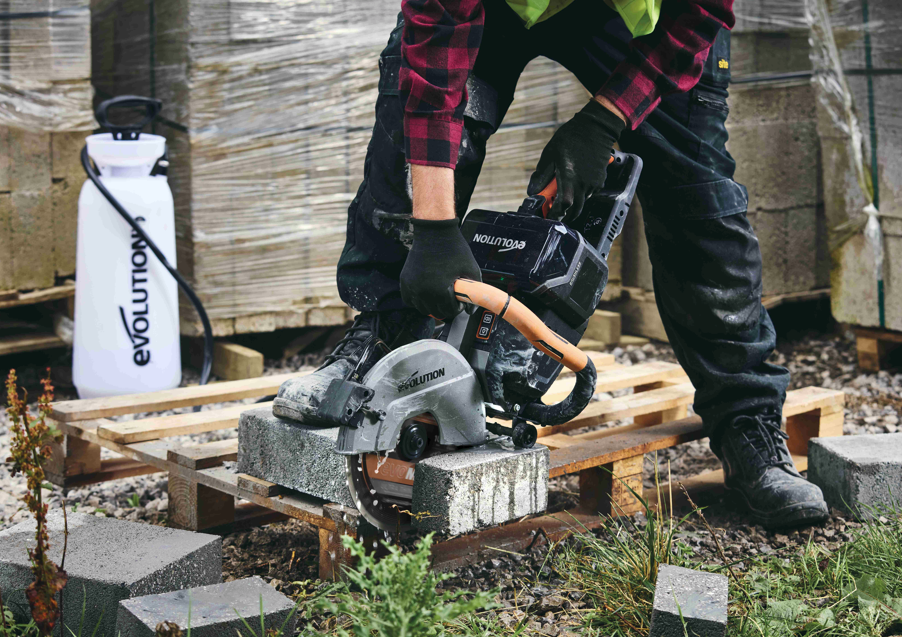
Changing the way contractors look at disc cutters, Evolution Power Tools unveiled its R260DCT-Li battery-powered cordless disc cutter to professionals in 2025. |
EVOLUTION POWER TOOLS
Concrete saws are essential tools in modern construction, yet misconceptions and rapid technological shifts often cloud the conversation.
Despite their ubiquity, concrete saws are often misunderstood. Jennifer Rosser, head of marketing for Evolution Power Tools says common myths include the idea that any saw can cut concrete, dust control is impossible, wet cutting is always better and DIY cutting saves money.
“Concrete’s density and abrasiveness demand specialized tools with diamond blades and high torque,” she says, noting that using the wrong equipment risks damage and inefficiency.
In addition, Rosser says that using improper techniques can lead to structural damage and safety hazards.
“Professional grade tools and training is indispensable in this line of work,” she says.
As for water use, both wet and dry methods have situational advantages. Also, most advanced saw models, including Evolution’s lineup, feature integrated water-fed dust suppression systems that meet OSHA standards, dramatically reducing silica exposure.
Looking ahead, Rosser says the global concrete saw market is projected to grow over the next several years, driven by infrastructure development and urbanization.
In 2026, the ongoing challenges of labor shortages, supply chain volatility related to material cost increases and tariffs and overall economic uncertainty due to interest rate fluctuations and general policy shifts are expected to continue to affect the overall industry.
Like many construction tools, more manufacturers are turning to battery-powered options even for concrete saws.
In addition to the lighter, emission-free battery-powered innovations, overall builds on saws are becoming more ergonomic for the workers to manage on the jobsite.
Lastly, blade technology continues advancing to provide longer lasting and faster cuts.
Rosser cites Evolution’s R10DCT-Li, which has won several industry awards, as an example of the current shift in innovation.
“The 40V brushless motor and cordless specific blade combine to give longer run times and more cuts per charge for less money than the competition can manage,” she says. “It’s portable, lightweight, and perfectly balanced so it can be used anywhere on any jobsite. It has the raw cutting performance of our corded saws in a lighter, smaller, and cable-free package.”
To stay competitive and meet customer needs, Rosser encourages distributors to stock cordless and electric models due to the accelerated interest in battery-powered saws.
Also, she recommends highlighting OSHA-compliant dust suppression features to contractors who face stricter regulations, noting that Evolution saws would meet all those requirements.
“Rising costs and labor shortages mean distributors who provide product demos and safety training will win loyalty,” Rosser says.
As for Evolution, she says the company will continue to expand its portfolio of saws with ergonomic designs, safety compliance features and premium diamond blades.
 |
|
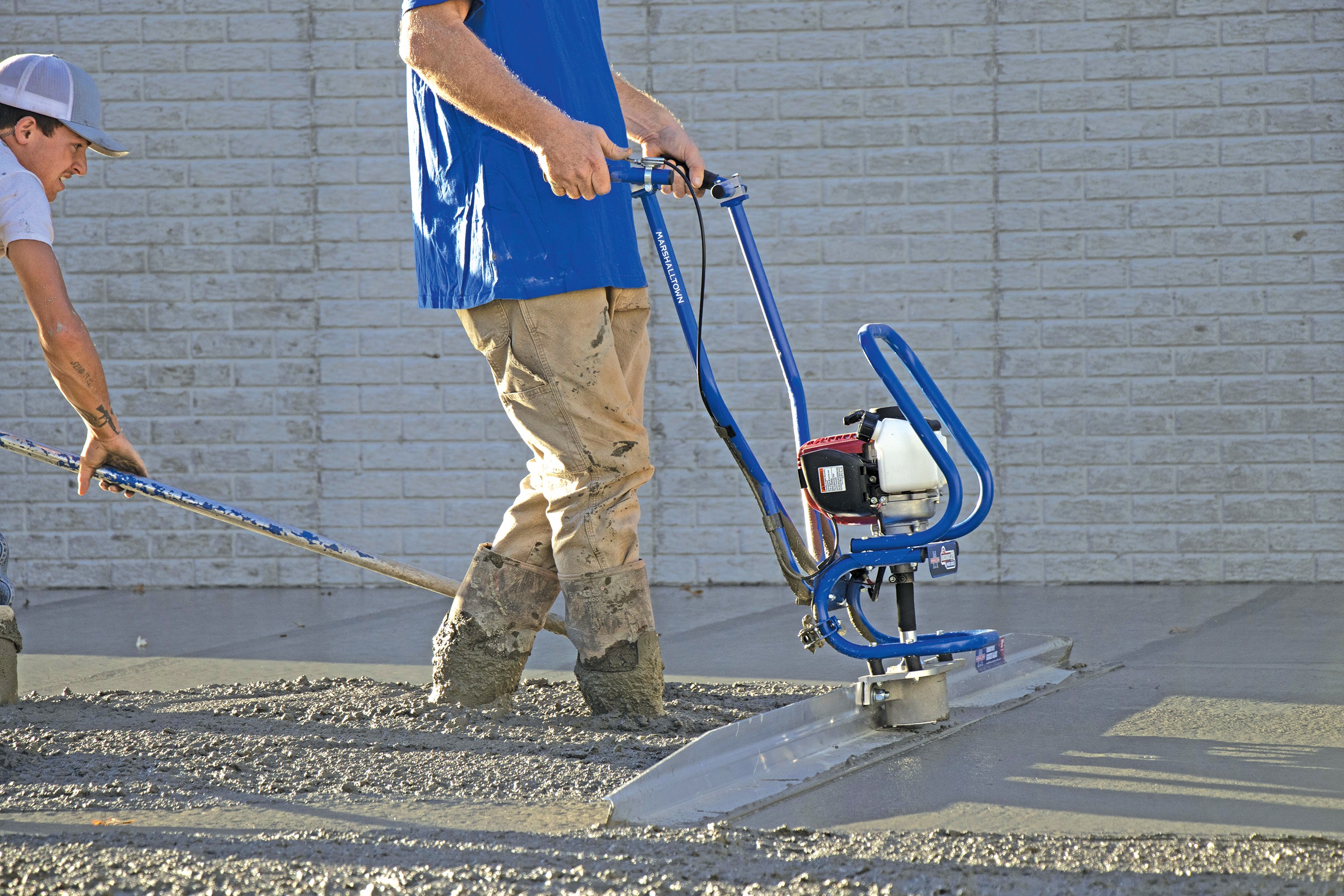
MARSHALLTOWN and other manufacturers are turning to technology to meet customer’s needs. A battery-powered Shockwave 2.0 power screed will be available later this year. |
MARSHALLTOWN
One of the biggest misconceptions about concrete tools is that they are all the same and that consistency, materials, and manufacturing processes don’t make a significant difference.
“At MARSHALLTOWN, we’ve proven for over 135 years that well-engineered, American-made tools dramatically improve job quality, reduce user fatigue, and extend tool life,” says John Reynolds, COO of MARSHALLTOWN.
He notes that today’s tradespeople continue to demand higher performance, durability and ergonomic improvements to their tools.
“These are areas where MARSHALLTOWN continues to stay at the cutting edge of the industry with new designs and refinements, tested and proven in real-life conditions, by real-life tradespeople,” Reynolds says.
Even as construction cycles fluctuate, he says demand for concrete work remains steady across infrastructure, commercial projects, and residential construction.
Challenges such as the ongoing labor shortages and economic uncertainty will shape the construction industry in the coming year, increasing the need for intuitive, high-performance tools that help deliver a quality finish every time.
“While supply chain disruptions have improved from recent peaks, global sourcing remains unpredictable, which makes MARSHALLTOWN’s American-made tools a dependable advantage that distributors can rely on,” Reynolds says. “At the same time, economic uncertainty continues to influence purchasing decisions, with tradespeople favoring tools that deliver long-lasting durability and real value over short-lived import alternatives.”
He says MARSHALLTOWN’s focus on manufacturing excellence, tight quality control, and domestic production gives distributors a reliable partner during periods when service consistency and availability matters most.
Reynolds says distributors should focus on delivering reliability, performance, and expertise by prioritizing dependable, American-made brands.
“Stocking professional, high-quality tools is equally important, as today’s tradespeople rely on tools such as high-performance floats, finishing trowels, edgers and groovers, and screeds to work efficiently and achieve consistent results, even as skill gaps persist,” he says.
In addition, he says distributors can further strengthen customer relationships by emphasizing training and product knowledge, helping contractors understand the value of professional-grade tools, which often leads to greater loyalty, improved service, and fewer returns.
Lastly, Reynolds encourages distributors to offer complete assortments, rather than individual tools, such as MARSHALLTOWN’s full range of floats, finishing tools, placers, screeds, edgers and groovers, brackets and adapters, and handles, to simplify purchasing decisions and improve overall jobsite efficiency.
Within the concrete industry, Reynolds says tradespeople continue to demand tools that prioritize ergonomics and comfort, helping reduce fatigue and repetitive strain on the job. Such needs are reflected in MARSHALLTOWN products with innovations such as its DuraSoft handles and lightweight finishing trowels.
“At the same time, a focus on quality materials and precision manufacturing remains essential, with highestgrade materials advanced manufacturing techniques delivering tools that last longer and perform with unmatched consistency,” he says.
Finally, while concrete work remains hands-on, the integration of technology is increasingly shaping design, with efficient, eco-friendly solutions, such as tools that enable accurate placement and battery-powered operation for zero emissions, setting new standards for the jobsite.
Reynolds notes that these are areas MARSHALLTOWN has already been investing in and developing new products such as the battery-operated Spin Screed roller screed, the Shockwave 2.0 power screed with vibration dampening and the DustPro360 for safety when mixing materials.
 |
|
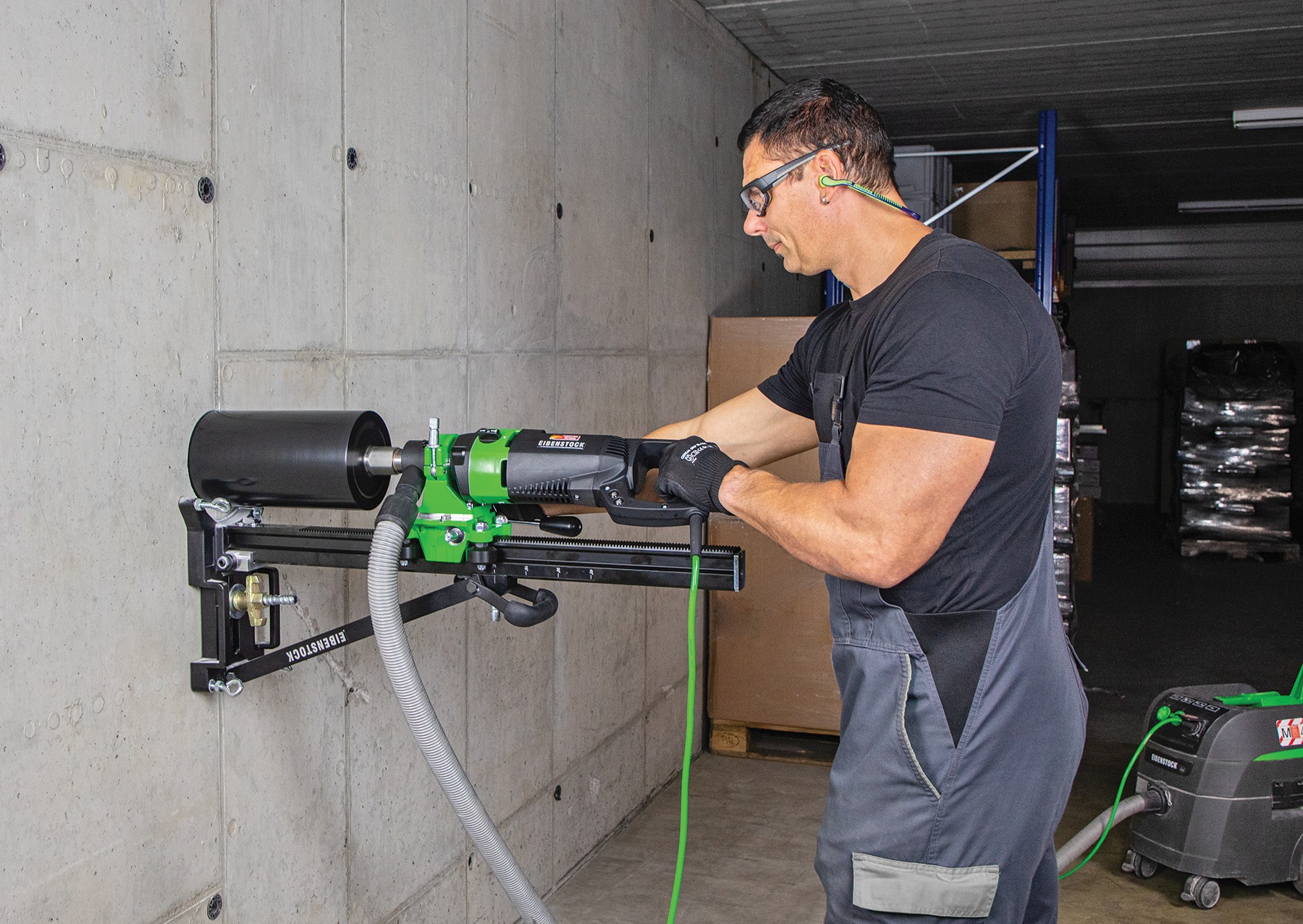
No water is needed to use CS Unitec’s ESD 162 dry core drill. The tool manages hard or reinforced concrete with no slurry while drilling and has a dust extraction port built into the spindle |
CS UNITEC
Concrete work of any kind can take a serous toll on workers and be a messy job.
One misconception about concrete core drilling is the need for water.
Combined with use of a HEPA vacuum for dust extraction, CS Unitec and Eibenstock have released a dry, soft impact drill with impact hybrid technology for drilling reinforced concrete and other materials, dry.
“This soft impact allows you to drill rebar with no water and the core bits still remain cool to the touch,” says Scott Saunders, director of sales for CS Unitec. “With this technology, you do not need to worry about water when drilling and the messy slurry to clean up.”
In addition, for crews working in winter months, there is no concern of water freezing.
“With conventional core drills, the cold temperatures create a whole different challenge when drilling,” Saunders says.
CS Unitec offers two models with the new technology, the hand-held or rig-mounted ESD 162 for up to six inches in diameter or the rig-mounted ESD 200 for up to eight inches.
He says both models manage hard or reinforced concrete with no slurry while drilling.
Another current trend in concrete tools is to have a battery platform for larger walk behind tools.
CS Unitec and Trelawny have launched three new walk-behind tools for concrete surface preparation on an 82-volt platform. These include an 8-inch scarifier, a 10-inch concrete grinder and a floor stripper.
“These three units with batteries are unique to the industry, as they are usually used with power cords or gasoline,” Saunders said. “Surface preparation without limits so you can work seamlessly, wherever the job may take you.”
 |
|
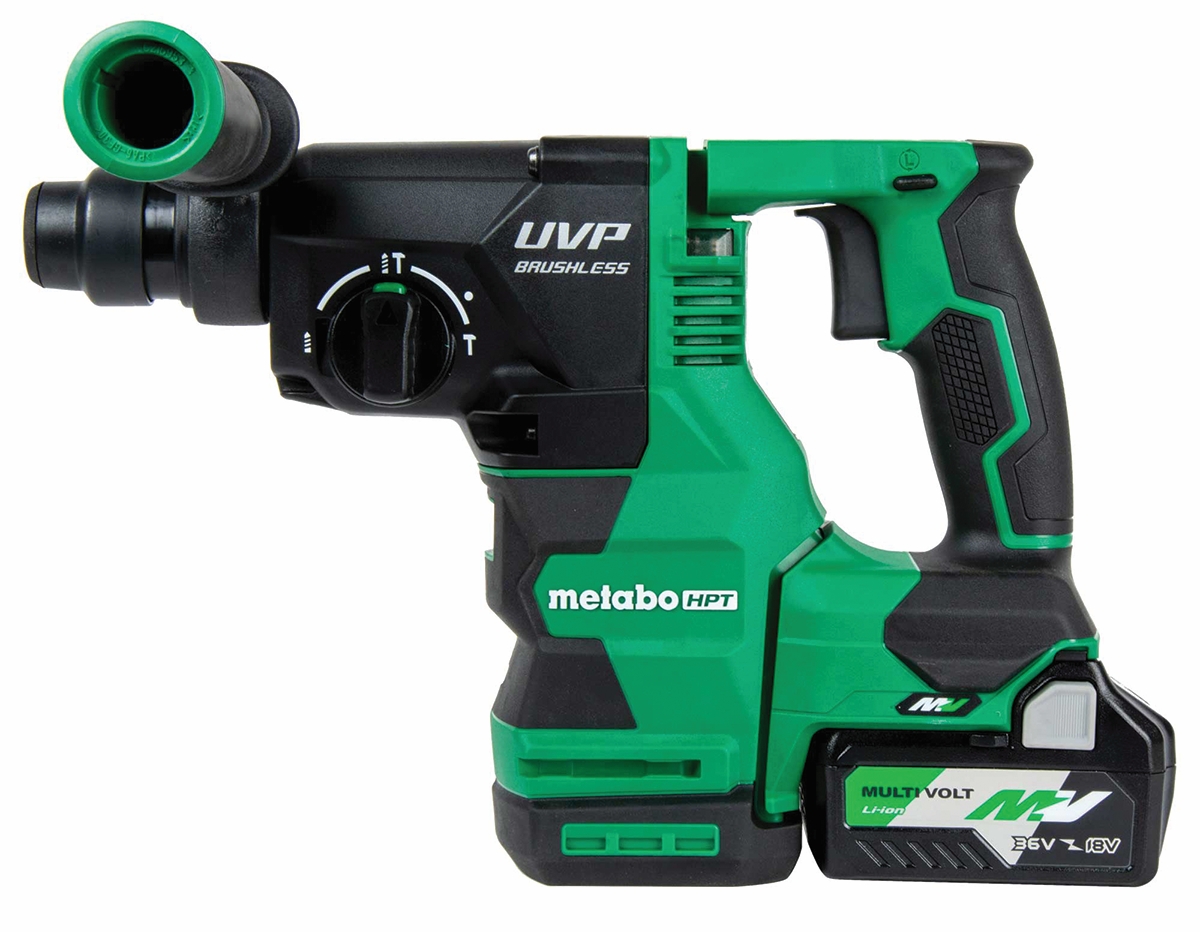
Metabo’s HPT DH3628DA is a 36V MultiVolt rotary hammer which delivers cordless performance with three operating modes in a lightweight, compact design. |
METABO HPT
Within the concrete industry, rotary hammers are powerful tools which are misunderstood by those who have never used them before.
According to Chris Suggs, product manager at Metabo HPT, too many tradespeople make the mistake of treating a rotary hammer as being a big hammer drill.
“This misunderstanding can lead to poor tool selection, resulting in inefficient work, damaged equipment, or even injury,” he says. “When chosen and used correctly, rotary hammers are a specialized powerhouse for demanding applications.”
Although both tools can drill into masonry, Suggs says a rotary hammer uses a piston-driven mechanism to generate impact energy. This design allows it to deliver significantly higher impact energy with less effort from the user, making it ideal for concrete, stone, and light demolition applications.
Rotary hammers are widely used by professionals on commercial jobsites every day, but they are also suitable for DIY users or homeowners.
“Whether installing anchors in concrete, drilling into foundations, or removing tile, any user can benefit from a compact rotary hammer with the right features,” Suggs says.
As example, he says the Metabo HPT DH3628DA includes an LED level, auto-stop for repetitive drilling, and three operating modes, all in a lightweight, compact design.
With brushless motor technology, it delivers high impact energy (2.3 foot-pounds) and fast drilling speeds (950 rpm/4,300 bpm) for demolition applications. Featuring three modes, hammer drilling, chipping and drilling, a variable-speed trigger and weighing only 7.0 pounds, Suggs says the DH3628DA is easy to use in overhead applications or for all-day use.
Like many tools, most people assume more power means better performance.
“Higher wattage or a larger tool does not necessarily mean better results,” Suggs says. “Selecting a rotary hammer with the right impact energy, speed, and bit size for the application is far more important. A tool that is too large can increase user fatigue and reduce control.”
In the case of the Metabo HPT DH3628DA, like all the company’s 36V MultiVolt tools, it accepts any MultiVolt battery for power and can also accept the unique 36V AC Adapter to plug in for all day runtime offering versatility and power on the go.
“Metabo HPT cordless and corded rotary hammers are engineered to deliver the right balance of power, control, and durability for professionals and DIY users alike,” Suggs says. “Understanding what a rotary hammer is, and what it is not, helps users work more efficiently and safely.”
LEARN MORE
www.store.evolutionpowertools.com
This article originally appeared in the February/March 2026 issue of Contractor Supply magazine. Copyright, 2026 Direct Business Media.

CONTRACTOR SUPPLY MAGAZINE
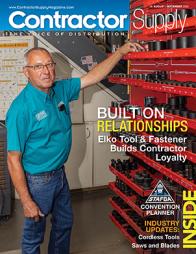
The August/September 2026 issue of Contractor Supply magazine is here!
In our cover story, Built on Relationships, Elko Tool & Fastener of Elko, Nevada has found success in the mining market by offering good customer service.
Also in this issue are Industry Updates.
This digital edition, sponsored by BECK AMERICA Inc., is fully searchable and contains live links to every advertiser and new product listing. Click away!
| Read the Articles Read the Digital Edition |