

Built to be Fixed
Inside Banner Tool Service's Repair-First Business Model
 |
|
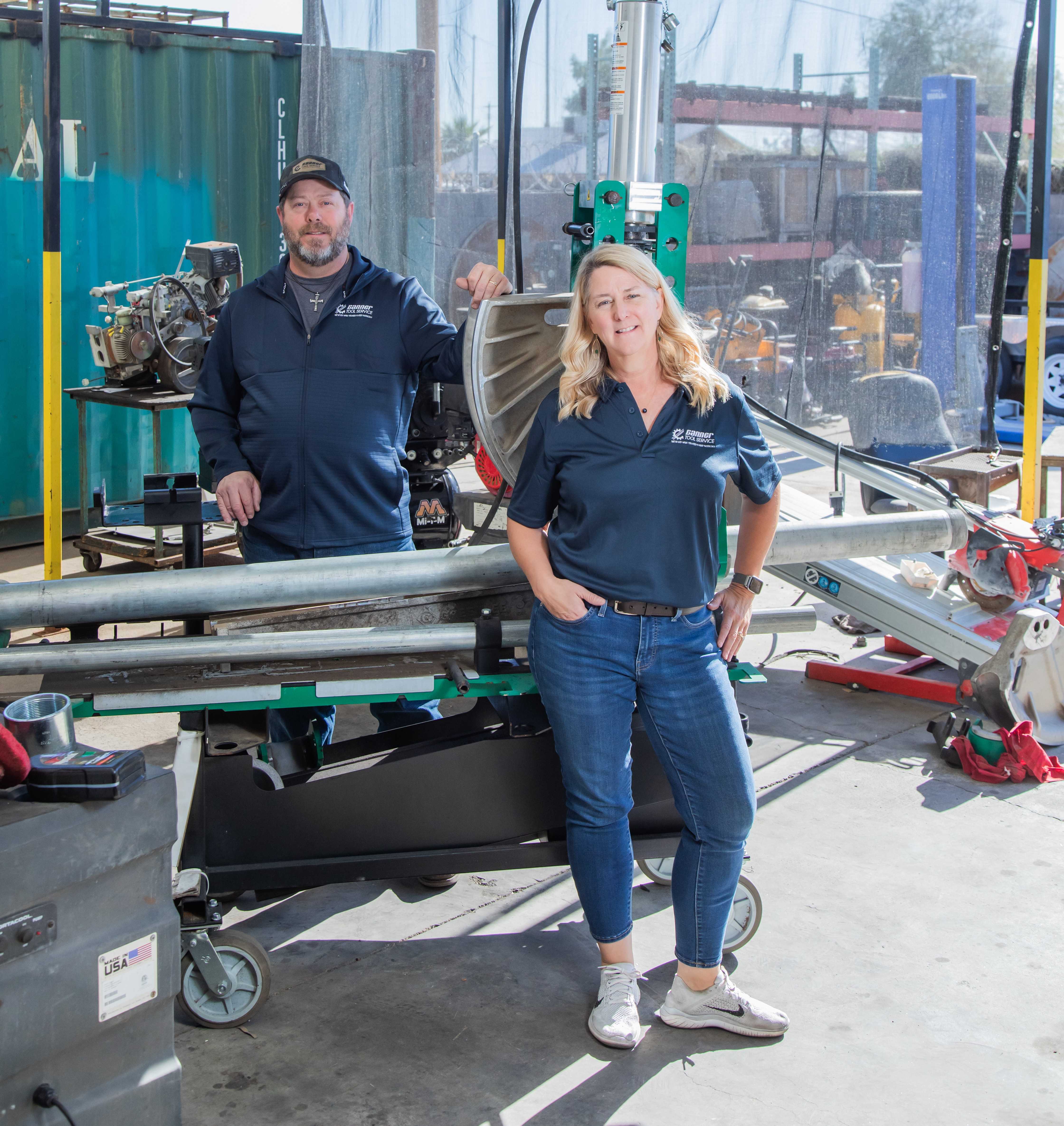
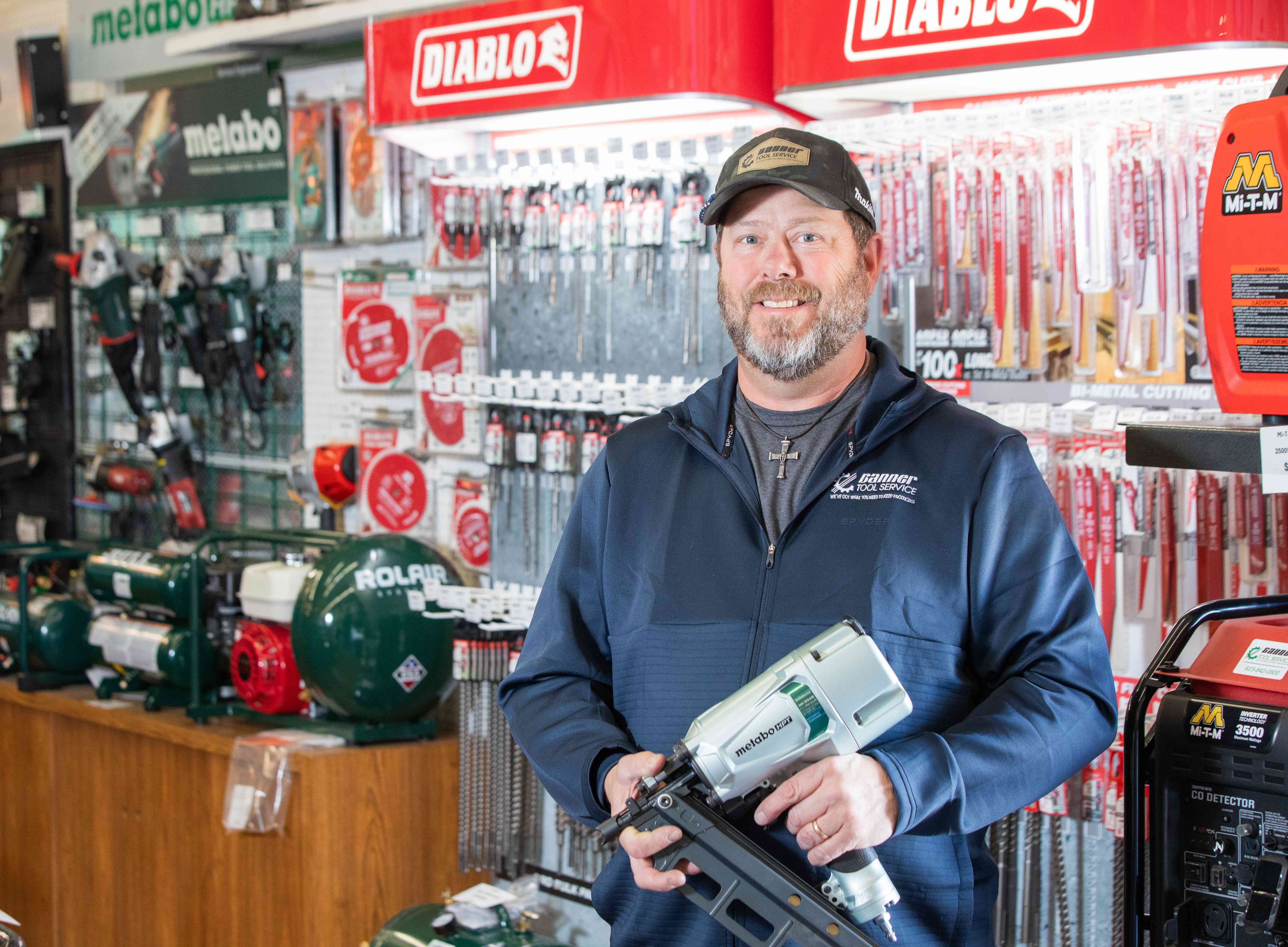
After nearly 40 years in business, Banner Tool Service in Glendale, Arizona maintains it’s unmistakeable family-run and small business character. Siblings Chris Wagner and Jennifer Gerston have served as co-owners since their father handed over the reigns. |
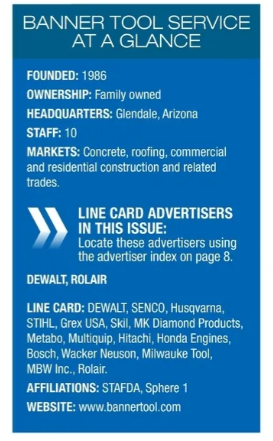
While many distributors have pared down service or outsourced repairs, Banner Tool Service of Glendale, Arizona, stands apart by keeping repairs central to its business.
The company is neither old-fashioned nor overly modern; it occupies a middle ground shaped by what works in a real-world, tool-centric environment.
Siblings Chris Wagner and Jennifer Gerston now steer the business day-to-day, inheriting both the operation and the work ethic of their father Dennis Wagner, who purchased the company in 1999.
When Banner Tool Service opened its doors nearly 40 years ago, it was little more than a side venture retired businessman Leo Cournoyer was operating out of a storage unit in Peoria, Arizona.
“He was a busybody and would go to swap meets and garage sales, buying used tools, fixing them, and reselling them for profit,” Chris says.
By 1992, Leo bought the building, believed to have once been a neighborhood grocery store, that still houses Banner Tool today.
He sold the business to Dennis in 1999.
Despite its growth and generational transition, the business retains an unmistakably family-run character.
While his active role has diminished, partly due to COVID-era caution Dennis still reviews the books monthly, offers feedback, and keeps a supportive but watchful eye on the financial side of things.
However, now in his 80s, Dennis is more likely found on a golf course than behind the counter, but Banner Tool is still firmly shaped by his influence.
The company has grown without the benefit of multiple branches or national-scale resources; instead, it has flourished on the strength of mechanical expertise, relentless
honesty, improvisation during industry turmoil, and the unmistakable imprint of a family that has guided it for 26 years.
As a result, Banner Tool is a go-to resource for contractors in the Phoenix valley, trusted equally for tool troubleshooting, fastener supply, equipment stocking, and reliable support through market changes.
 |
The Hard Way
A veteran of the airline industry, Dennis’ financing background gave him the structure to manage Banner Tool and operate a six-day-a-week business.
 |
His son Chris Wagner came into the business in 2000, after more than a decade in the restaurant management business in the Kansas City, Missouri area.
At the time, he and his wife had just welcomed their third daughter, and the prospect of raising their children near their grandparents weighed heavily on the decision to relocate.
Chris jumped in feet first, transitioning from restaurant management to tools in April 2000.
He had always been mechanically curious, tinkering with equipment and watching repair technicians whenever something broke at his restaurant, so he could perhaps make repairs the next time it broke rather than calling a tech.
His transition to tool repair and equipment sales was less shocking than some might expect.
“I’ve always found tools interesting, so I just would read trade magazines like Contractor Supply to see what new tools are coming out and how they are used in the field,” Chris says.
Now with over 25 years in business, he says he’s much better at understanding how the equipment works and understanding what the techs are doing to repair it.
Chris says he’s an example of the idiom, “a little bit of knowledge can be a dangerous thing.”
While he admits freely that he is far more comfortable explaining how equipment works to customers than performing the repairs himself, he has reached a level of understanding that makes him effective in communicating to customers what’s wrong with their equipment in plain language.
Over time, Chris gravitated toward operations, customer interaction, and the mechanical side of the business, while his father continued to oversee the finances.
Seven years ago, long after Chris had established himself as the public-facing leader of the shop, his sister Jennifer joined the business.
After a 27-year career in food industry sales and marketing, she faced a layoff, which prompted a career pivot.
She joined the family business part-time to address an immediate staffing need. Her role quickly expanded, reflecting her adaptability, skill, and the trust in the family
business in her professional abilities.
Her transition demonstrates how industry experience and strong work ethic can translate into success across different business contexts.
Her husband, David, has a longstanding career in construction sales, having developed strong field relationships over an 18-year tenure at Banner Tool.
These relationships and his industry expertise continue to support his active role in
construction sales today, highlighting the value of experience and networking in sustaining career longevity.
Today, she manages almost the entire back office: payroll, IT oversight, financial administration, internal processes, and the broad spectrum of “house” responsibilities that keep the business operational.
Ironically, it was not originally her plan to have any role in the family business.
“I have a very different background, and I see things differently than my brother,” Jennifer says.
With her corporate background, Jennifer approaches Banner Tool with a different lens, one shaped by more high-tech systems and structured workflows.
From her perspective, there is no question that Banner Tool’s technology is functional but dated.
The company still maintains an on-site server rather than operating in the cloud. As the only space with air conditioning, the server room doubles as an employee break room in the Arizona summers, a humorous reminder of the shop’s old-school infrastructure.
Jennifer jokes that it would be a titanic effort to transform or update the company’s decades-old systems.
“That doesn’t mean that there’s not something out there that could help us do a better job,” she says, admitting that she regularly evaluates options for more modern POS and general IT platforms.
Keeping finances in mind though, the philosophy of “if it isn’t broken, don’t fix it” is very real for Jennifer.
“There’s always some little things we wish we could tweak, but there’s always a way around it too,” she says.
Still, Jennifer also sees that modern tools could streamline operations, integrate sales functions, and improve productivity.
Her goal is not to overhaul the business overnight; rather, it is to chip away at inefficiencies while respecting what works.
For example, Banner Tool does not have an online sales outlet. The option was considered nearly 15 years ago, as the concept of online sales was first becoming more evident.
However, at the time and currently, Banner’s POS software system would not connect well
with new programs.
Chris admits the investment at that time was more than they were prepared to make. Now, with a greater necessity for an updated POS system, the option to move forward with online sales will likely open.
“I know it’d be kind of late in the game getting into it, but if anything, it’ll be more just kind of an additional avenue to maybe give a little bit of revenue stream,” Chris says.
The contrast between Chris and Jennifer’s approach to the business has strengthened Banner Tool.
Chris manages the front of the house, dealing with customers, sales, the counter team, and the daily flow of equipment in and out of the service center and Jennifer keeps the business running from the back office.
Together, they preserve the core values on which Banner Tool was built while positioning it for the next phase of growth.
 |
|
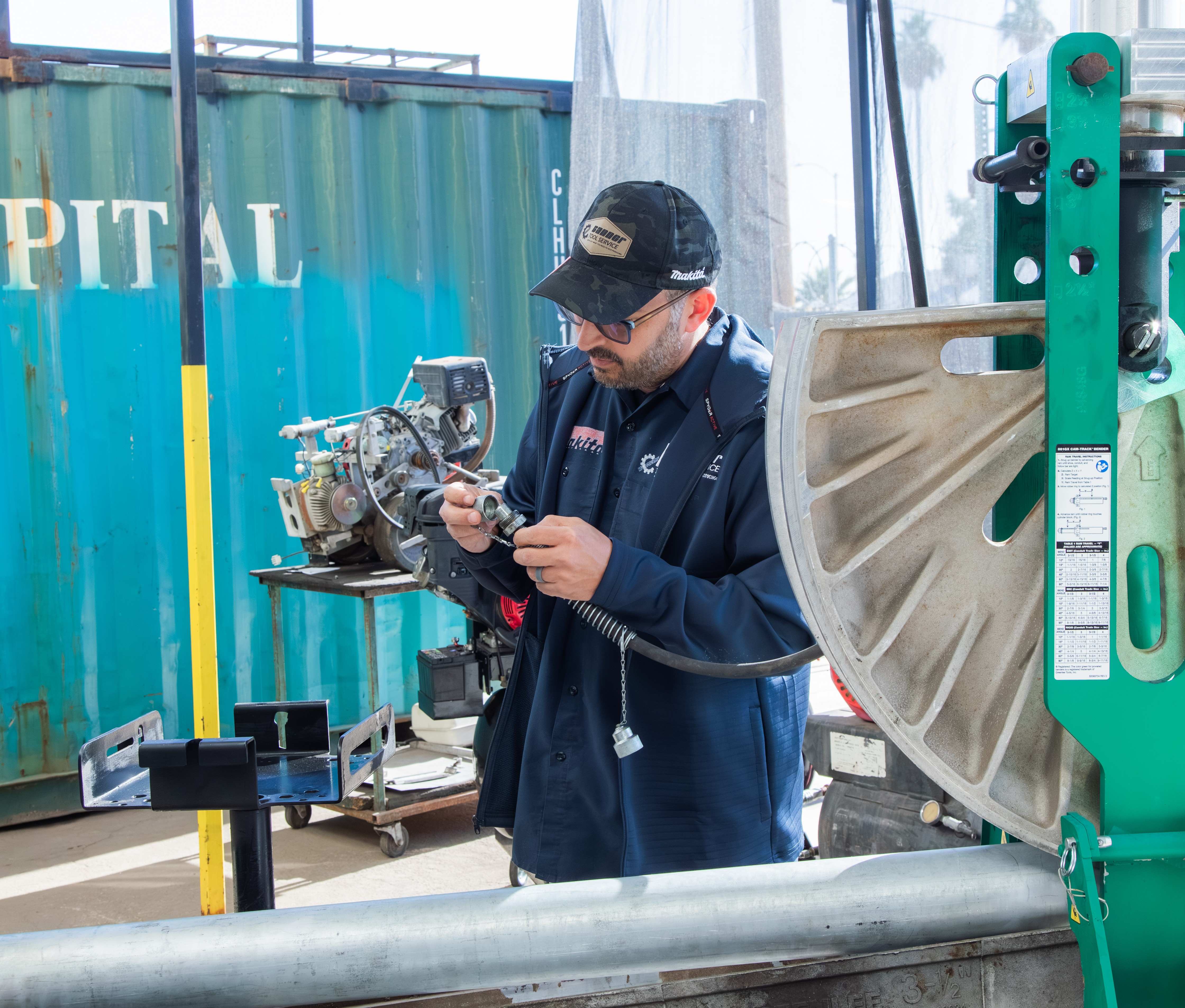
Banner Tool Service’s repair shop currently gets through approximately 100 pieces of equipment per week. |
Inside the Shop
What sets Banner Tool apart is not merely the volume of repairs it oversees, but the breadth of equipment it works on.
Contractors, homeowners, industrial shops, landscapers, and specialty tradespeople bring in items ranging from pneumatic nailers and electric grinders to two-cycle gas tools and construction-grade equipment such as rammers, plate compactors, and floor grinders.
Outside of the contractor-based sales, industrial manufacturers contribute around 10% of total sales.
Few small, single-location companies can claim such a balanced customer mix. Diversity has become one of Banner Tool’s greatest strengths.
Nearly every brand carried in the showroom, including Milwaukee Tool, Metabo, DEWALT, Makita, Rolair, STIHL and more, is something Banner Tool is certified to repair.
“We touch a lot of stuff,” Jennifer says.
Some of the vendor partnerships date back prior to the family’s acquisition of the business, while others have been added more recently because the manufacturers have demonstrated strong support for Banner Tool and its customers.
For example, STIHL became a significant part of Banner Tool’s business heading into the 2008 recession.
When the economy started softening in 2006 and 2007, STIHL’s sales rep encouraged Chris and Jennifer to expand the available STIHL product line.
Prior to that, Banner Tool carried STIHL products but was primarily focused on the cut-off saws and chainsaws.
Based on the sales rep’s suggestion, Chris says approximately 20 SKUs were added, along with related parts.
Today, Banner Tool is one of the largest single-location STIHL dealers in the Phoenix region.
“A lot of what we sell are the construction cut-off saws, but we do quite well with a lot of the small landscaping-related tools as well,” he says.
Banner recently added RIDGID and Greenlee to the product lines they service.
Chris says the intent is not to become a full-line dealer because competing with nationwide suppliers like Fastenal, White Cap, or Grainger would require massive inventory investment.
Repairing higher-end equipment offers far greater business value than focusing on low-cost items such as $100 drills.
“We are limited in our sales growth on the repair side, because you only have so many mechanics that can do the work, and they can only repair so many items,” Chris says.
Growth is dependent on servicing complex, high-value tools that
command higher billing rates.
This strategy has enabled Banner Tool to remain resilient through economic downturns,
including the 2008 housing crisis, the COVID-19 pandemic, and local market fluctuations.
Currently, the shop can manage repairs on approximately 100 pieces of equipment per week with five techs and a driver who manages equipment pickup an delivery across the
Phoenix Valley.
Technicians bring six to 20 years of experience and are cross-trained to handled diverse repair needs, ensuring flexibility and efficiency throughout the workflow.
A structured intake queue organizes tools based on arrival time and category, ensuring that the workload remains balanced.
The flow from intake to repair to testing to customer pickup has been refined over decades, even as new categories of equipment have been added.
The shop area itself is designed around safety and practicality. A designated space is used for testing gas-powered equipment to prevent fumes from spreading through the store. A separate space is devoted to cleaning and component preparation.
Turnaround times generally fall in the two- to three-week range, although volume varies dramatically based on season and trade needs.
Deep Inventory
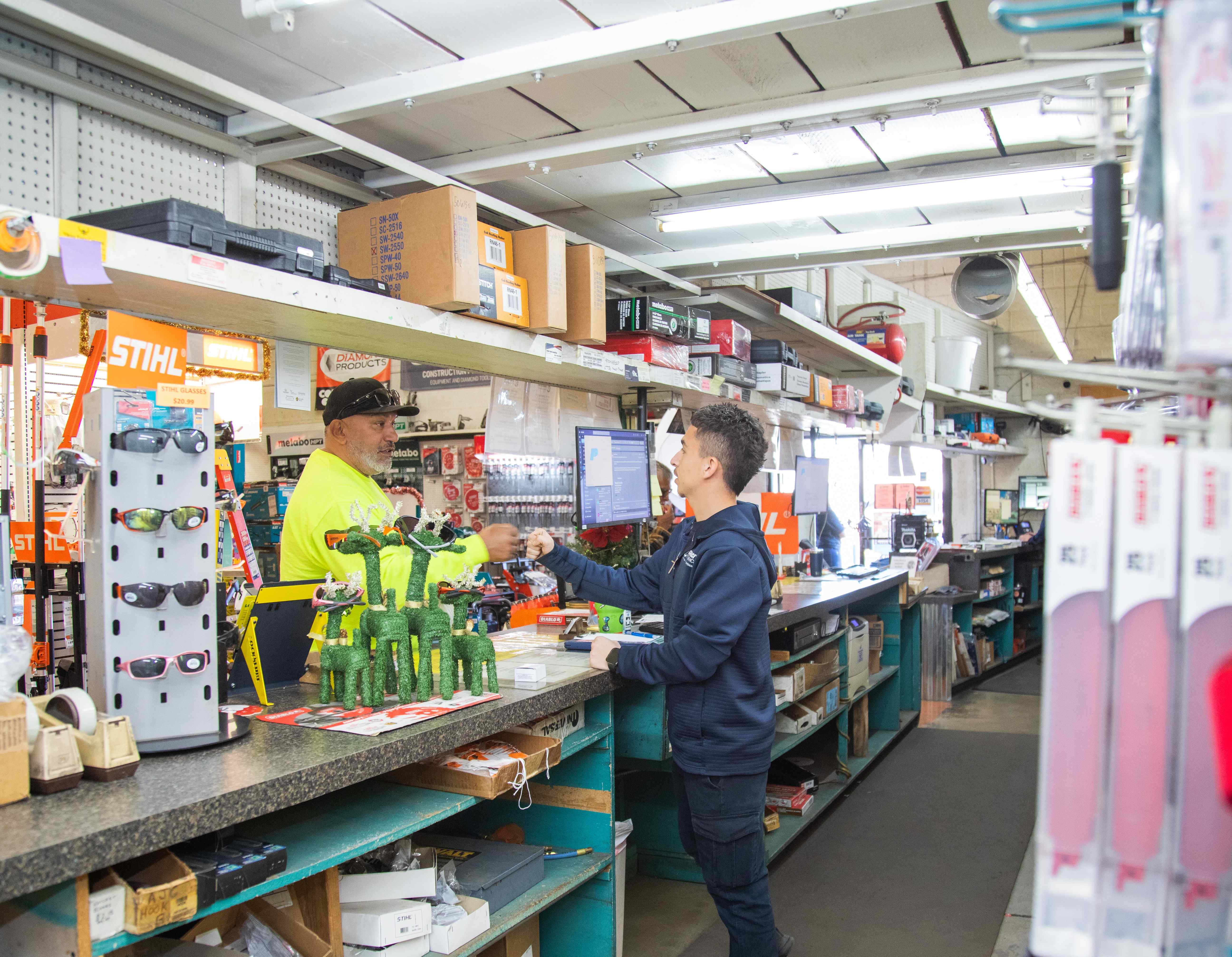
Unlike many of its competitors, due to its focus on repair, Banner Tool maintains an extensive parts inventory across brands and tool types.
Contractors and superintendents often stop by to pick up bumpers, pistons, O-rings, air filters, chainsaw recoils, fasteners, and other components to repair equipment themselves.
“Our diverse customer base relies on this commitment to stocking components that others often consider low-margin or inconvenient,” Jennifer says, noting that some distributors don’t delve into it to the depth of parts that Banner Tool does.
“That rapport matters,” Chris says. “If I can’t get the part, then its unlikely to be found.”
During the COVID pandemic, he used every possible outlet possible to serve his customers including wiping out wholesale distributor’s stock of items, finding things online or
wherever things were available.
“I became very creative on how to get some of the stuff,” Chris says.
Banner Tool’s “no fix” process is also a key part of its customer trust strategy.
When a piece of equipment is evaluated and the repair cost approaches the price of a new tool, the customer is given the choice: repair or replace.
This transparent approach ensures customers make informed decisions without pressure. If the contractor opts not to proceed with the repair, only the evaluation fee is charged, and the item is returned promptly.
 |
Investing in Community
Banner Tool’s relationship with its community mirrors its relationship with its customers.
First, much like its own business model, Banner Tool keeps its eye on the overall industry as a long-time member of STAFDA.
Educational opportunities through the association assisted in accelerating Chris’ understanding of the distribution industry early in his career.
In addition, membership has provided more opportunities for collaboration with vendor partners, leading to new repair or sales options.
In addition to STAFDA, Chris says the company recently joined Sphere 1.
At the community level, Banner Tool works with the local high school’s DECA programs to bring in student interns and introduce the next generation to business operations and the options available within construction trades.
In addition, Banner Tool regularly donates goods to the local trade school to assist students taking part in the annual Skills USA program.
“The industry cannot function without trained technicians, and we see value in contributing to the ecosystem that will ultimately supply future mechanics, field personnel, and trade professionals,” Chris says.
Other charities that Banner supports include St. Vincent De Paul, Knights of Columbus, St. Mary’s Food Bank, local VFW, and Special Olympics.
The future of Banner Tool is not dependent on adding locations, adopting fully automated systems, or matching national distributors’ numbers of SKUs.
It’s rooted in the principles that have sustained it for decades: consistency, integrity, and a commitment to tackling any challenge.
“Our goal is simple, earn trust through repairs, and sales opportunities will follow,” says Chris.
Rather than pursuing rapid expansion, Banner Tool focuses on reliability and expertise, guided by the belief that nearly any tool can be repaired with the right care.
“We remain dedicated to delivering exceptional customer service, supporting our community, and adapting to an evolving economy while continuing to be a trusted resource for our customers,”
Chris says.
Photos by Meredith Comfort
This article originally appeared in the February/March 2026 issue of Contractor Supply magazine. Copyright, 2026 Direct Business Media.

CONTRACTOR SUPPLY MAGAZINE
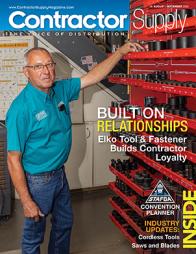
The August/September 2026 issue of Contractor Supply magazine is here!
In our cover story, Built on Relationships, Elko Tool & Fastener of Elko, Nevada has found success in the mining market by offering good customer service.
Also in this issue are Industry Updates.
This digital edition, sponsored by BECK AMERICA Inc., is fully searchable and contains live links to every advertiser and new product listing. Click away!
| Read the Articles Read the Digital Edition |