


Diamonds Are a Contractor's Best Friend
There is no question that diamond blades can cut almost any type of construction material. They are commonly used for tile installation, concrete cutting, brickwork, demolition and other applications involving harder materials. Today’s blade manufacturers continue to raise the bar in the pursuit of versatile, fast cutting, longer lasting products.
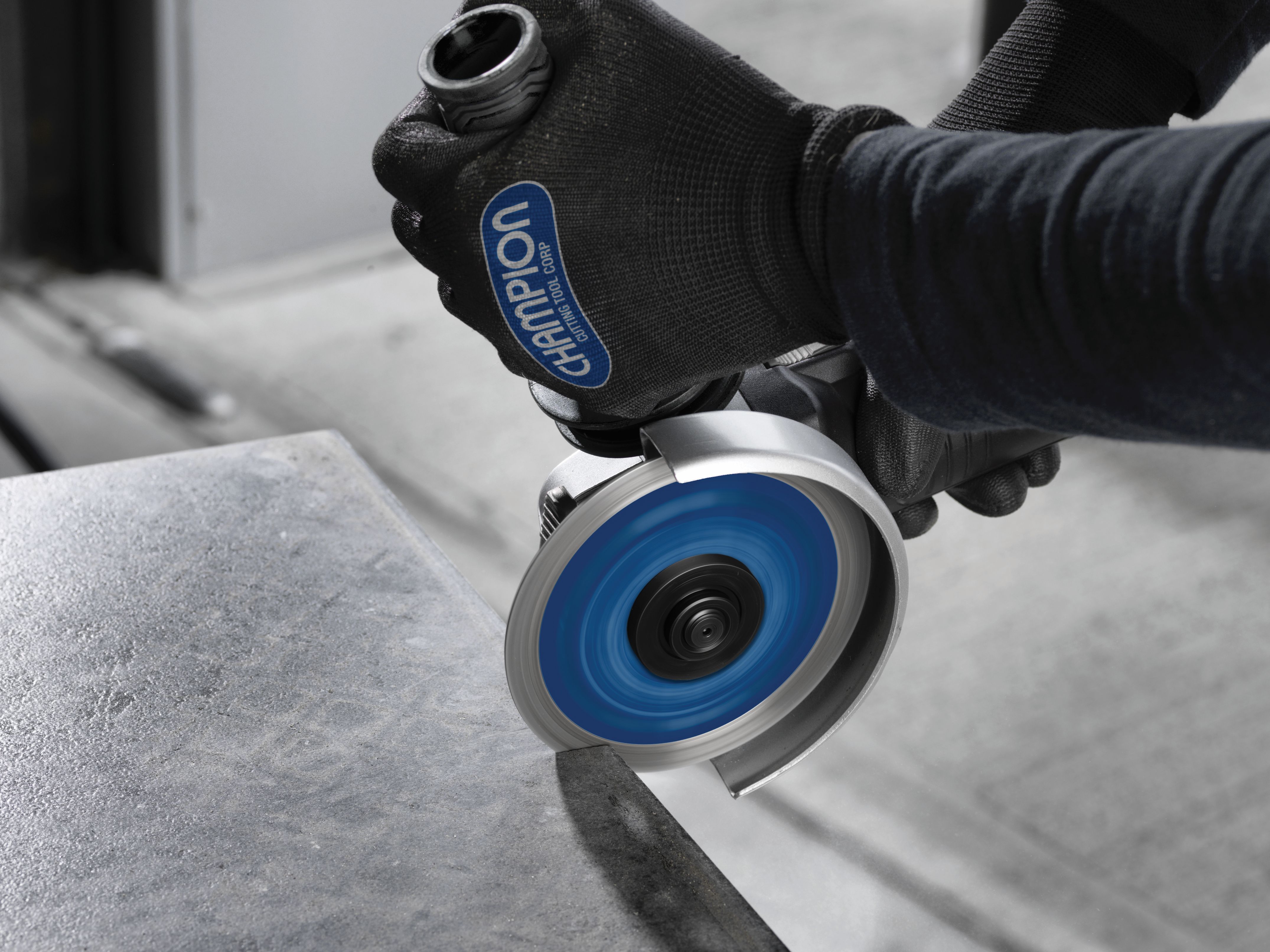 |
| Champion blades have been repackaged to make it easier for both distributors and contractors to identify which blade they need for which application |
CHAMPION CUTTING TOOL
One of the most common causes of blade failure, premature wear, or jobsite injury isn’t material hardness or machine power, it’s user error.
Allison Frey, chief marketing officer at Champion Cutting Tool Corp., says selecting the wrong blade for the application or operating it outside recommended guidelines will slow down a job and can cause a variety of problems for tool users.
“The difference between metal cutting saw blades and diamond blades is that diamond blades remove material by grinding,” she says. “The type of material and thickness that the user needs to cut determines the type of diamond blade that they use.”
Champion Cutting Tool directly addressed these challenges by enhancing and upgrading the packaging for its diamond blades to ensure distributors and users can easily find the blade they need.
“Each blade displays critical information clearly: size, blade style, intended material application, and operating guidelines,” Frey says. “This information is bold and easy to read, valuable for both users and distributors who need to guide operators to the correct tool.”
She also notes that for distributors with showrooms, Champion’s diamond blades make a significant impact on retail displays due to the attractive and easy to hang merchandisable packaging.
“Working with diamond blades is messy, tough, and physically demanding,” she says, crediting Champion’s approach of having a more streamlined and high-quality blade range in making a difference in sales.
“In the world of tools, choice is valuable, until it becomes overwhelming,” Frey says. “Many professionals have experienced the frustration of sifting through an overly deep product line where differences between blades are unclear or marginal.”
One of the goals for Champion Cutting Tool is to educate distributors and users in other markets about its broad offering of high-quality diamond tools. Each Champion diamond blade, which is made of a steel core with diamond segments or a diamond rim, is optimized based on application. They are available in four styles: segmented, turbo, turbo segmented, and continuous rim.
“We can serve users who need to cut concrete, brick, block, stone, and tile with blades from 4 1/2 inches to 14 inches in diameter,” she says.
Many styles have cooling holes and are hot pressed, tensioned and balanced, intended to reduce vibration and heat build-up.
“Whether cutting concrete, masonry materials, asphalt, or tile, operators can quickly identify the right blade for the job,” Frey says. “Champion’s premium diamond blades are engineered with concentrated industrial diamonds for faster, consistent cutting and less chipping. Champion is committed to serving the market with reliable, high performance, industrial diamond blades.”
THE L.S. STARRETT COMPANY
A common misconception about diamond blades is that any diamond blade can cut any material. In addition, many contractors approach this and other tool categories with the misunderstanding that more expensive always means better, no matter the application.
 |
|
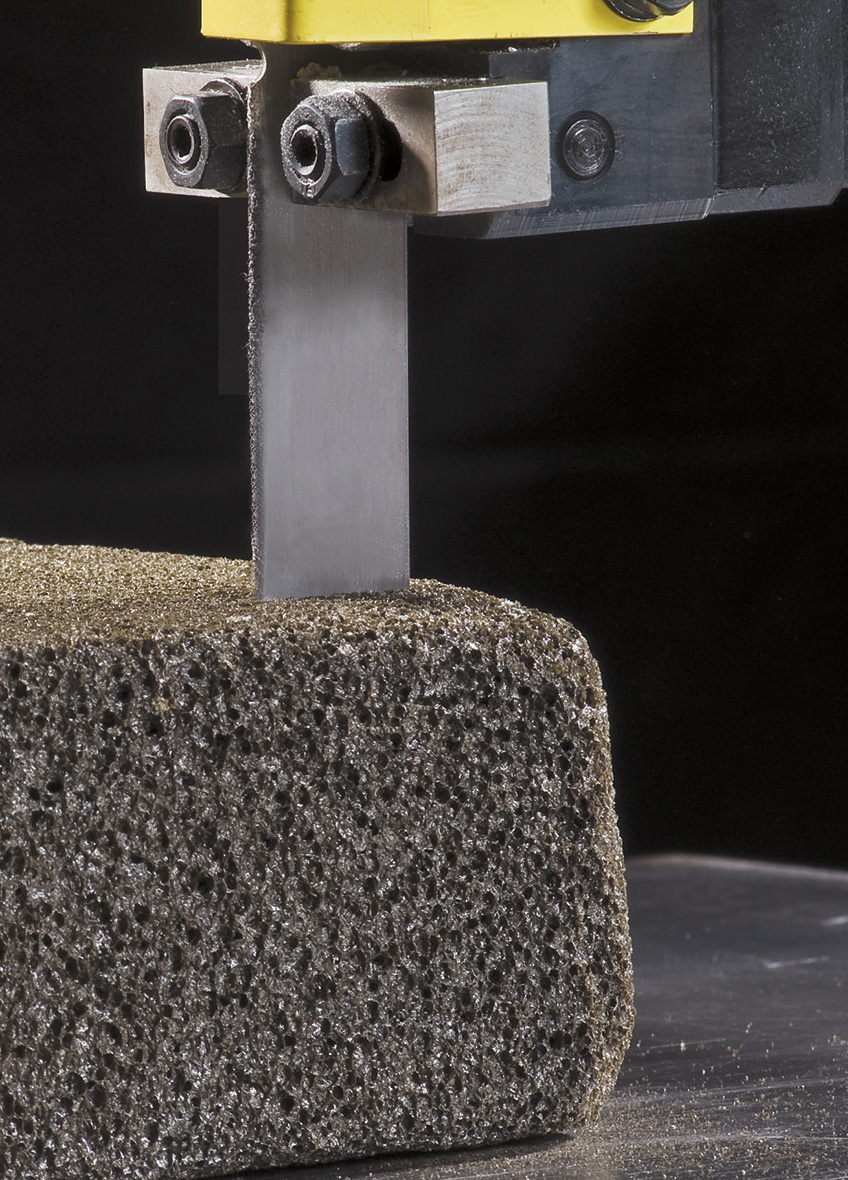
Advanz DG is ideal for specialized applications involving extremely hard and/ or abrasive materials such as glass-fired ceramics, stone, silicon and laminated fiberglass |
According to Felipe Arntsen, saws and hand tools product manager at The L.S. Starrett Company, both of those are misstatements.
“In truth, each blade is designed for specific materials such as concrete, asphalt, tile, or stone,” he says, adding that price does not replace proper application. “A premium blade used on the wrong material can perform worse and wear out faster.”
Also, Arntsen says that the idea that faster is always better when cutting is a misnomer. “Forcing the cut reduces blade life, generates overheating, and can damage both the blade and the tool,” he says.
Recent development trends within the diamond blade manufacturing industry have been directed toward durability, efficiency and overall versatility.
“More sustainable manufacturing processes are creating safer, more efficient, and environmentally friendly solutions for the industry as well,” Arntsen says.
Looking ahead into 2026, he predicts a good year, as the overall outlook for diamond blades is still positive and stable, supported by ongoing demand in construction, renovation, and infrastructure projects.
“Residential construction growth and renewable energy projects continue to drive demand, while advancements in blade technology improve performance and durability,” Arntsen says. “Despite potential economic uncertainty, moderate growth is expected across distribution and end-user markets.”
In 2026, he says the primary challenge is the economic uncertainty, which can lead to reduction in overall project budgets and an increase in material demand.
In addition, Arntsen notes that supply chain disruptions continue to affect availability and lead times for tools, including diamond blades. Continued inflation and rising costs of raw materials and transportation may pressure pricing and margins.
“Distributors should monitor these factors to plan inventory, manage customer expectations, and maintain reliable service,” he says, noting that it will be important to ensure product availability and prompt delivery to maintain customer trust.
“They should provide application-specific guidance, helping customers choose the right blade for their material and cutting method,” Arntsen says. “Offering technical support and training can differentiate distributors, enabling customers to maximize blade performance and lifespan.”
As a company, Starrett’s key strategic priorities for diamond blades over the next few years will focus on providing high-performance, application-specific solutions that meet the evolving needs of the construction and industrial markets.
Highlighted products include diamond edge drill bits, diamond grit hole saws and Advanz DG band saw blades.
Arntsen says the diamond edge drill bits and diamond grit hole saws are ideal for demanding applications where precision and durability are required for small diameter holes in brick, glass, ceramic tile, concrete, or stone.
Similarly, the Advanz DG band saw blades are designed for extremely hard and abrasive materials such as glass-fired ceramics, stone, silicon, laminated fiberglass, and Pyrex.
“These blades deliver precise cuts, excellent finishing, and exceptional durability, even at high machine cutting speeds,” he says. “These priorities and products reflect our commitment to helping customers maximize productivity while supporting distributors with reliable, high-performance tools for a variety of challenging applications.”
LEARN MORE
This article originally appeared in the February/March 2026 issue of Contractor Supply magazine. Copyright, 2026 Direct Business Media.

CONTRACTOR SUPPLY MAGAZINE



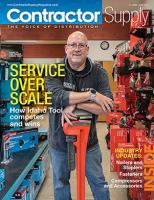
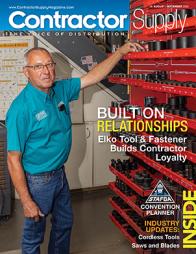
The August/September 2026 issue of Contractor Supply magazine is here!
In our cover story, Built on Relationships, Elko Tool & Fastener of Elko, Nevada has found success in the mining market by offering good customer service.
Also in this issue are Industry Updates.
This digital edition, sponsored by BECK AMERICA Inc., is fully searchable and contains live links to every advertiser and new product listing. Click away!
| Read the Articles Read the Digital Edition |