

 |
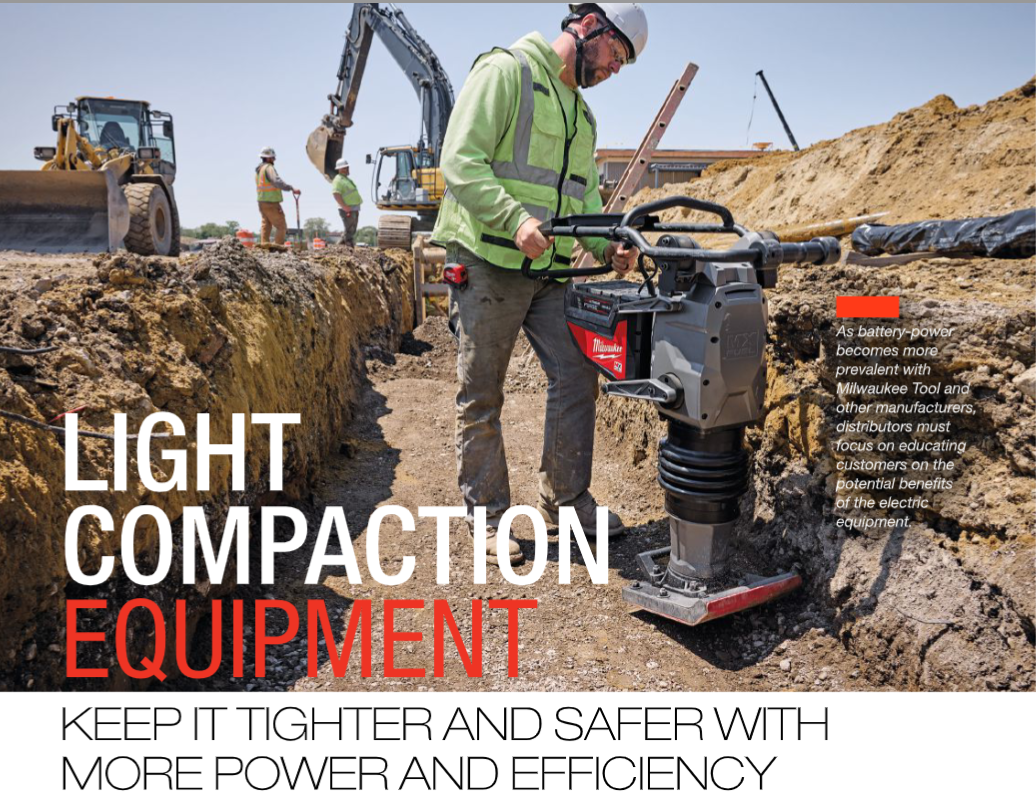
For any job, from a garage pad to a home or warehouse slab, a parking lot, highway or aircraft runway, soil and substrate compaction is a critical and potentially costly process that can determine success or failure of the final product. Transition into battery power, smart controls, ergonomic design and safety are some of the key factors impacting the design process for these manufacturers.
MILWAUKEE TOOL
The compaction equipment category is evolving as contractors prioritize safety, efficiency, and compliance with emissions and noise regulations.
In recent years, the adoption of battery-powered solutions is accelerating as rising costs increase pressure to improve productivity and reduce downtime.
“Many of the top failure modes in engine-driven equipment are tied to maintenance and repair of the gas engine,” says Brandon Fredricks, senior product manager at Milwaukee Tool. “By removing the engine, battery-powered solutions provide a more reliable product, which translates to higher productivity.”
The simplicity of using battery-powered solutions improves overall performance on the jobsite.
Fredricks notes that the battery equipment starts instantly, eliminating the need to choke, prime and pull to start.
“Combined with reduced maintenance, no gas storage or refueling, and quieter operation, these solutions support cleaner, more efficient jobsites,” he says. “Advancements in battery platforms continue to improve runtime, durability, and performance, helping contractors adapt to changing requirements while maximizing uptime.”
A major misconception about the plate compactors and rammers is around run-time needs.
When considering run-time, many contractors tend to assume things such as compaction equipment must run for the entire duration of a job. Fredricks says this is not accurate.
“Plate compactors and rammers are generally used in short bursts of five to ten minutes at a time, followed by downtime for grading, leveling, and adding lifts,” he says. “This natural cycle provides ample opportunity to recharge batteries between passes, meaning most jobs can be completed without disruption.”
For example, Fredricks says a driveway project may take four hours, but actual compaction time is typically only about 30 minutes.
In addition to misunderstanding run time, he says contractors often fall for the misconception that battery-powered equipment reduces productivity.
“In reality, solutions like Milwaukee Tool’s MX FUEL plate compactors deliver harder hits, enabling faster travel speeds,” Fredricks says, noting that in some cases, performance is nearly twice as fast as competitive gas models while achieving the same compaction.
“This means 35 minutes with a battery plate compactor can equal an hour of compaction with a gas unit,” he says. “Understanding duty cycles, leveraging recharge windows, and recognizing productivity gains are key to seeing that battery-powered solutions not only meet expectations but often outperform traditional gas equipment.”
To Fredricks, the transition from gas to battery power is one of the major trends shaping the development of light compaction equipment.
“Milwaukee Tool’s MX FUEL REDLITHIUM FORGE battery packs exemplify this progress, delivering more power, faster charging, and longer life to support the industry’s gas-to-battery transition,” he says.
As the most advanced battery options within the Milwaukee Tool lineup, the MX FUEL REDLITHIUM FORGE battery packs also include built-in REDLINK Intelligence safeguards against overheating, while the COOL-CYCLE Active Cooling System, paired with a COOL-CYCLE compatible charger, actively cools batteries for uninterrupted workflow.
“As these innovations evolve, they will continue to drive efficiency and performance across a wide range of applications, redefining what contractors can expect from battery-powered solutions,” Fredricks says.
Another drive for design changes in light compaction equipment is safety and compliance with health standards. In conjunction, across multiple types of equipment, smart technology is becoming integral to monitoring real-time optimization, preventative maintenance and integrated safety features.
Fredricks says the advances include more intuitive push-button starts and Milwaukee Tool’s AUTOSTOP system that automatically shuts down the equipment if it is tipped over.
“These advancements are setting the stage for equipment that is more connected, efficient, and operator-friendly,” he says.
Like many industries, Fredricks says the construction industry is facing several headwinds distributors should monitor closely in 2026.
He says economic pressures remain significant, with rising material and labor costs squeezing margins and influencing purchasing decisions.
In addition, stricter emissions and noise regulations are adding complexity to the market, requiring contractors to adopt compliant equipment and sustainable practices.
“Distributors should prioritize educating customers on the performance parity of battery-powered compaction equipment compared to traditional gas models, addressing common misconceptions about power and runtime,” Fredricks says. “Choosing platforms that minimize maintenance and downtime will be critical, as contractors seek solutions that improve productivity under labor constraints.”
He says highlighting benefits such as easy operation, elimination of gas-related emissions and maintenance and automatic shut-off will likely resonate strongly.
“Positioning these solutions as drivers of jobsite efficiency will help distributors differentiate and meet evolving customer expectations,” Fredricks says.
For its part, Milwaukee Tool will continue to focus on accelerating the transition from gas to battery-powered solutions across the light compaction category.
“Milwaukee is committed to advancing trade-focused solutions that deliver performance parity with gas while driving sustainability and productivity,” he says, noting that expansion of the MX FUEL system continues to be a priority in offering professionals emission-free, low-maintenance alternatives for safer, more efficient jobsites.
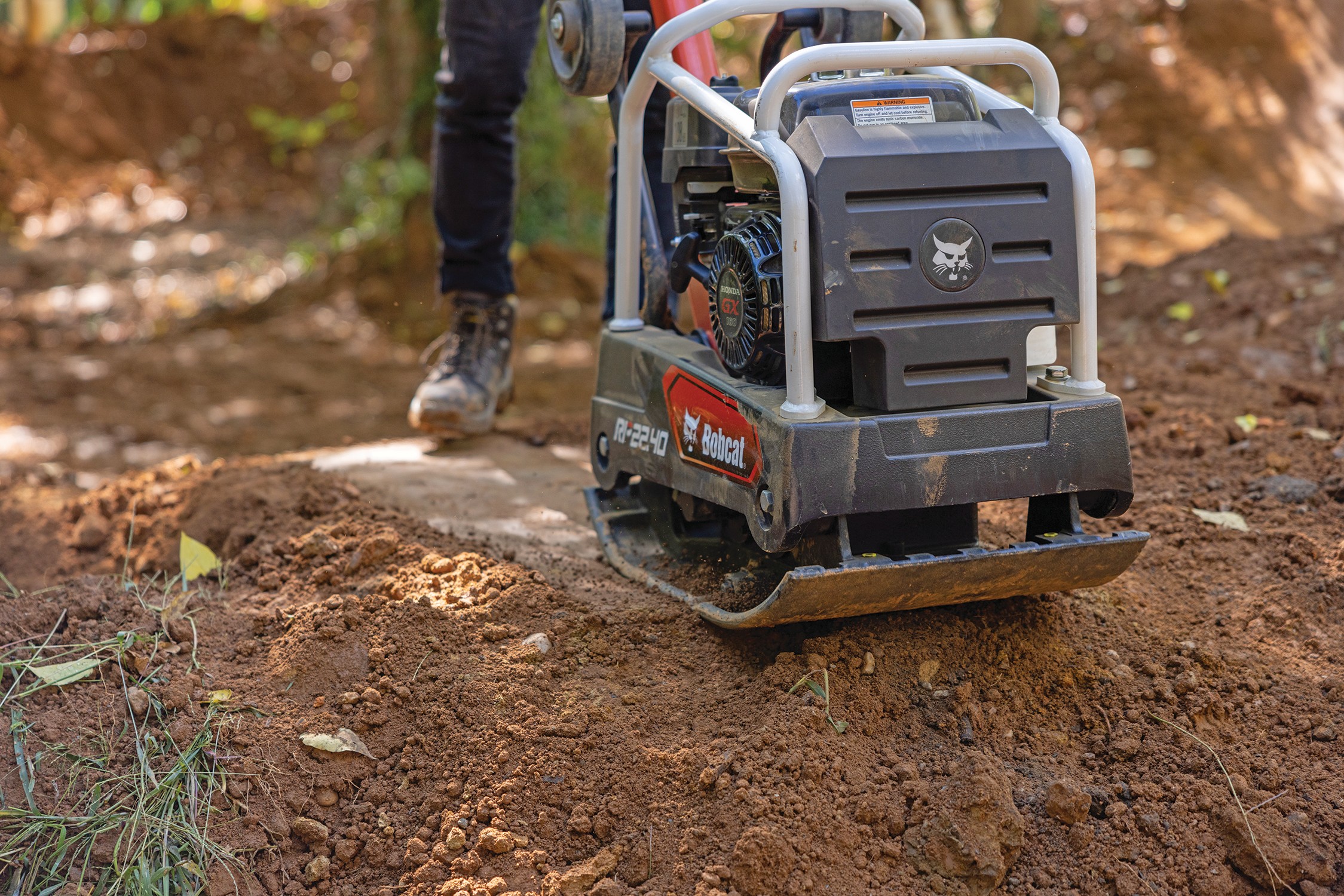 |
| The walk-behind Bobcat reversible plate compactors are as nimble as they are durable, making them ideal for compacting granular material such as sand, gravel and asphalt. |
BOBCAT
Although associated mostly with compact track loaders or skid steers, Bobcat is among the players in the light compaction equipment industry.
The full range of Bobcat light compaction products includes rammers, forward plate compactors, reversible plate compactors and trench rollers.
“Many assume that light compaction equipment may be less durable or less productive than larger machines,” says Joe Tomlin, product specialist II at Bobcat. “In reality, these tools are designed for specific applications, such as patchwork, landscaping and confined spaces, where maneuverability and precision are critical.”
When used correctly, he says light-duty compaction equipment delivers excellent performance and efficiency.
While Bobcat currently offers gas-powered light compaction equipment, Tomlin admits that electrification is relevant as battery-powered compactors serve as effective tools for noise-sensitive and emission-restricted environments.
In addition, he says ergonomics is shaping design priorities, as manufacturers focus on improved vibration control and enhanced operator comfort.
For distributors, Tomlin says the market outlook for light compaction tools is strong, with urban development, infrastructure upgrades and the growth of the rental market driving demand.
“Contractors increasingly value compact solutions for tight job sites and quick turnaround projects,” he says.
Like others, Tomlin cited the ongoing labor shortages, economic pressures and supply chain disruptions as challenges.
Combined, he says tightening budgets are prompting contractors to seek equipment that delivers high ROI and versatility.
“Distributors should prioritize education by helping customers understand the application-specific benefits of light compaction tools,” Tomlin says. “They should also ensure rental readiness by stocking versatile, easy-to-maintain units that can support the growing demand for rental fleets.”
Learn More
This article originally appeared in the February/March 2026 issue of Contractor Supply magazine. Copyright, 2026 Direct Business Media.

CONTRACTOR SUPPLY MAGAZINE
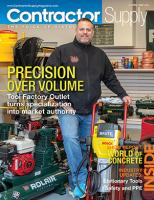
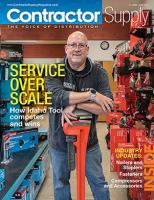
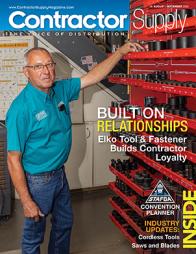
The August/September 2026 issue of Contractor Supply magazine is here!
In our cover story, Built on Relationships, Elko Tool & Fastener of Elko, Nevada has found success in the mining market by offering good customer service.
Also in this issue are Industry Updates.
This digital edition, sponsored by BECK AMERICA Inc., is fully searchable and contains live links to every advertiser and new product listing. Click away!
| Read the Articles Read the Digital Edition |